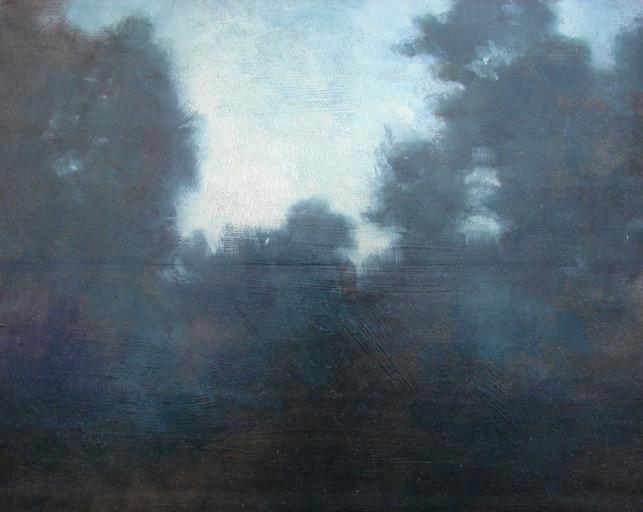
 Théodore RousseauFrança, 1812–1867
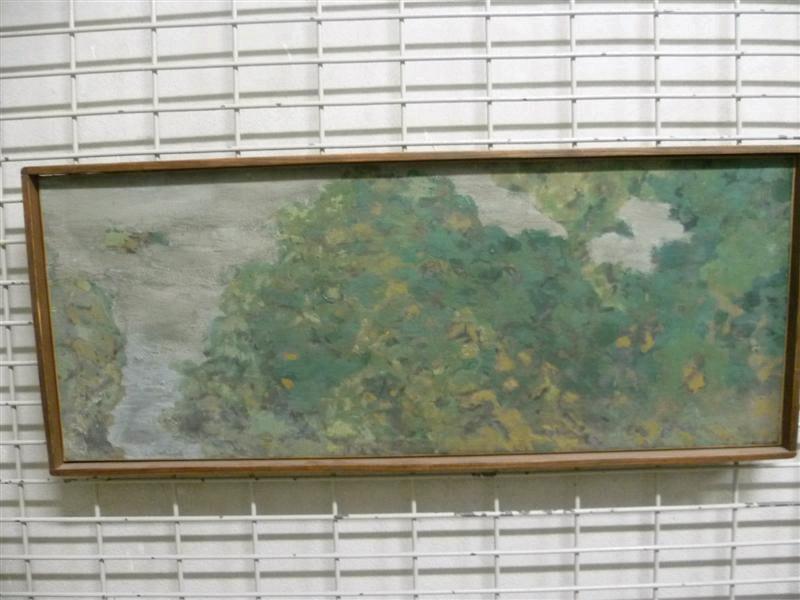
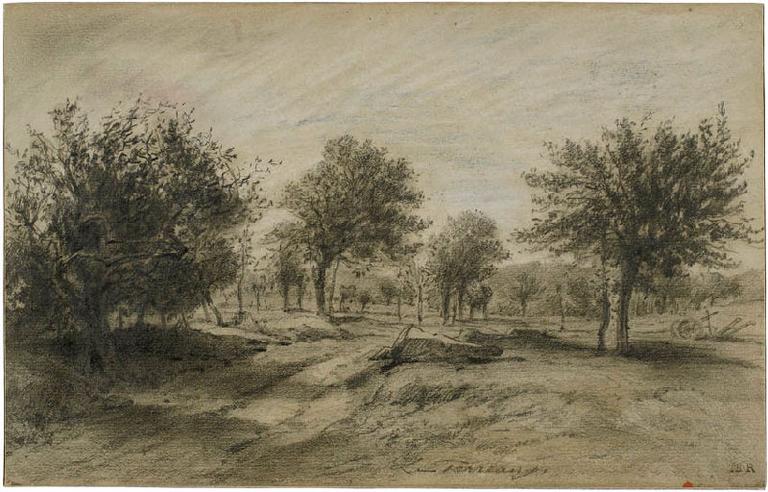
Les Terreaux
Será possível contemplá-la?
Desconhecido
Dijon, França
O proprietário é conhecido; não se sabe se hoje está exposta.
- Neste estado desde
- Fonte
- O museu
Sobre a obra
Nas palavras do museu — em francês
Pierre noire avec rehauts de craie sur papier
Museu de Belas Artes de Dijon
Pormenores
- Número de inventário
- DG 327 ; 194 (DG 1976)
O que mostra
No catálogo
Fontes
- Museu de Belas Artes de Dijon
- Imagem: Museu de Belas Artes de Dijon — © François Jay - musée des beaux-arts de Dijon; Ministère de la Culture (France), base Joconde
Entretanto, na vida de Théodore Rousseau
A vida inteira1831
Salon debut: a landscape of the Auvergne
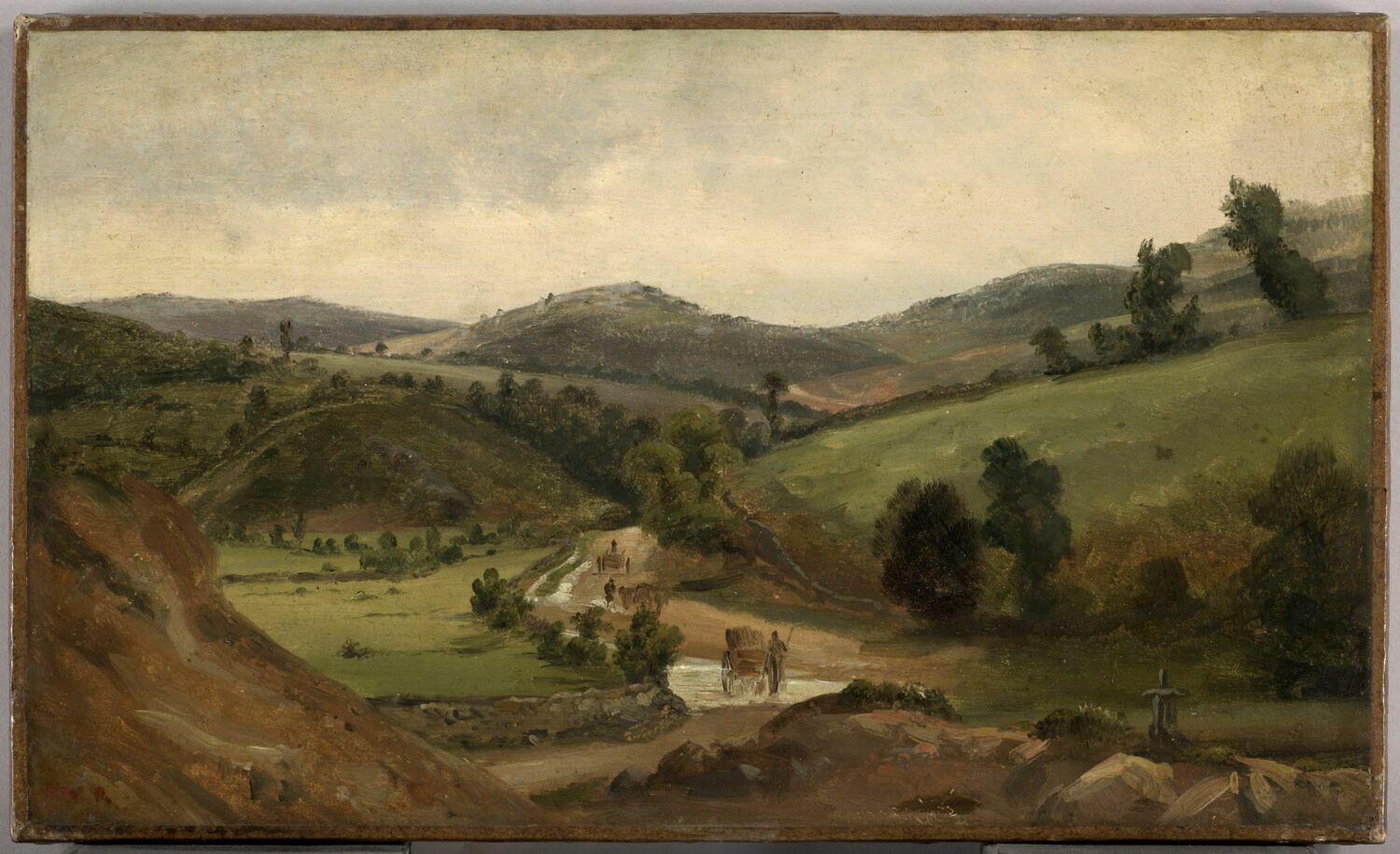
The nineteen-year-old Rousseau submitted work to the Paris Salon, and his landscape of the wild Auvergne won recognition for its lively brushwork. At the Salons of 1831, 1833, 1834 and 1835 he showed six works.
1831
Takes up aquatint
On Célestin Nanteuil's advice, in 1831 Rousseau studied the technique of aquatint. Besides painting he made original prints, including glass plates for photographic printing.
1832–1833
First paints outdoors
In 1832–1833 Rousseau first went out to paint en plein air. His painting is associated with the notion of the “intimate landscape”, its motifs supplied above all by the forest of Fontainebleau.
1836
The Salon rejects “Landscape of the Jura”
In 1836 the Salon jury rejected Rousseau's great work “Landscape of the Jura” (“The Descent of the Cattle”), and of the eight works he sent to the Salon between 1836 and 1841 none was accepted. By other accounts, the four Salons after his 1831 debut had already gone badly.
winter 1836 – 1837
First winter at Barbizon
Rousseau spent the winter of 1836–1837 at Barbizon with the painters Narcisse Díaz de la Peña and Théodore Caruelle d'Aligny; the nature there impressed him so deeply that from then on he came back every year. In time a circle of painters who, like him, painted nature from life gathered around him — Cabat, Daubigny, Dupré — and so the Barbizon school gradually took shape.
1836–1849
“Le grand refusé”
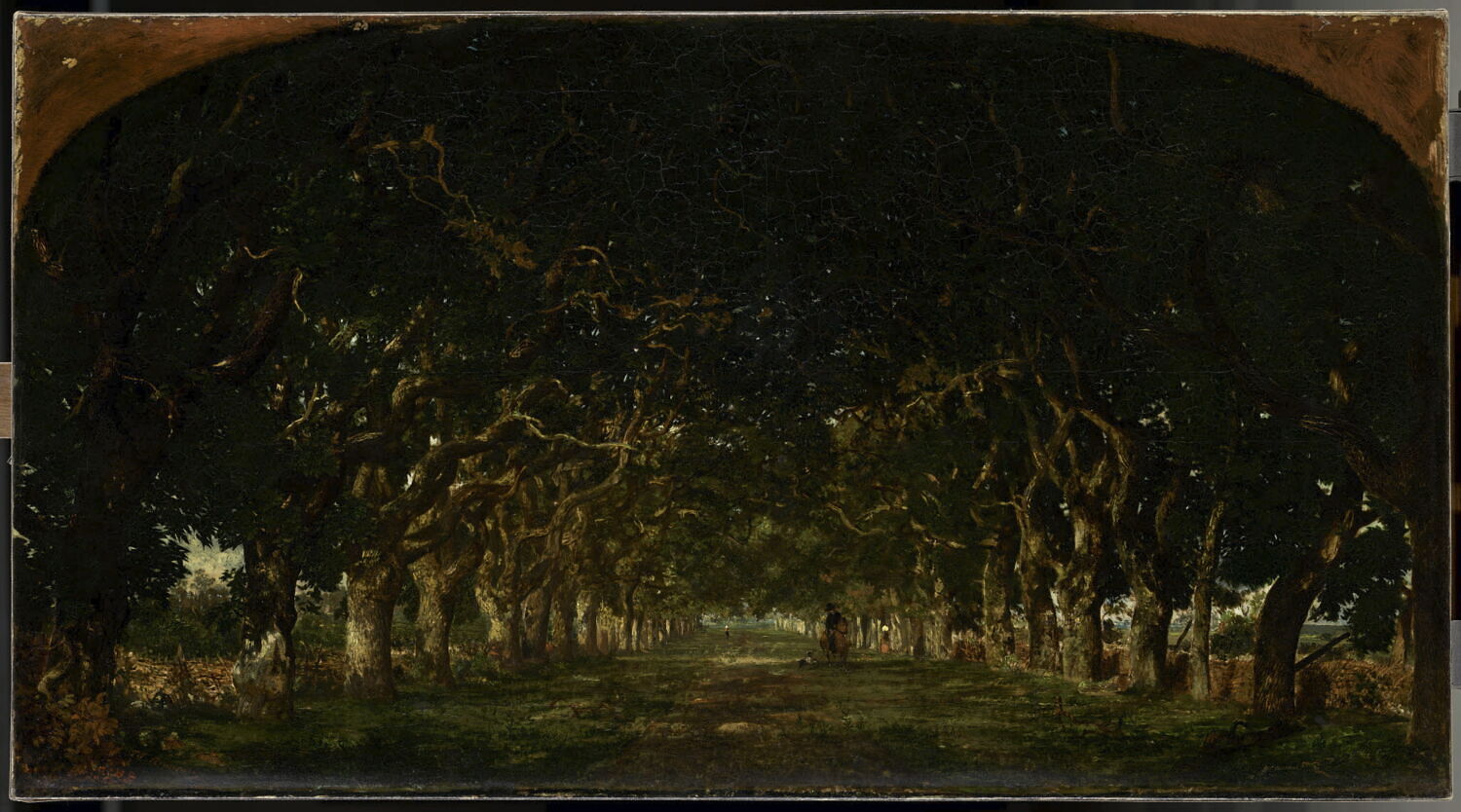
After 1841 Rousseau stopped sending work to the Salon until 1849; dubbed “le grand refusé”, he became known through the writings of his friend, the critic Théophile Thoré, while his father, who had at first regretted his son's forsaking business, sided with him in all his conflicts with the Salon. In these years of “artistic exile” Rousseau painted some of his best pictures: “The Chestnut Avenue”, “The Marsh in the Landes” (now in the Louvre) and “Hoar-Frost”.