 Johannes VermeerPaíses Baixos, 1632–1675
O Astrónomo
L'Astronome
Posso vê-la?
Sim, exposta agora
Onde está «O Astrónomo» hoje? Museu do Louvre, Salle 837, Aile Richelieu, Niveau 2, Paris. Sim, exposta agora. Verificado 26 de setembro de 2026.

Fechado· abre às 9:00
Exposta ao público.
- Verificado
- Neste estado desde
- Fonte
- O museu
Sobre a pintura
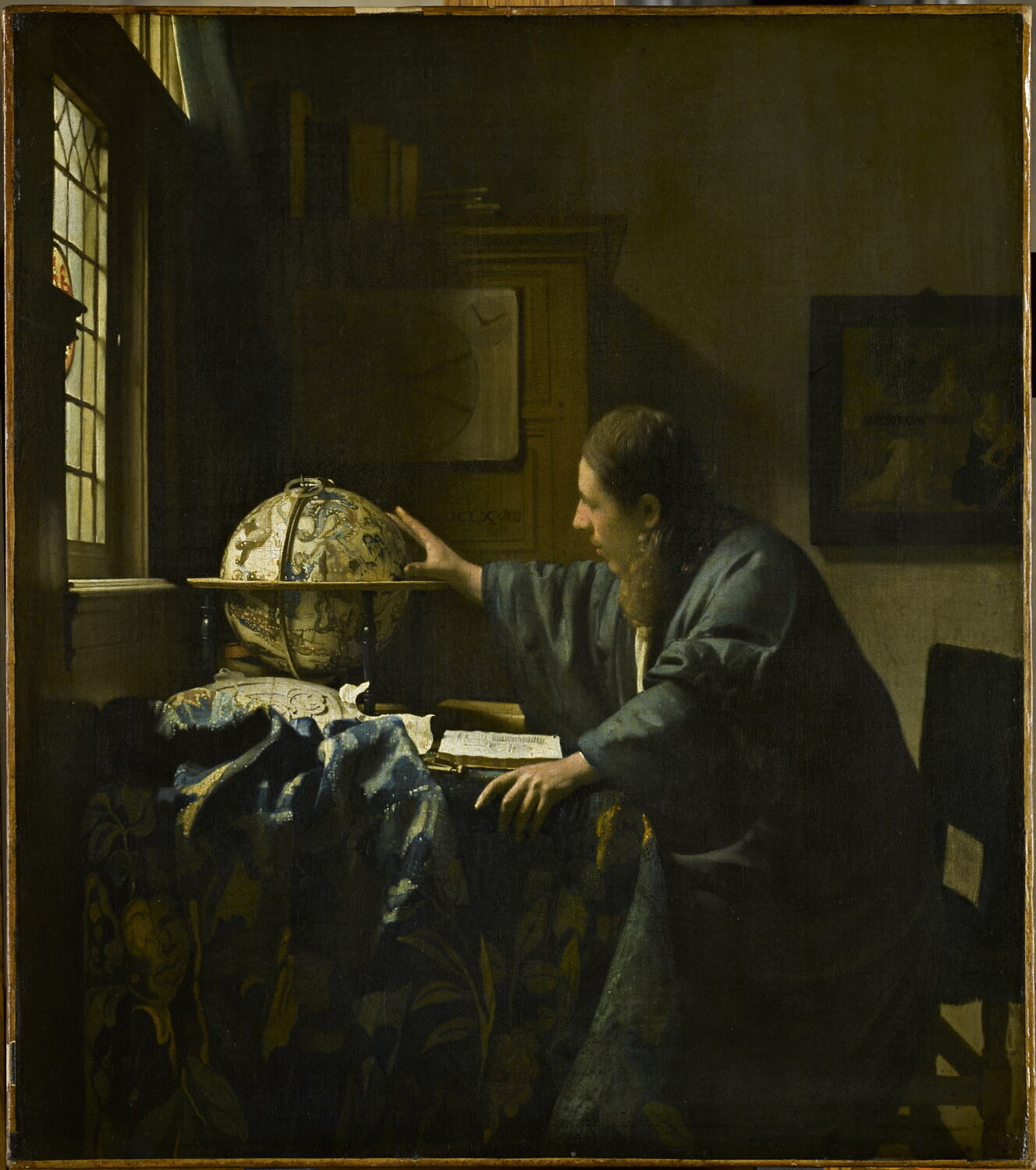
O Astrónomo (em neerlandês: De Astronoom) é uma pintura a óleo sobre tela do mestre holandês Johannes Vermeer, datada de 1668 e conservada no Museu do Louvre em Paris.
A obra está assinada e datada: "IV Meer MDCLXVIII", sendo uma das três obras datadas por Vermeer; a assinatura e a data estão registadas num dos lados visíveis do armário, ao nível da mão do cientista. Houve dúvidas no passado sobre a autenticidade da assinatura, pensando alguns críticos que tinha sido inserida a posteriori. Mas os dados técnicos publicados em 1997 parecem ter dissipado qualquer possível dúvida sobre a autenticidade da data e da assinatura do artista.
Pormenores
- Número de inventário
- RF 1983 28
No catálogo
Fontes
- Museu do Louvre
- Imagem: Museu do Louvre — © 2016 GrandPalaisRmn (musée du Louvre) / Franck Raux
Na vida de Johannes Vermeer
A vida inteira1653–1675 · Local de trabalho
Delft
1653–1675
Patrons: van Ruijven and van Buyten
Pieter van Ruijven and his wife Maria de Knuijt were Vermeer's patrons for the better part of his career: van Ruijven bought much of his output, which kept Vermeer afloat financially but reduced the chances of his fame spreading beyond Delft. The baker Hendrick van Buyten held a couple of his paintings as collateral.
1672
The “Year of Disaster”: war and the collapse of the market
In 1672 the Rampjaar, a severe economic downturn, struck the Dutch Republic after French troops under Louis XIV invaded from the south and troops from Münster and Cologne from the east. Vermeer's sale of a painting that year was his last, and five years passed before circumstances improved.
1672
To The Hague: appraising a collection for the Elector
In 1672 Vermeer, a recognised connoisseur, travelled to The Hague, where together with the painter Jacob Jordaens he appraised Venetian and Roman paintings offered to the Elector of Brandenburg for 30,000 guilders. Before a notary he denied the collection's authenticity and declared it worth no more than a tenth of the asking price.
1675
A sudden death in December 1675
Vermeer's widow wrote to the creditors that during the war he had been forced to sell paintings at a reduced price; falling into despondency, in December 1675 he lost consciousness and died a day and a half later. What exactly happened remains unclear.
1675
Died