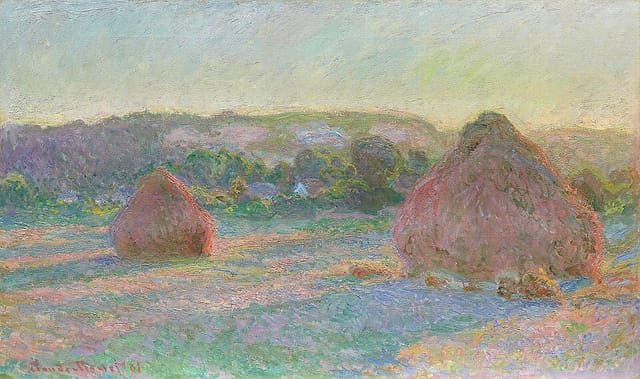
Grosz, GeorgeAlemanha, 1893–1959
Last Day
Será possível contemplá-la?
De momento, não recebe

Chicago, Estados Unidos
Pertence à coleção, mas de momento não está exposta.
- Verificado
- Neste estado desde
- Fonte
- O museu
Sobre a obra
Grosz left Germany only eighteen days before Hitler seized power in January 1933. Because of his relentless political satire and criticism of the state, he would undoubtedly have been the target of persecution and execution by the new Nazi regime. Between 1933, when he arrived in New York, and 1936, he worked on a series of watercolors representing his first impressions of the metropolis. The Last Day does seem to be based on the Manhattan skyline, but Grosz's treahnent of it is more a foreshadowing of his apocalyptic paintings of the late 1930s. Grosz mounted an exhibition of his watercolors at Alfred Stieglitz's An American Place gallery in 1934-35.
Art Institute of ChicagoCC BY 4.0
Pormenores
- Número de inventário
- 1970.118
No catálogo
Fontes
- Art Institute of Chicago
- Imagem: Art Institute of Chicago — © the artist or rights holder
Entretanto, na vida de Grosz, George
A vida inteira1928–1933 · Residência
Wilmersdorf
1932
An invitation to teach in New York
Bitterly anti-Nazi, Grosz accepts an invitation to teach the summer semester at the Art Students League of New York; in October 1932 he returns to Germany.
1933
A break with the past: a new style and subjects
In America Grosz resolves to make a clean break with his past and changes his style and subject matter: in place of his corrosive vision of the city he paints conventional nudes and many landscape watercolours. In his autobiography he writes that much that had frozen within him in Germany melted in America and that he deliberately destroyed a part of his past.
12 – 23 January 1933
Emigration to the United States
On 12 January 1933 Grosz and his family emigrate to the United States; their ship docks in New York on 23 January, a week before Hitler comes to power in Berlin.
1933–1945
His work is classed as “degenerate art”
In Nazi Germany Grosz's work is classed as 'degenerate art'.
1933–1955
Teaching at the Art Students League
Grosz teaches at the Art Students League of New York until 1955; his students include Romare Bearden, who was influenced by his collage style, Joseph Glasco and Robert Cenedella, whom he mentored from 1957 to 1959.
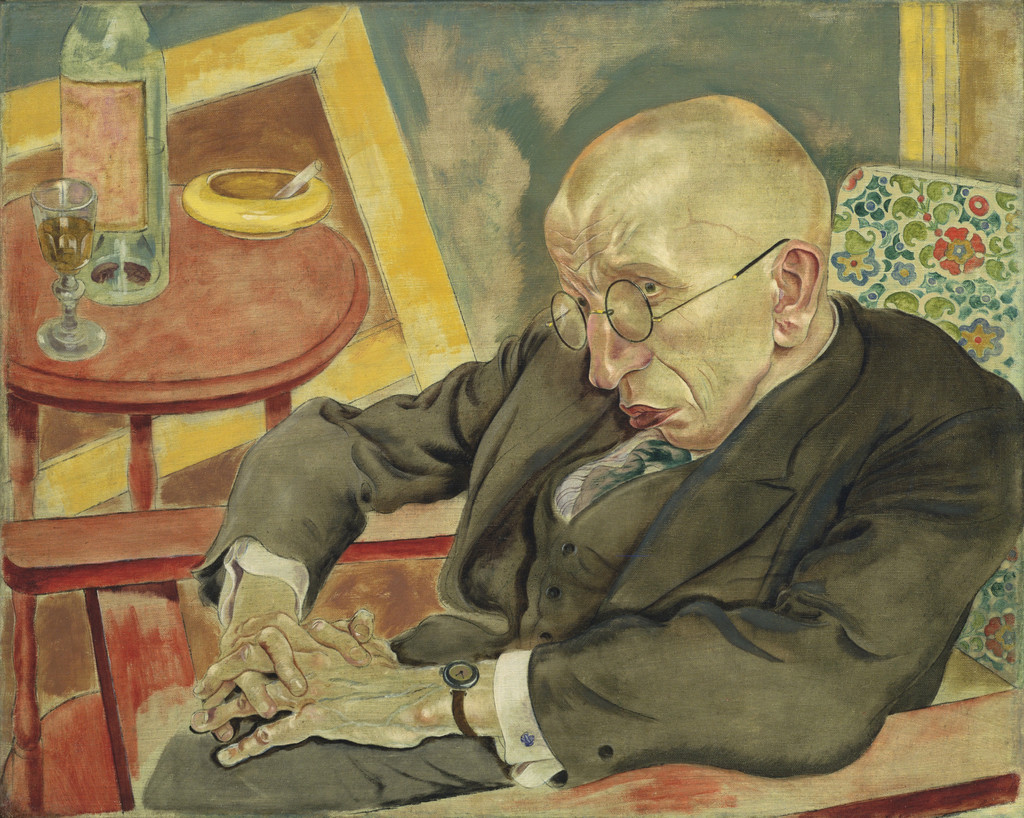
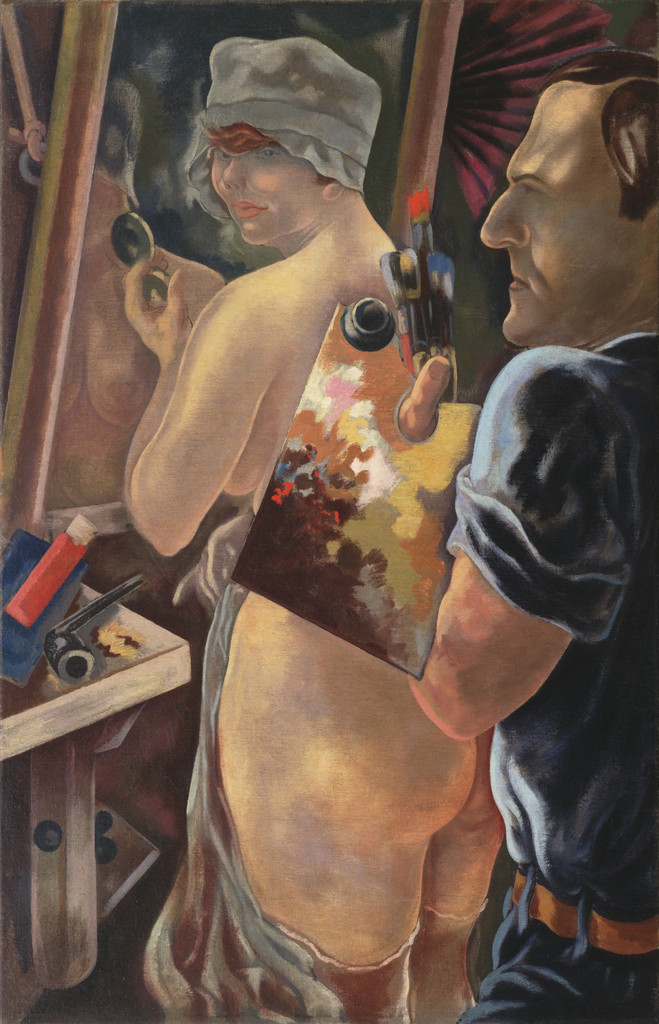

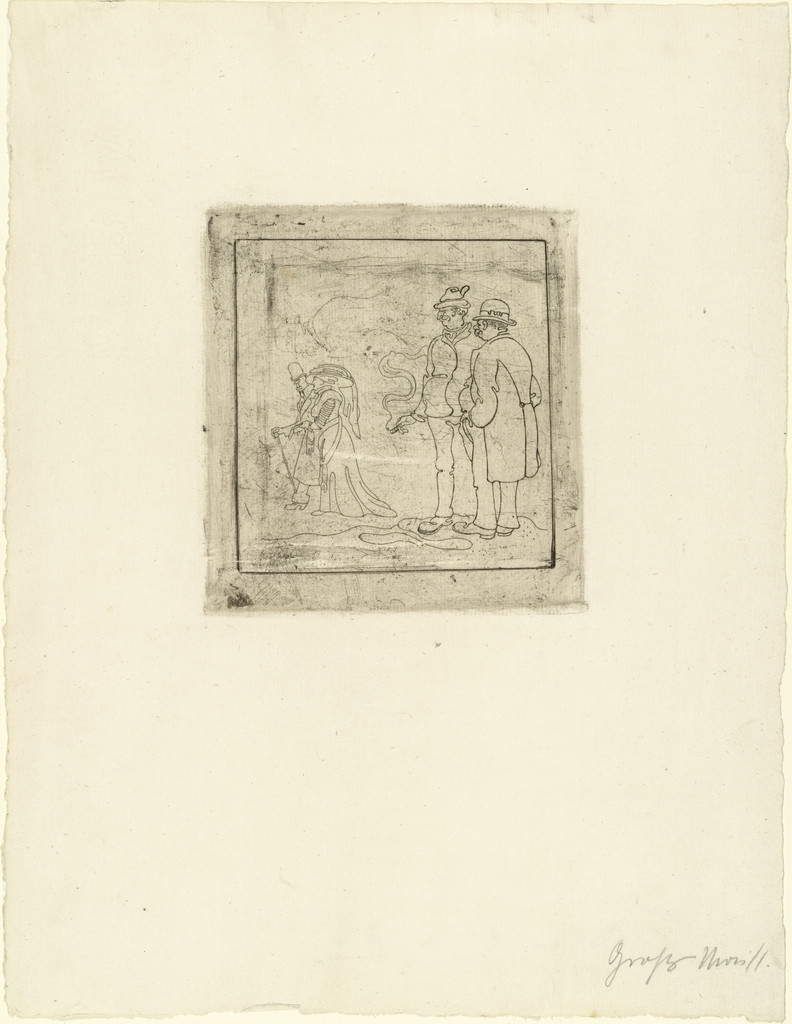

![The End of the Road (Out of Fear of Starvation) [Das Ende des Weges (Aus Nahrungssorgen)], George Grosz, 1913](https://www.moma.org/media/W1siZiIsIjEyMTkwNyJdLFsicCIsImNvbnZlcnQiLCItcmVzaXplIDEwMjR4MTAyNFx1MDAzZSJdXQ.jpg?sha=864379f3ce59af36)