 Lorenzo di CrediItália, 1459–1537
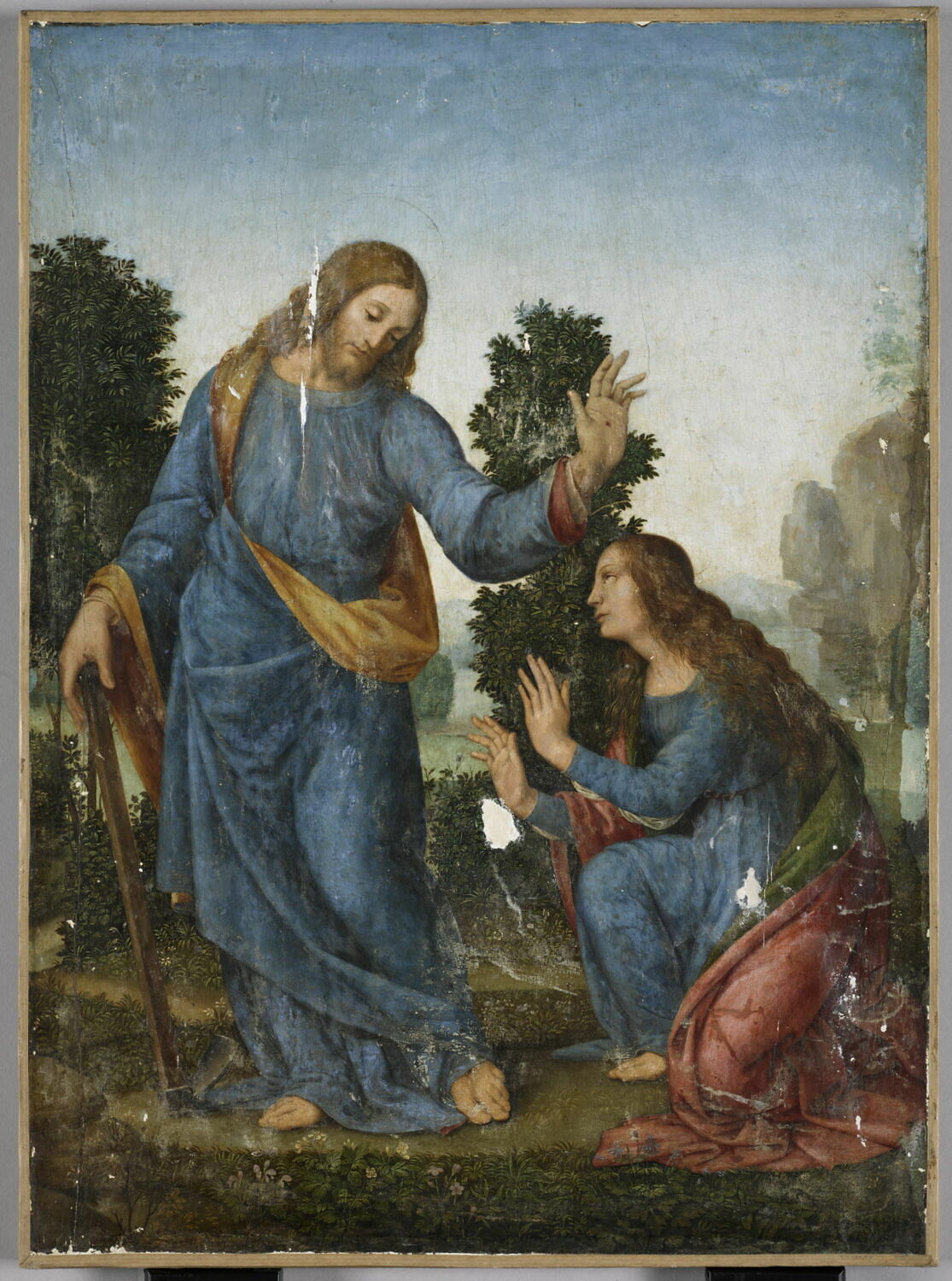
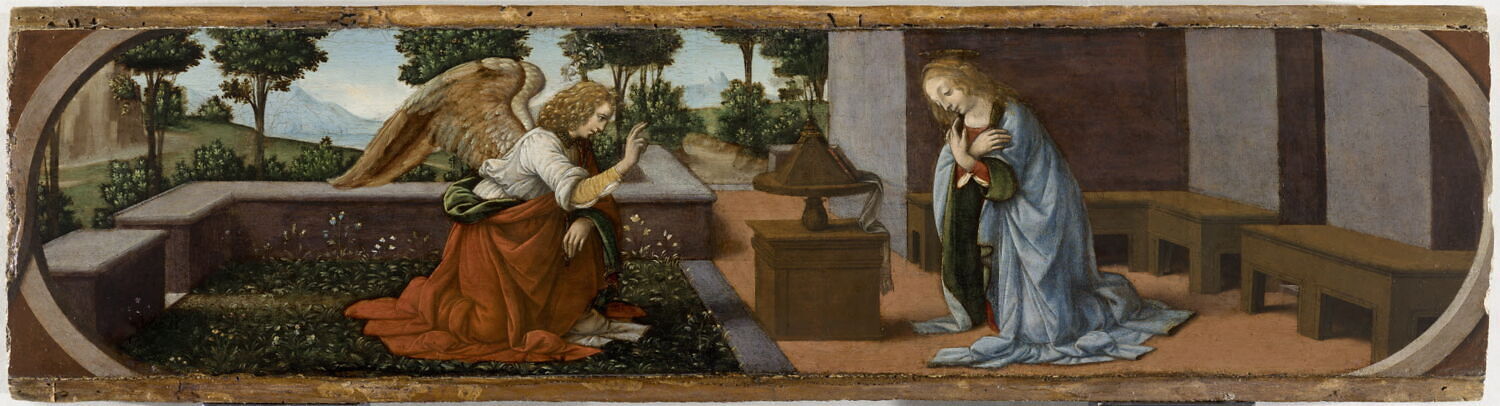
L'Annonciation
Será possível contemplá-la?
Sim, recebe visitas

Exposta ao público.
- Verificado
- Neste estado desde
- Fonte
- O museu
Sobre a pintura
Anunciação é uma pintura a óleo da autoria de Leonardo da Vinci, elaborada no período compreendido entre os anos de 1478 e 1482. A obra apresenta duas versões, sendo que a segunda está localizada no Museu do Louvre.
Ler mais
A obra mostra o momento em que o anjo Gabriel anuncia à Maria que ela está esperando o filho de Deus, no caso Jesus. Para retratar a cena, da Vinci se utilizou de cores solenes, que transferem seriedade para a obra. A virgem está retratada com um manto azul e o anjo Gabriel com um manto vermelho, cor esta até então pouco explorada nas obras de arte. A Virgem e o anjo estão inseridos em um ambiente que remete à calma e à paz, com a adoção da técnica de perspectiva. Para retratar os dois personagens da cena, o pintor se utilizou de traços naturalistas e seguindo a lógica da proporcionalidade corporal para aproximar o sagrado do profano, visando gerar empatia com os fiéis da igreja católica. O rosto de todos os personagens são proporcionais ao resto do corpo, seguindo conceitos aprimorados na época,
Pormenores
- Número de inventário
- MI 598
No catálogo
Fontes
- Museu do Louvre
- Imagem: Museu do Louvre — © 2023 GrandPalaisRmn (musée du Louvre) / Mathieu Rabeau
Entretanto, na vida de Lorenzo di Credi
A vida inteira1480/81
First recorded in Verrocchio's workshop
Having been taught first by his father, the goldsmith Andrea d'Oderigo, and then by Andrea del Verrocchio, he is first recorded in his master's workshop in 1480/81, on low wages. His fellow pupil in that workshop was Leonardo da Vinci, who considerably influenced his work.
1482–1483
Runs Verrocchio's workshop in the master's absence
Gradually becoming Verrocchio's principal assistant, he runs the workshop in 1482–1483 while the master is away.
1488
Verrocchio dies and Lorenzo inherits the workshop
Having become his master's principal assistant, he inherits Verrocchio's workshop on his death, when Lorenzo is still in his twenties. He largely continues Verrocchio's style and, according to Vasari, avoids large paintings, preferring smaller works with a meticulous finish.
1488
Venice: Verrocchio's body and the Colleoni statue
He brings his master's body from Venice, where Verrocchio died, back to Florence. Verrocchio's will recommends Lorenzo to the Venetian authorities to finish the equestrian statue of Bartolomeo Colleoni, which then existed only in clay; he transfers his rights to another artist, apparently a bronze technician, and several years later the statue is completed by the Venetian sculptor Alessandro Leopardi. By other accounts Lorenzo helped to finish the statue.
after 1497
A follower of Savonarola: turning away from worldly subjects
After 1497 he becomes a follower of the fiery monk Girolamo Savonarola and rejects worldly subjects: apart from portraits, there are no mythological subjects among his known works, except for a nearly nude Venus for the Medici family. In his mature years he also turns to the manner of Fra Bartolommeo, Perugino and the young Raphael, as the “Crucifixion” in Göttingen and the “Annunciation” in Cambridge show.