ART WIKI32 963 em exposição
MapaColeçãoArtistasMuseusExposiçõesRevista
Entrar

ART WIKI

Onde está a obra-prima, e a que horas se abre a porta.

Coleções: Art Institute of Chicago, Galeria Nacional de Arte, Galeria Tretiakov, Getty Villa, Harvard Art Museums, Hermitage, Hirshhorn Museum and Sculpture Garden, Instituto de Artes de Minneapolis, Museu de Arte de Cleveland, Museu de Arte Moderna, Museu do Louvre, Museu Estatal de Amesterdão, Museu J. Paul Getty, Museu Metropolitano de Arte, Museu Nacional de Arte da Dinamarca, Museu Pushkin, Museu Russo, Museu Smithsoniano de Arte Americana, Museu Vitória e Alberto, Museu Whitney de Arte Americana, National Museum of Asian Art, National Portrait Gallery, Catálogo Estatal do Fundo Museológico da Rússia (274 museus), Europeana (19 museus), Wikidata (6 museus), Paris Musées (12 museus) e Joconde, a base de museus do Ministério da Cultura de França (495 museus). As imagens pertencem aos titulares dos direitos.

Secções

  • Mapa
  • Pesquisa
  • Coleção
  • Obras-primas
  • Em exposição agora
  • Artistas

Mais

  • Museus e galerias
  • Exposições
  • Revista
  • De onde vêm os dados
  • Privacidade e cookies
InícioMapaCatálogo
  1. Coleção/
  2. Museu de Arte de Cleveland/
  3. Landscape with Wheelbarrow
Landscape with Wheelbarrow, Vincent van Gogh, 1883
Vincent van Gogh, retratoVincent van GoghPaíses Baixos, 1853–1890

Landscape with Wheelbarrow

1883 · watercolor and opaque watercolor with black chalk on cream paper

Será possível contemplá-la?

De momento, não recebe

Museu de Arte de Cleveland

Cleveland, Estados Unidos

Pertence à coleção, mas de momento não está exposta.

Verificado
há 3 dias
Neste estado desde
16 de ago. de 2026
Fonte
O museu
No mapaPágina do museu

Sobre a obra

Landscape with Wheelbarrow is a watercolor on cream wove paper painting by the Dutch Post-Impressionist painter Vincent van Gogh. In 1883, Van Gogh painted a vast piece of land in emerald and chartreuse-like colors accompanied by a lonesome wheelbarrow in the middle ground along with red roofed cottages on the horizon line. The painting is accented with graphite. It is now in the Cleveland Museum of Art, Ohio.

Wikipédia · CC BY-SA

Nas palavras do museu

In September 1883 Van Gogh left the bustling Dutch city of The Hague in search of open countryside in which to paint. He moved to Drenthe, a village in northeastern Netherlands that was virtually untouched by the Industrial Revolution. He described the barren terrain as supremely beautiful and serene: "What tranquility, what expanse, what calmness in this nature." With a limited palette of steely greens and cool blues, Van Gogh masterfully portrayed one of the region’s expanses of heath—"a vast plane vanishing into infinity"—illuminated by the lilac hues of the evening sky.

Museu de Arte de Cleveland

Pormenores

1883 · aos 30 anos
18531890
Número de inventário
1958.30

No catálogo

Desenhos e aguarelasImpressionismoSéculo XIXPaíses Baixos

Fontes

  • Museu de Arte de Cleveland
  • Imagem: Museu de Arte de Cleveland — CC0 (Cleveland Museum of Art Open Access)

Entretanto, na vida de Vincent van Gogh

A vida inteira
  1. late 1881

    Lessons with Anton Mauve

    His second cousin Anton Mauve, the successful artist Van Gogh longed to be, took him on as a student and introduced him to watercolour. Within weeks they fell out, possibly over drawing from plaster casts.

  2. August 1881

    Proposes to his cousin Kee: “No, nay, never”

    His recently widowed cousin Cornelia “Kee” Vos-Stricker, seven years his senior, came to stay in Etten with her eight-year-old son. To everyone's surprise Van Gogh declared his love and proposed; she refused: “No, nay, never.”

  3. 1882

    His first paintings in oil

    Soon after three weeks in hospital in June 1882, Van Gogh painted in oils for the first time, with paints bought on money borrowed from Theo, and was surprised at how good the results were. In August Theo gave him money for materials to work en plein air, and Vincent wrote that he could now “go on painting with new vigour”.

  4. late January 1882

    Life with Sien Hoornik

    Van Gogh met Clasina Maria “Sien” Hoornik, a pregnant prostitute with a five-year-old daughter, and set up home with her; on learning of it, Mauve stopped answering his letters. His father pressed him to abandon Sien, and in 1883 Vincent left her and the children.

  5. 26 March 1885

    Death of his father

    The artist's father, the minister Theodorus van Gogh, died of a heart attack.

  6. August 1885

    First public showing, in shop windows in The Hague

    Van Gogh's work was publicly exhibited for the first time, in the shop windows of the dealer Leurs in The Hague.
Mais obras de Vincent van Gogh

Todas as obras
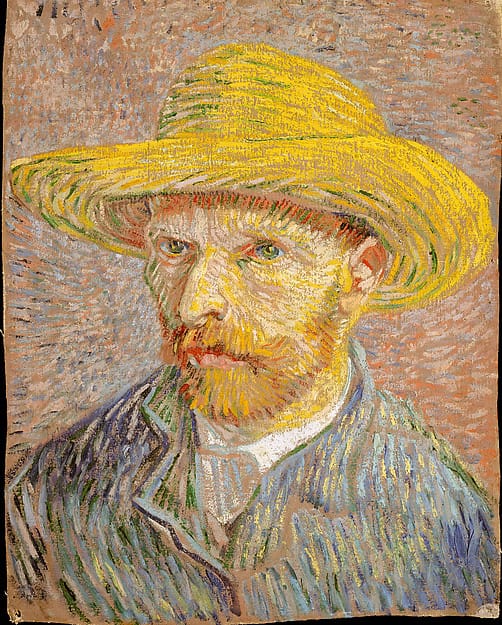
Self-Portrait with a Straw Hat (obverse: The Potato Peeler), Vincent van Gogh, 1887

Self-Portrait with a Straw Hat (obverse: The Potato Peeler)

1887 · Museu Metropolitano de Arte

Self-portrait, Vincent van Gogh, 1887

Self-portrait

1887 · Museu Estatal de Amesterdão

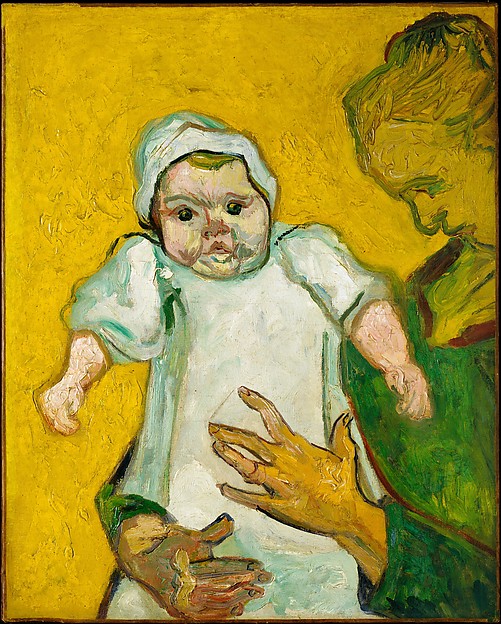
Madame Roulin and Her Baby, Vincent van Gogh, 1888

Madame Roulin and Her Baby

1888 · Museu Metropolitano de Arte

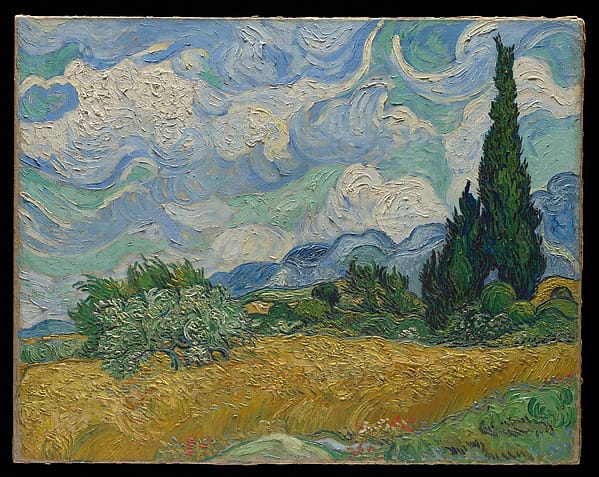
Wheat Field with Cypresses, Vincent van Gogh, 1889

Wheat Field with Cypresses

1889 · Museu Metropolitano de Arte

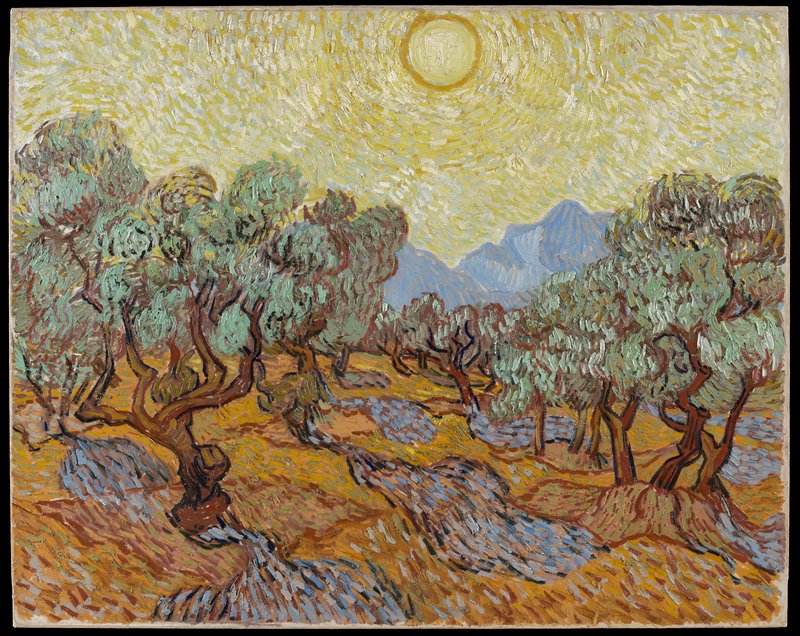
Olive Trees, Vincent van Gogh, 1889

Olive Trees

1889 · Instituto de Artes de Minneapolis

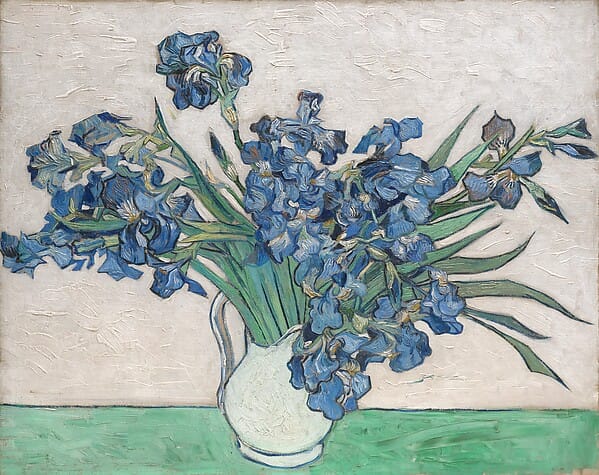
Irises, Vincent van Gogh, 1890

Irises

1890 · Museu Metropolitano de Arte

Het Singel bij de Lutherse Kerk te Amsterdam, Vincent van Gogh, 1885

Het Singel bij de Lutherse Kerk te Amsterdam

1885 · Museu Estatal de Amesterdão

The Potato Peeler (reverse: Self-Portrait with a Straw Hat), Vincent van Gogh, 1885

The Potato Peeler (reverse: Self-Portrait with a Straw Hat)

1885 · Museu Metropolitano de Arte

Vizinhas de sala: Museu de Arte de Cleveland

Página do museu
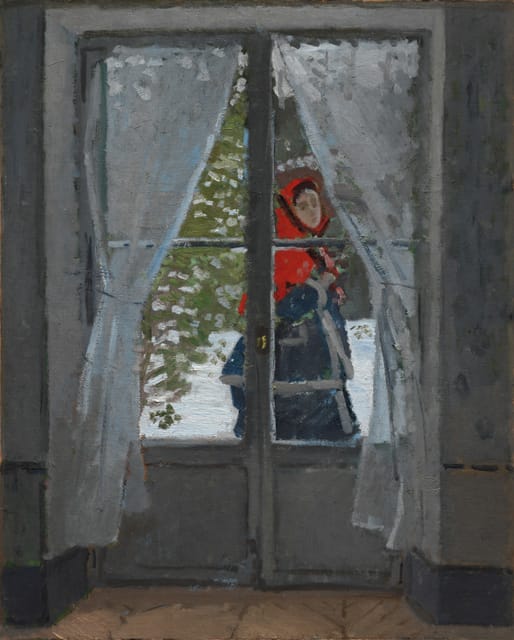
The Red Kerchief, Claude Monet, c. 1868–73

Claude Monet

The Red Kerchief, c. 1868–73

Melencolia I, Albrecht Dürer, 1514

Albrecht Dürer

Melancolia I, 1514

The Virgin and Child with the Pear, Albrecht Dürer, 1511

Albrecht Dürer

The Virgin and Child with the Pear, 1511

The Nativity, Albrecht Dürer, probably c. 1509/1510

Albrecht Dürer

The Nativity, probably c. 1509/1510

The Virgin and Child on a Crescent with a Starry Crown, Albrecht Dürer, 1508

Albrecht Dürer

The Virgin and Child on a Crescent with a Starry Crown, 1508

The Lamentation, Albrecht Dürer, 1507

Albrecht Dürer

The Lamentation, 1507

Large Horse, Albrecht Dürer, 1505

Albrecht Dürer

Large Horse, 1505

Nemesis (The Great Fortune), Albrecht Dürer, c. 1501/1502

Albrecht Dürer

Nemesis (The Great Fortune), c. 1501/1502