 Dirck van der LissePaíses Baixos, 1607–1669
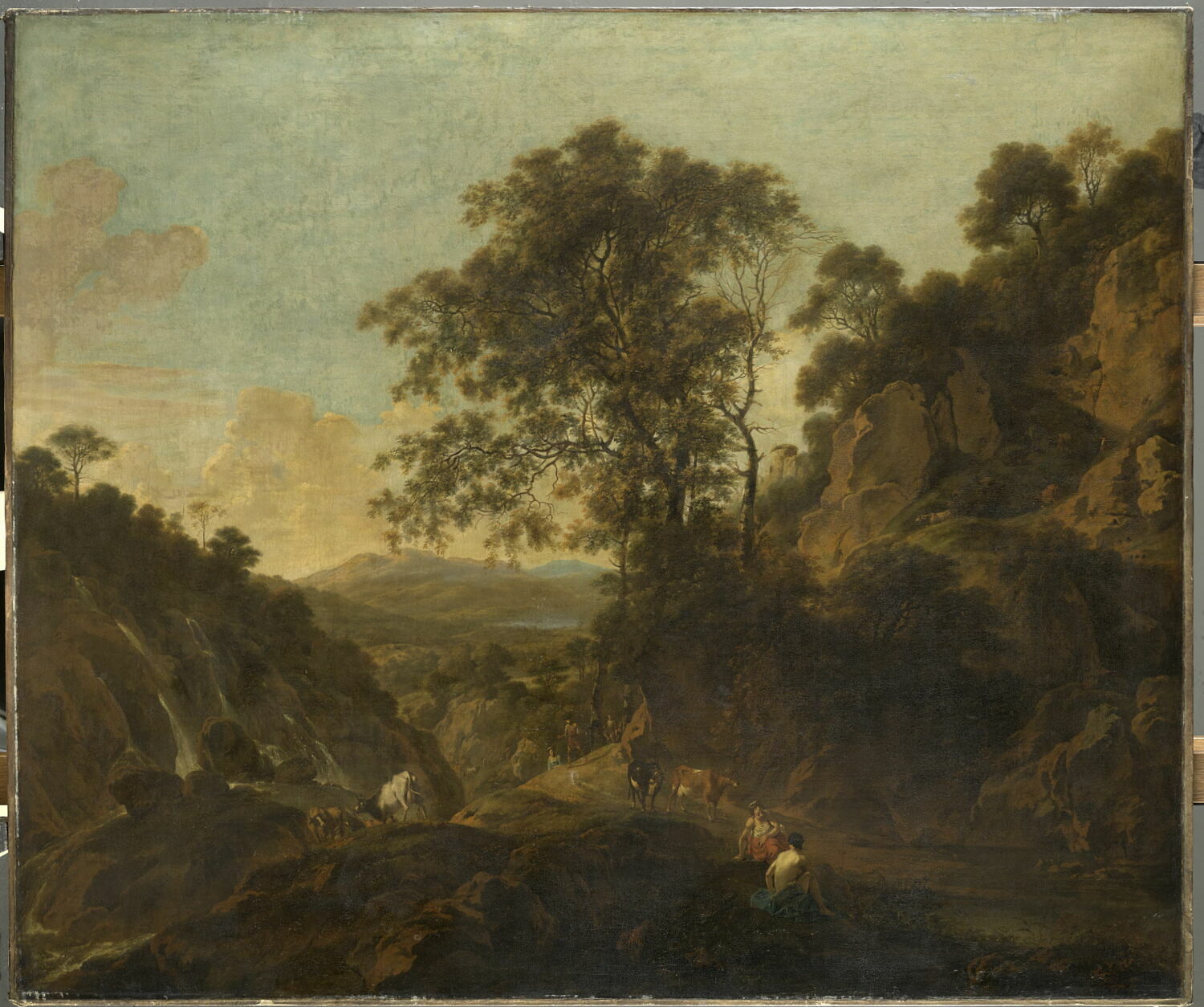
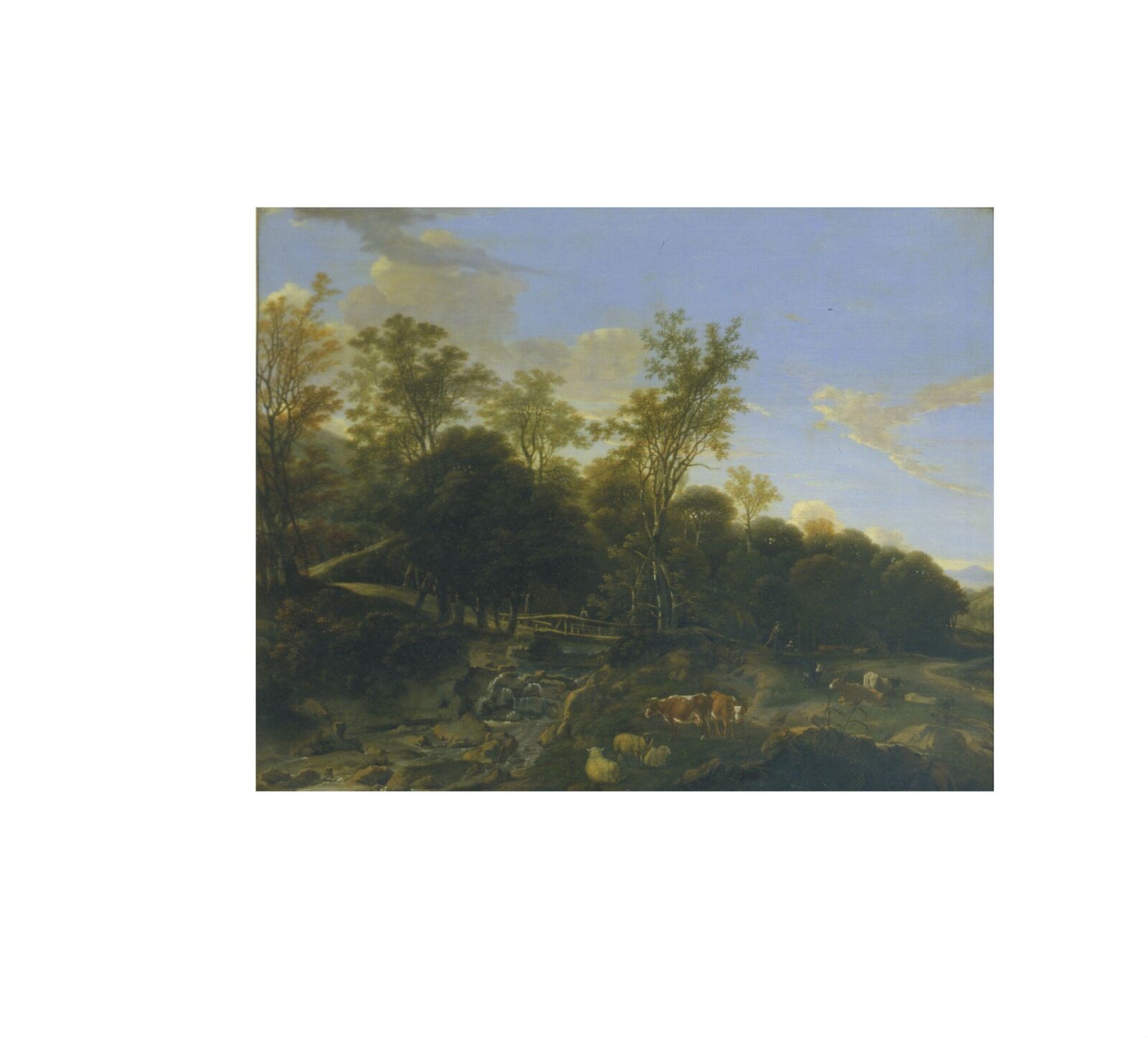
Landscape with Rustic Bridge and Cattle
Posso vê-la?
Desconhecido
Onde está «Landscape with Rustic Bridge and Cattle» hoje? Coleção: Museu Vitória e Alberto, Londres. Desconhecido.

Londres, Reino Unido
O proprietário é conhecido; não se sabe se hoje está exposta.
- Neste estado desde
- Fonte
- O museu
Sobre a pintura
Dirck van der Lisse (ca. 1607-1669) trained under the Utrecht landscape painter Cornelis van Poelenburgh (1594-1667) and moved in 1639 to The Hague where he was a founder-member of the painters' confraternity Pictura in 1656. He became Burgomaster of the city in 1660.
Ler mais
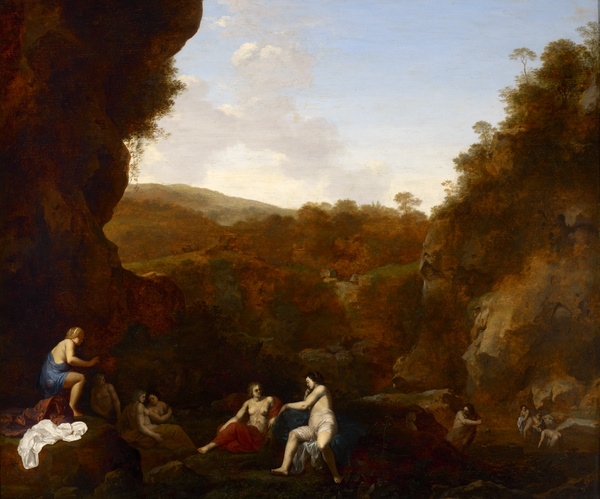
This painting is a good example of the Dutch Italianate landscape painter Dirck van der Lisse. He often represents hilly wooden landscapes bathed in a warm sunlight with few figures and cattle, one of his favourite subjects being bathing nymphs. This landscape shows in a mere Dutch tradition ordinary people involved in a daily activity such as looking after the cattle and going on errands through the country. His work is distinguished by a yellow-golden palette that is used here through the subtle use of yellowish greens and reddish browns in the vegetation and the ground. These tones are echoed in the brownish colour of the cows' hides and in the golden yellow of the sheep's fleeces. The path leading to the rustic bridge and vanishing into the woods also structures the whole composition which is balanced by a lighter distant mountain in the far right. Therefore, despite the filled vegetation, the artist managed to provide his picture with a deep sense of space and expansiveness which is typical of Dutch Italianate landscape painters.
Museu Vitória e Alberto
Pormenores
- Número de inventário
- 578-1882
O que mostra
No catálogo
Fontes
- Museu Vitória e Alberto
- Imagem: Museu Vitória e Alberto — © Victoria and Albert Museum, London
Na vida de Dirck van der Lisse
A vida inteira1635–1640 · Local de trabalho
The Hague
1640 · Local de trabalho
Utrecht
1642 · Local de trabalho
Amsterdam
1644–1669 · Local de trabalho
The Hague