Jack WhittenEstados Unidos, 1939–2018
Khee II
Dá para ver?
Não está exposta no momento
Onde está “Khee II” hoje? Coleção: Art Institute of Chicago, Chicago. Não está exposta no momento. Verificado 23 de novembro de 2026.

Chicago, Estados Unidos
Pertence à coleção, mas no momento não está exposta.
- Verificado
- Com este status desde
- Fonte
- O museu
Sobre a pintura
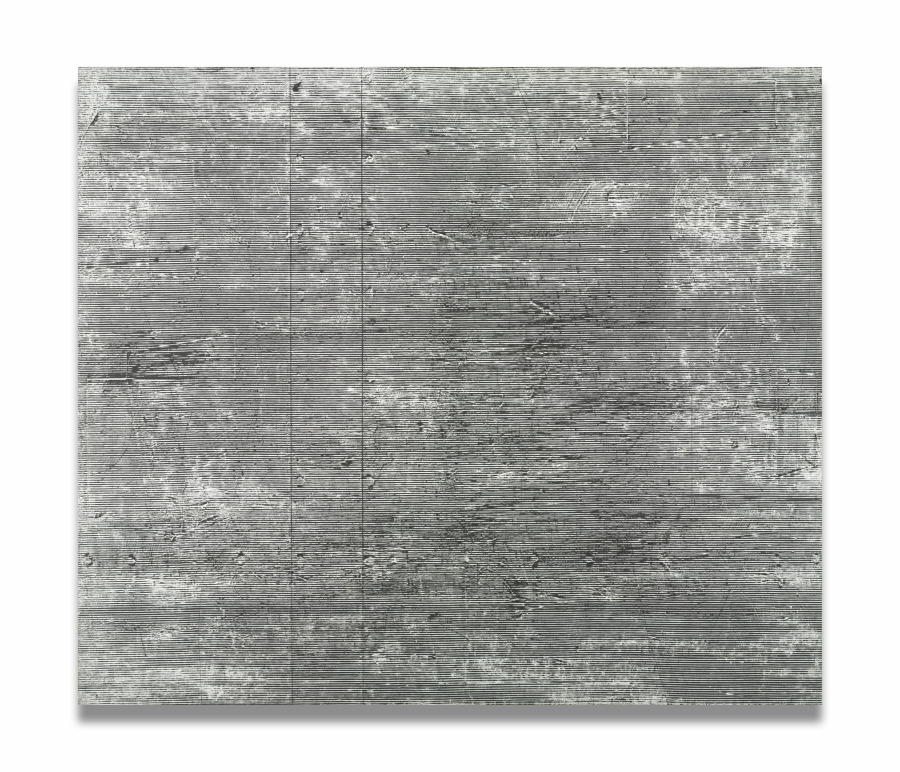
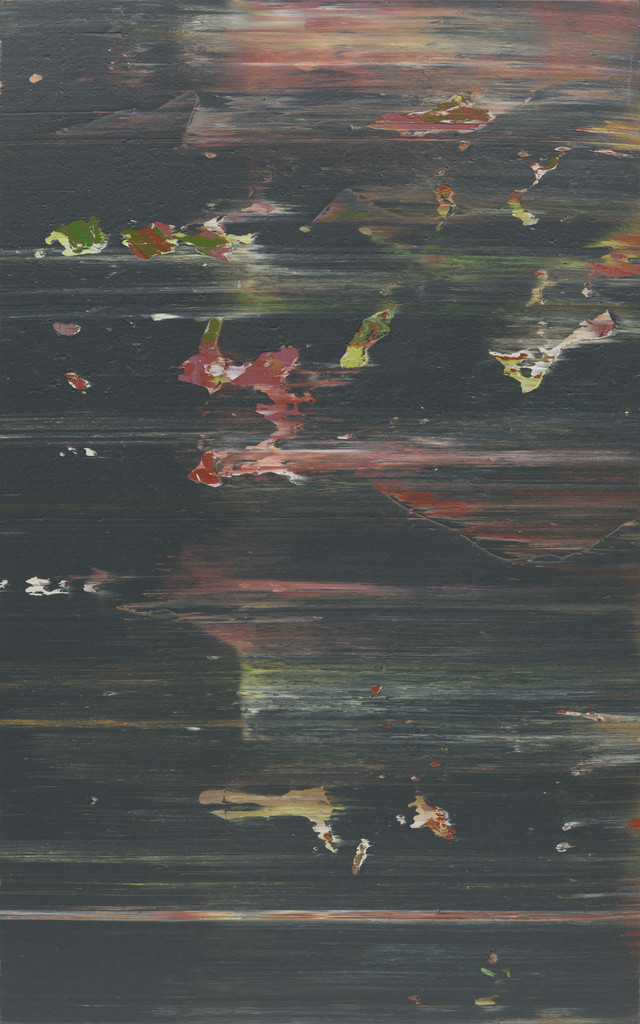
Jack Whitten made Khee II in 1978 through a process of pressure and dissolving paper; it is at the Art Institute of Chicago, Chicago. He put flat objects beneath the canvas, coated its surface with gesso and added sheets of coloured Japanese rice paper. As the paper dissolved, pigment remained. A rake or another notched implement dragged across the top pressed the hidden shapes into the canvas and spread the colour. Faint images emerge among alternating coloured bands. Whitten called his tool a developer, borrowing a term from photography.
Nas palavras do museu
In the early 1960s, as a young student in New York, Jack Whitten established ties with an older generation of black artists that included Romare Bearden and Jacob Lawrence, as well as with leading Abstract Expressionists such as Willem de Kooning, Ad Reinhardt, and Franz Kline. During the second half of the decade, Whitten began working toward an entirely unique relationship to painting that he described in this way: “About 1965 I wrote on my studio wall one day, the image is photographic; I must photograph my thoughts.” By 1970 the artist had eliminated both expressive color and figuration from his work, launching a ten-year series of paintings that capture, like a camera, the often chance-based immediacies of his dynamic studio process.
Ler mais
Khee II exhibits all the hallmarks of Whitten’s mature process-derived paintings. As with other works from this period, the artist placed a variety of flat, shaped objects beneath the canvas. After preparing the surface with gesso, he layered it with thin sheets of colored Japanese rice paper. The rice paper dissolved, leaving behind pure pigment. Whitten then pulled a rake or other notched tool—which he calls a “developer,” in obvious reference to a photographer’s chemicals—across the work’s surface. This served both to impress the shapes from below, effectively embossing the canvas, and to disperse color on top of it. The result is a series of ghostlike images and alternating rows of color that vibrate with subtle luminosity. This is a glowing evocative abstract painting that is also a layer-by-layer document of its own making.
Art Institute of ChicagoCC BY 4.0
Detalhes
- Número de inventário
- 2013.123
O que mostra
No catálogo
Fontes
- Art Institute of Chicago
- Imagem: Art Institute of Chicago — © the artist or rights holder