 Ivan Bilibin1876–1942
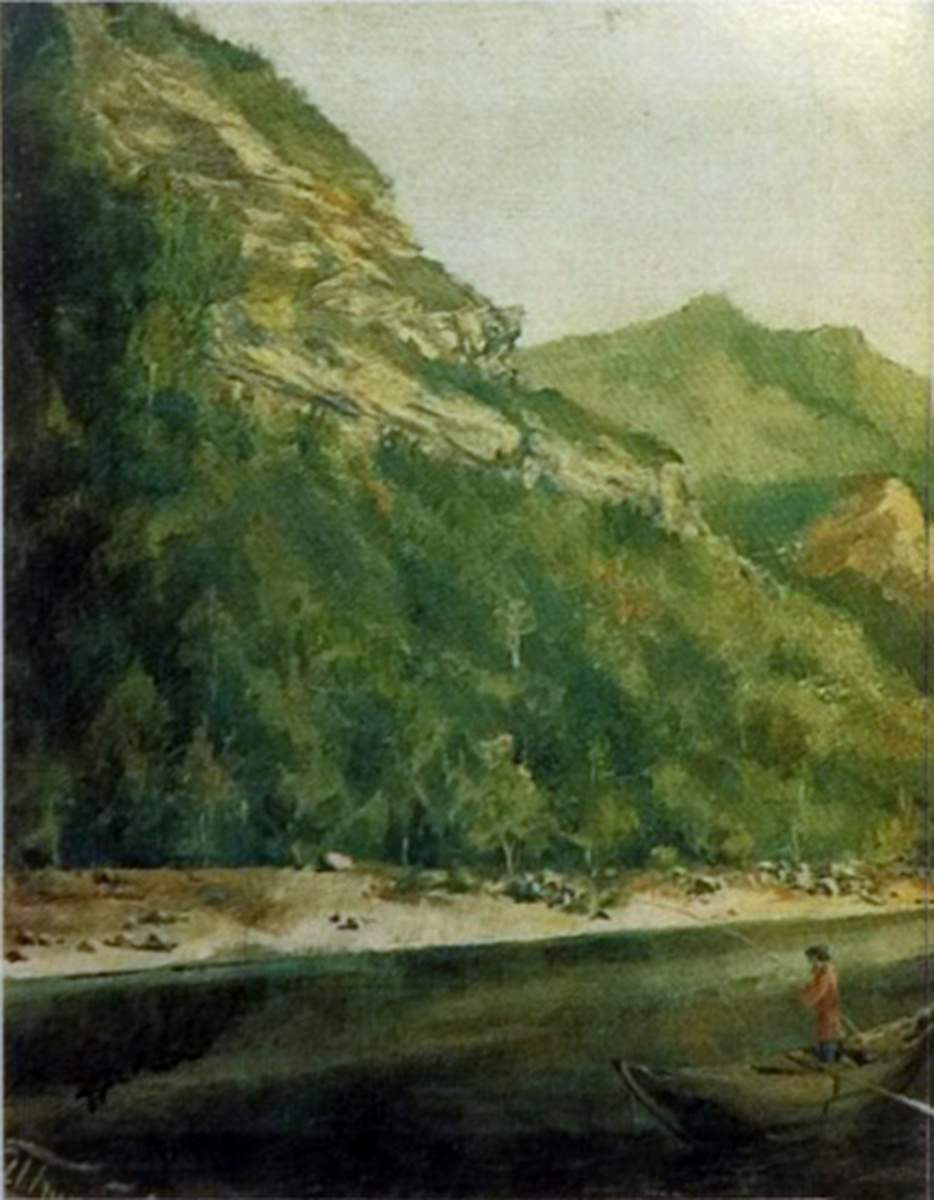
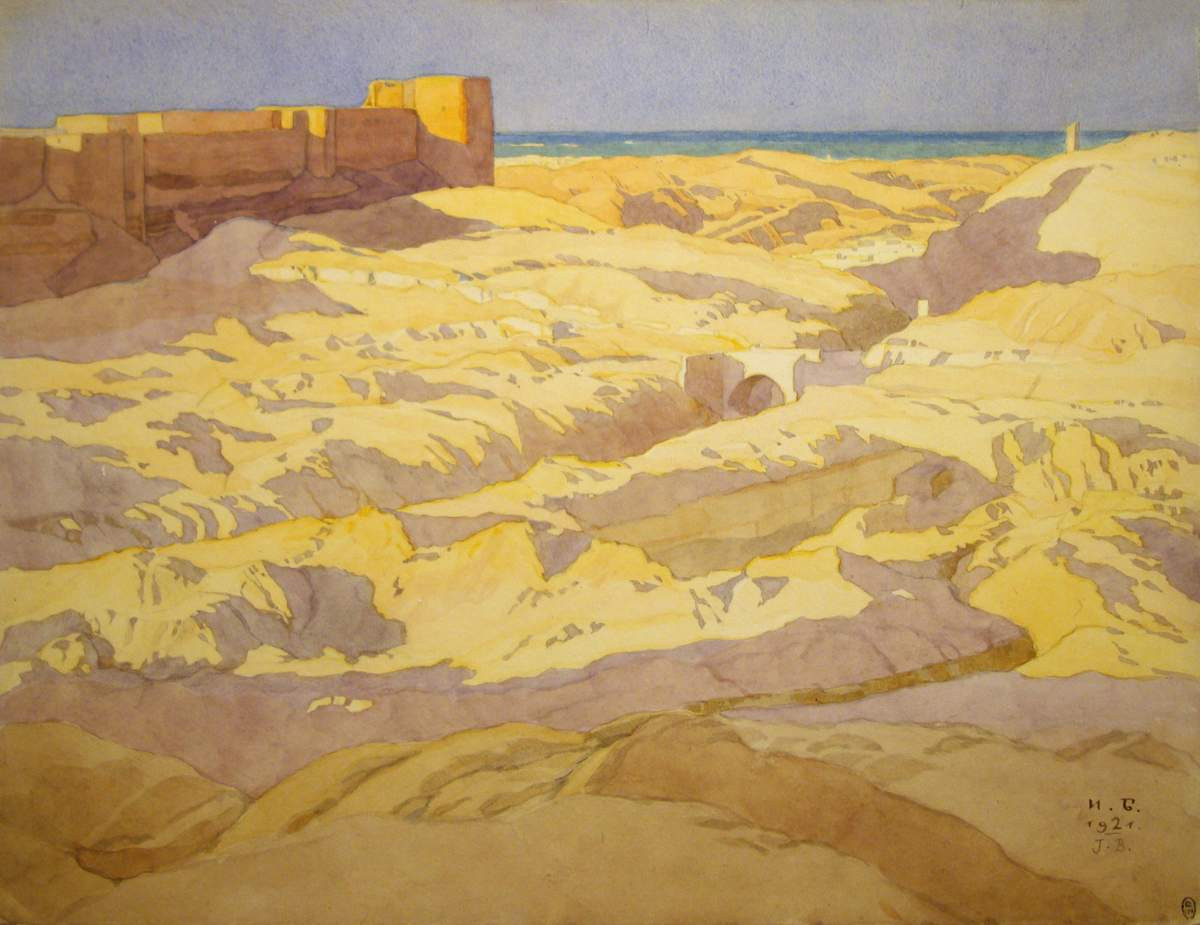
Каир. Цитадель
Será possível contemplá-la?
Desconhecido

São Petersburgo, Rússia
O proprietário é conhecido; não se sabe se hoje está exposta.
- Neste estado desde
- Fonte
- O museu
Pormenores
- Número de inventário
- РС-4080
O que mostra
No catálogo
Fontes
- Museu Russo
- Imagem: Museu Russo — © State Russian Museum
Entretanto, na vida de Ivan Bilibin
A vida inteiraOctober – December 1919
With the retreating Whites to Rostov and Novorossiysk
In October 1919 Bilibin moved from Crimea to Rostov-on-Don, and in December, with the retreating White Army, he ended up in Novorossiysk.
21 February 1920
Evacuated from Novorossiysk aboard the Saratov
Bilibin was evacuated from Novorossiysk aboard the steamer Saratov; because of sick passengers the refugees were landed neither at Constantinople nor at Famagusta in Cyprus, and the ship sailed on to Egypt.
1920
Settles in Cairo: the Byzantine style for the Greeks
Having arrived in Alexandria on 13 March and passed through quarantine and the British refugee camp at Tell el-Kebir, in May Bilibin settled in Cairo and worked for the Greek colony on icons, frescoes and panels in the Byzantine style. He painted Egyptian landscapes and studied Egyptian, Coptic and Arab art, enraptured by the 'head-spinning ornamentation' of the mosques.
1923
Marries Aleksandra Shchekatikhina-Pototskaya
Bilibin married the porcelain painter Aleksandra Shchekatikhina-Pototskaya, who had joined him in Cairo with her son Mstislav. In 1922 he had written to Maria Chambers asking for a divorce so that he could remarry; she did not reply, but by 1923 they were divorced.