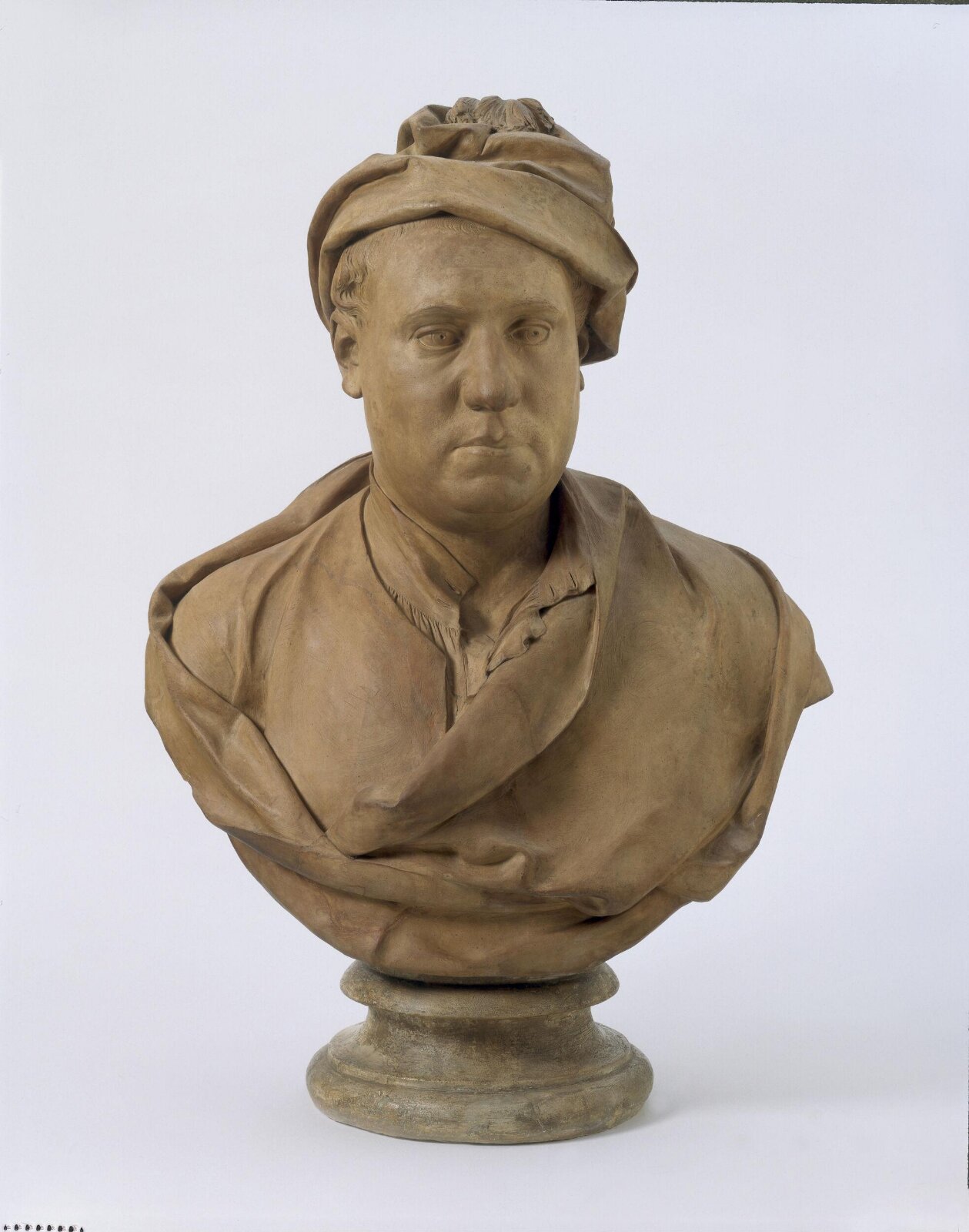
 Louis François RoubiliacFrança, 1695–1762
Jonathan Tyers
Posso vê-la?
Sim, exposta agora
Onde está «Jonathan Tyers» hoje? Museu Vitória e Alberto, British Galleries, Room 52, The George Levy Gallery, Londres. Sim, exposta agora. Verificado 12 de outubro de 2026.

Fechado· abre às 10:00
Exposta ao público.
- Verificado
- Neste estado desde
- Fonte
- O museu
Sobre a escultura
Object Type
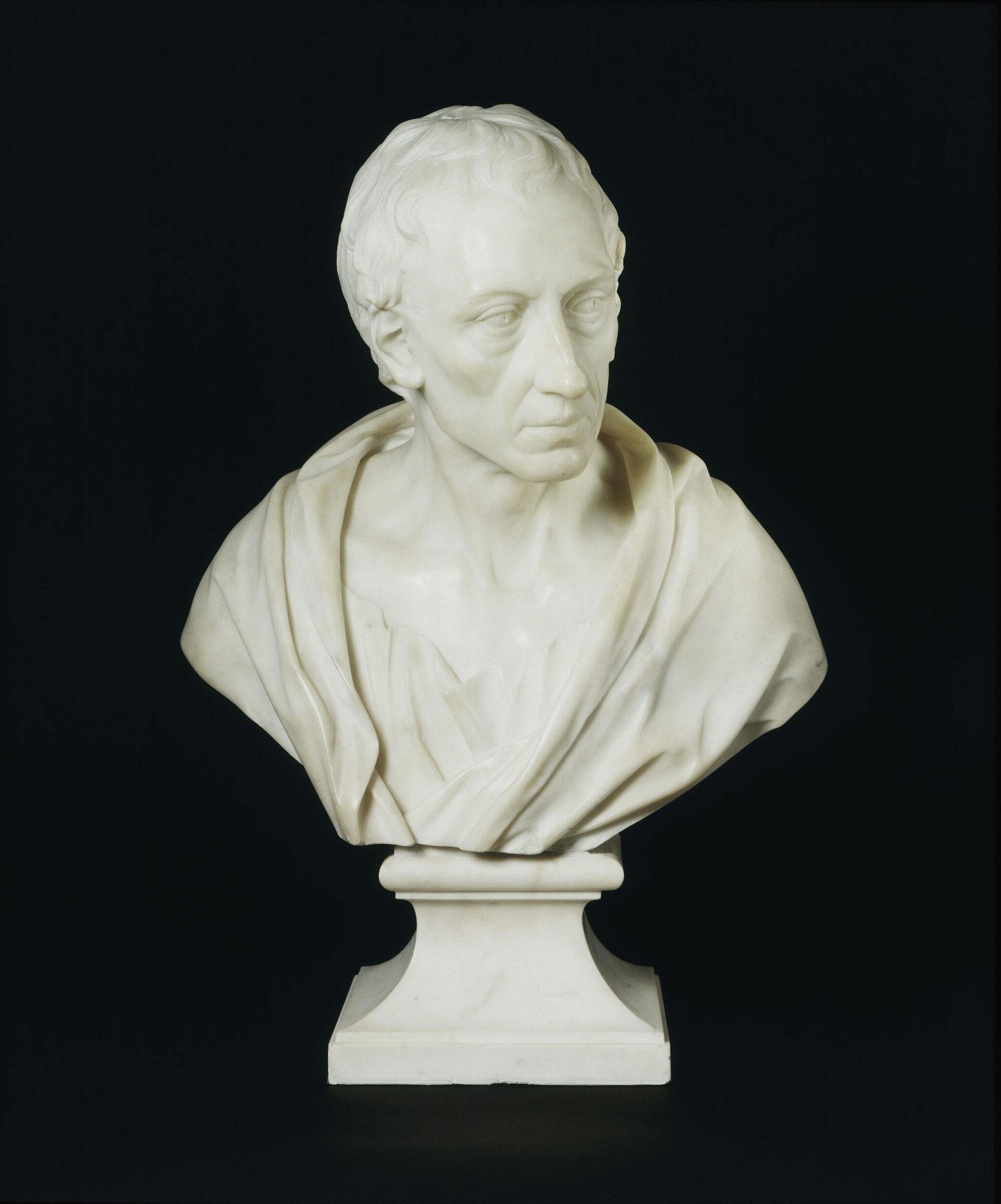
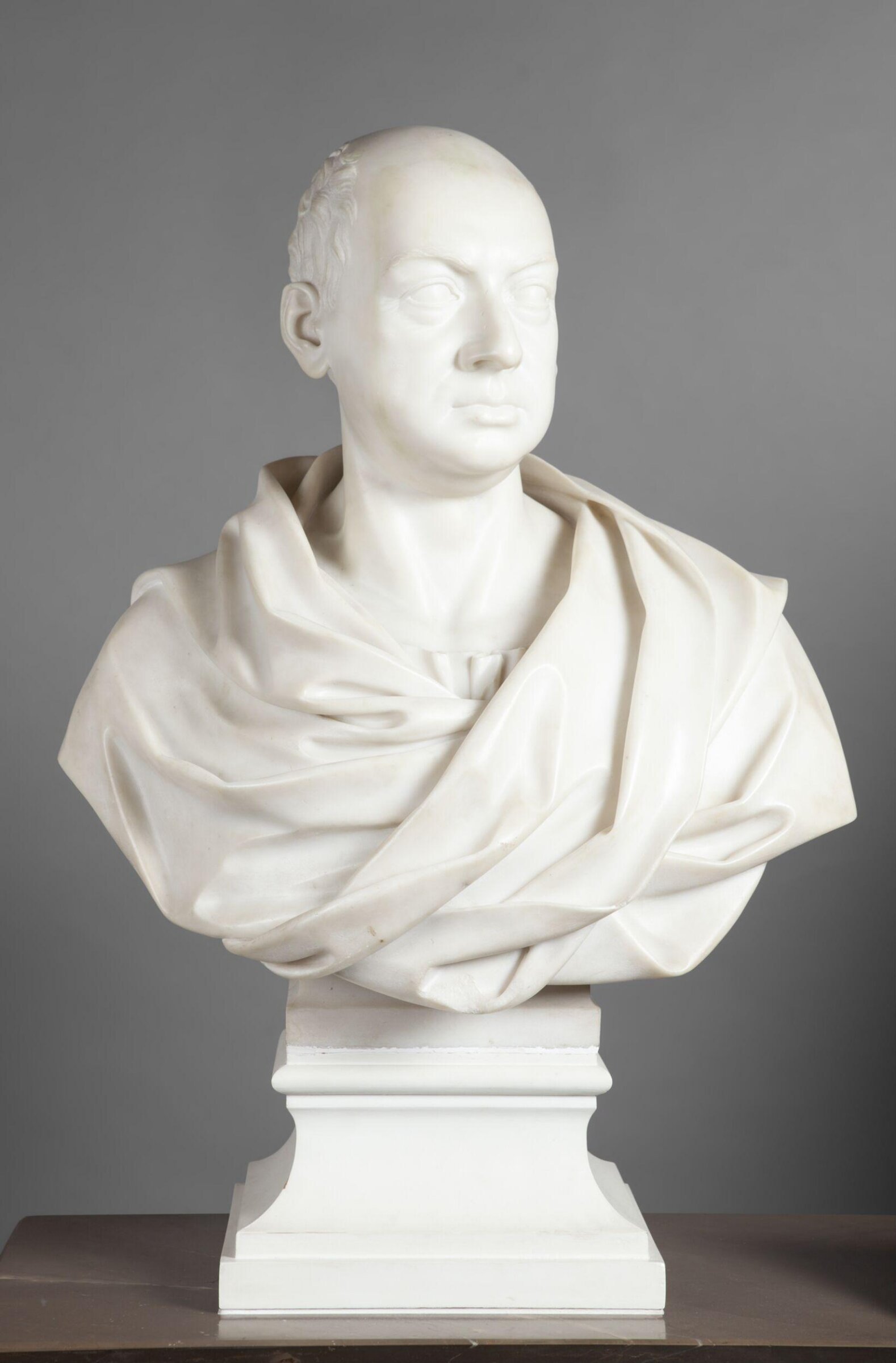
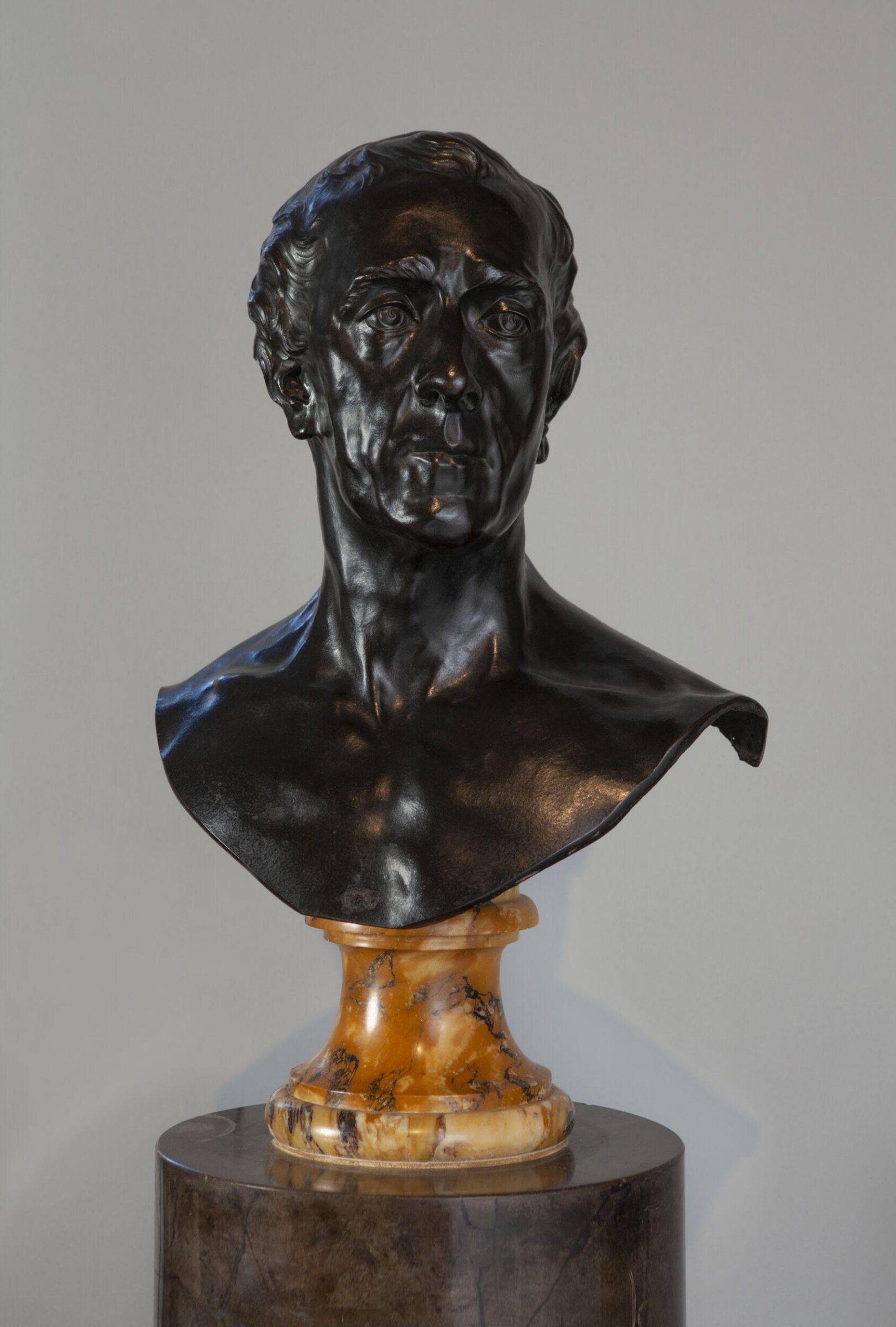
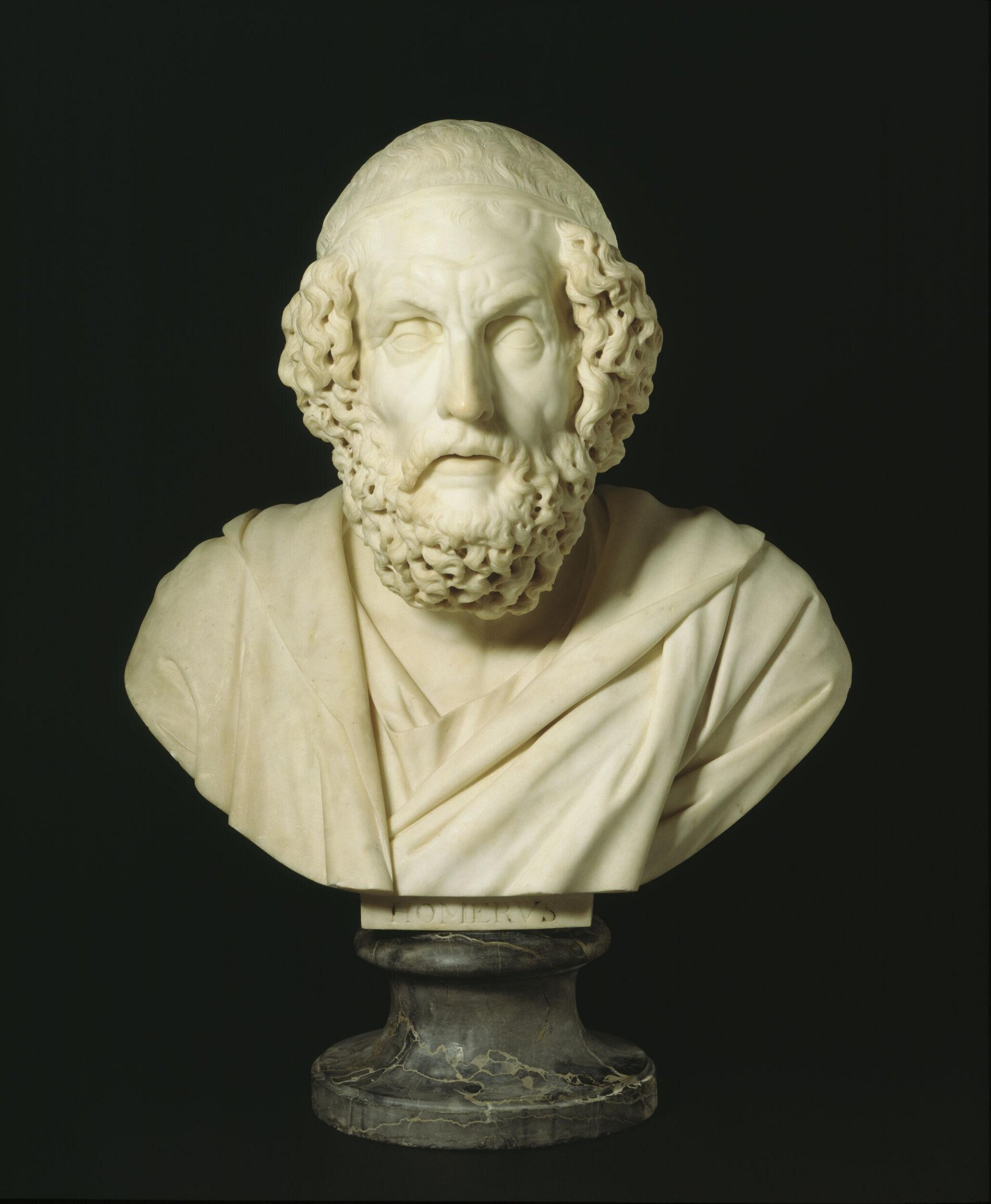
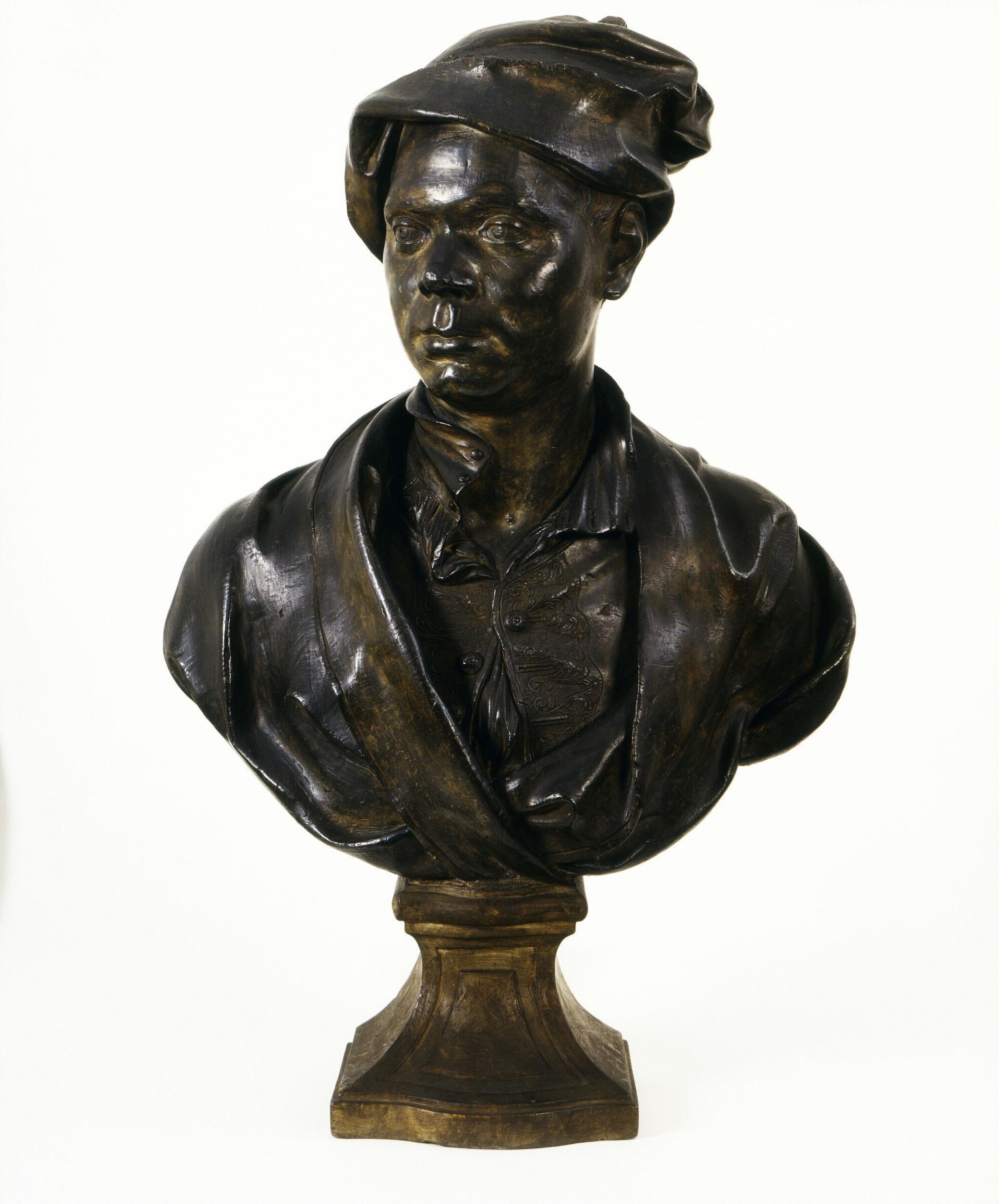
This is probably a model for the marble bust of Jonathan Tyers now in the City Museum and Art Gallery, Birmingham, although the quality of the carved marble looks inferior to the terracotta and may have been undertaken by associates in Roubiliac's workshop. Sculptors often worked in clay initially, which was then fired to become terracotta, and this example was almost certainly modelled from the life.
Provenance
Ler mais
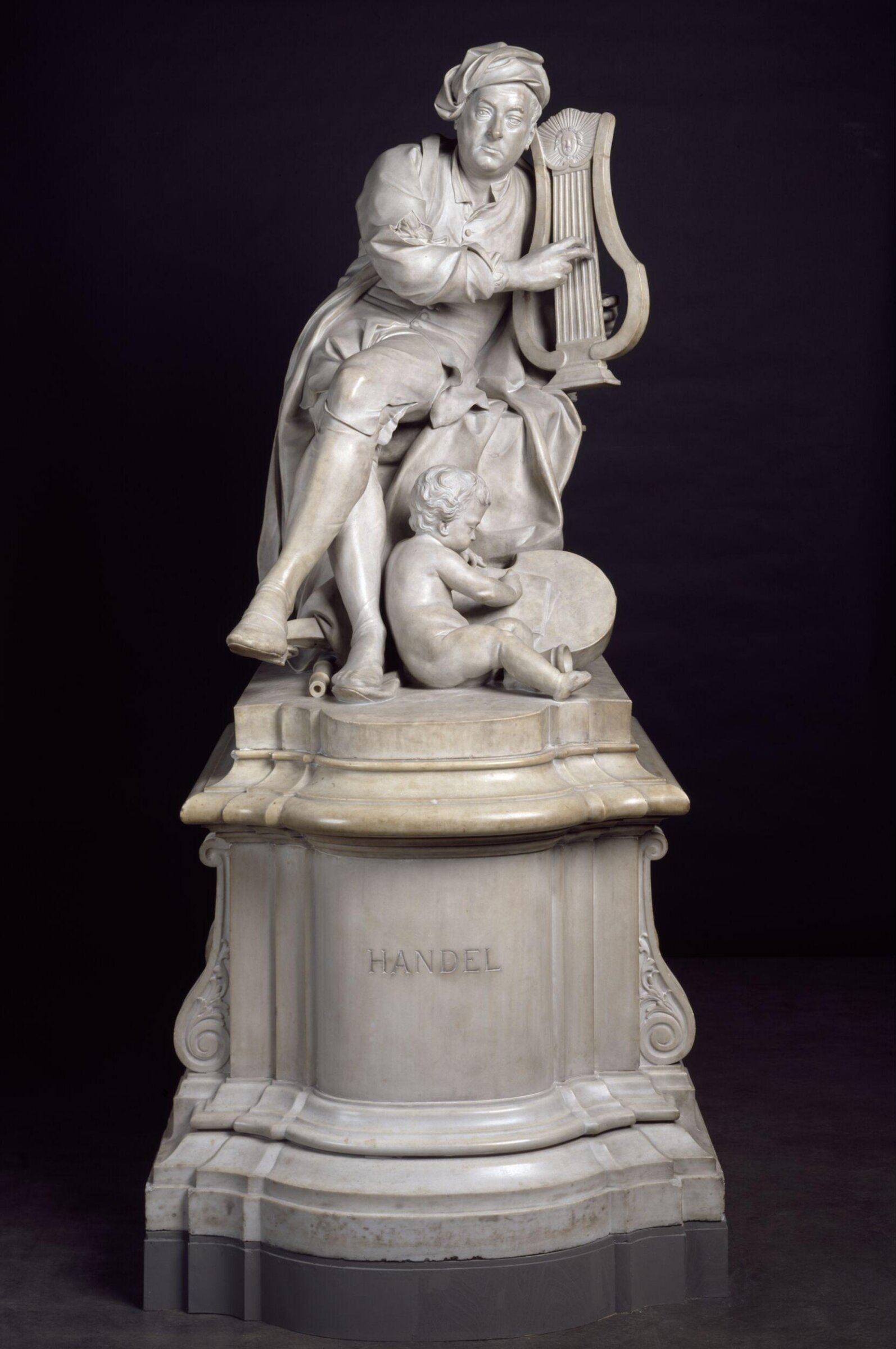
This terracotta and the marble version were almost certainly commissioned by Tyers himself, who had employed Roubiliac to produce the full-length marble figure of Handel for Spring Gardens, Vauxhall, of which Tyers was the proprietor. The two busts were recorded in the possession of the Tyers's grandson, and then passed by descent to the Reverend Jonathan Tyers Barrett of Brandon House, Suffolk. The busts were sold at the Brandon House sale in September 1919. The purchaser at this sale was Mr R. Levine, whose son, Mr G. J. Levine, sold the terracotta to the V&A in 1927 for £50. The marble bust was sold at Sotheby's on 24 June 1927 (lot 77), but in 1956 it was acquired by the Birmingham City Museum and Art Gallery from Sabin, a London dealer.
People
Jonathan Tyers (1702-1767) was the proprietor of Spring Gardens, Vauxhall, and was responsible for commissioning many works of art both for these entertainment gardens and for his own private estate at Denbies near Dorking, Surrey, whose gardens were devoted to the theme of melancholy. Tyers was a friend of William Hogarth (1697-1762), and also commissioned paintings from Francis Hayman (1708-1766) for Spring Gardens. His commission for a full-length marble statue (museum no. A.3-1965) of the composer George Frideric Handel from Roubiliac was probably given at about the same time that this bust was produced. Here Tyers is shown in casual dress and a soft cap, analogous to the clothes seen in the Handel marble. Subjects were increasingly depicted in casual dress in the 18th century; this often signified their role as artists, or conversely as gentlemen.
Museu Vitória e Alberto
Pormenores
- Número de inventário
- A.94-1927
O que mostra
No catálogo
Fontes
- Museu Vitória e Alberto
- Imagem: Museu Vitória e Alberto — © Victoria and Albert Museum, London