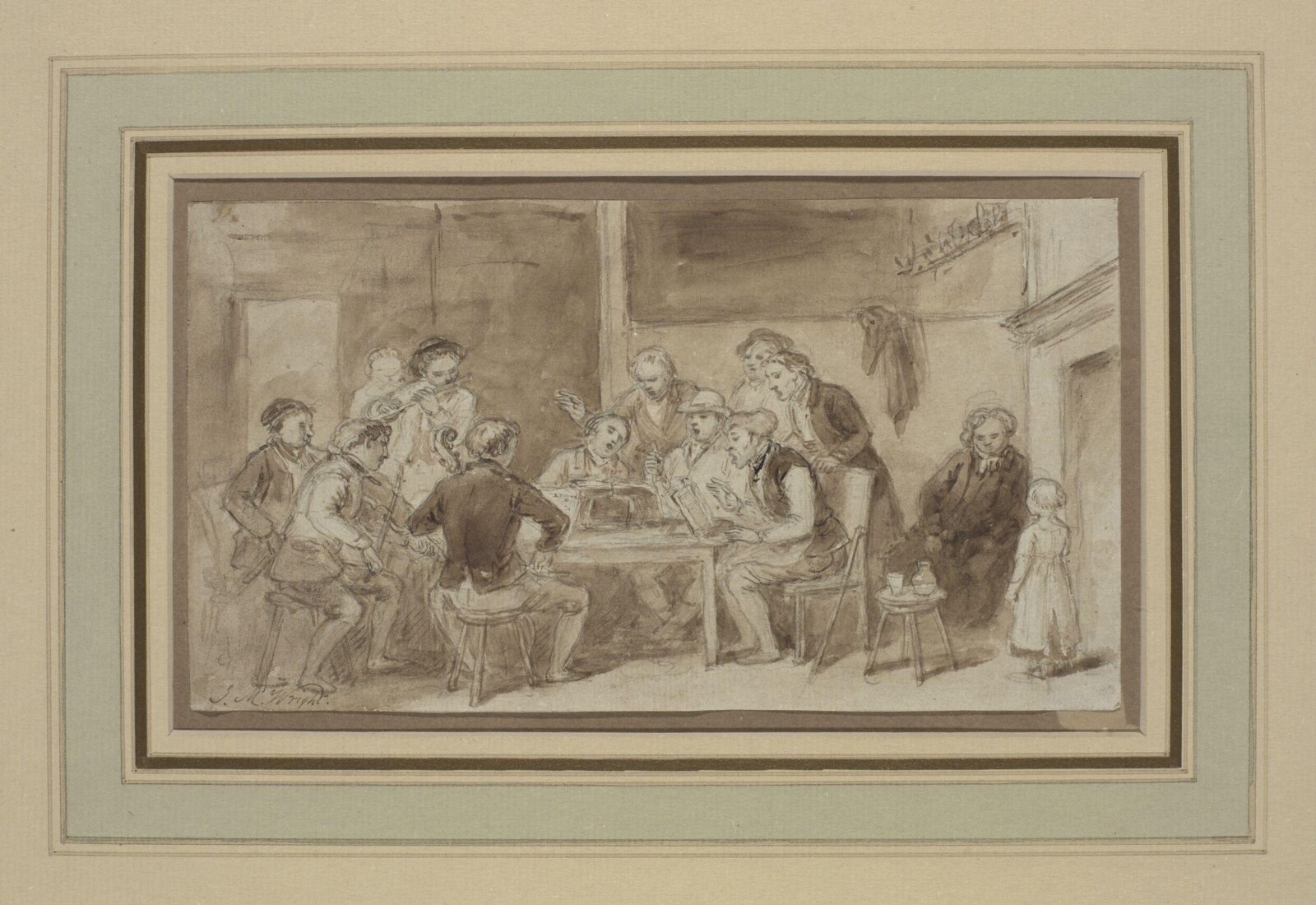
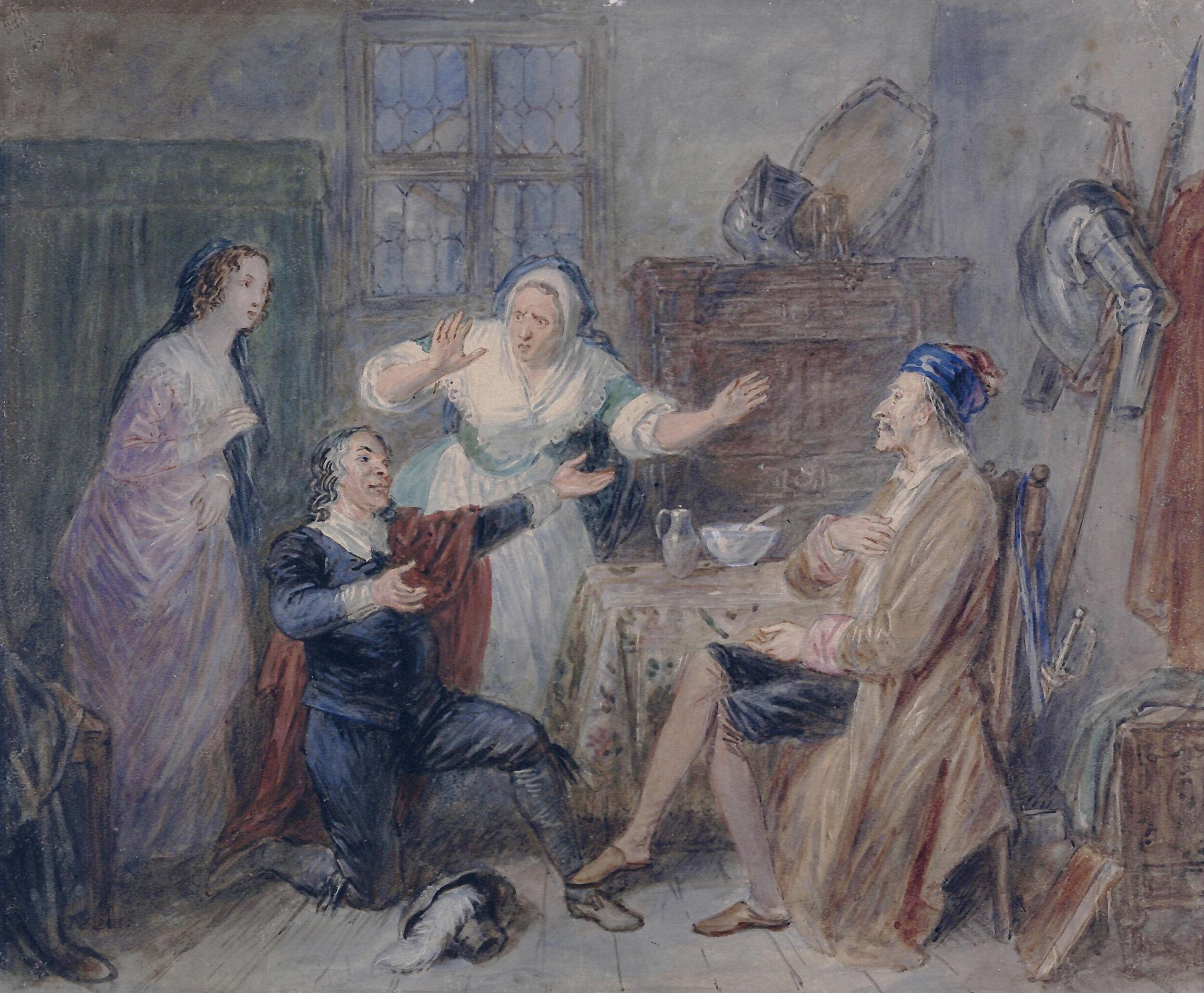
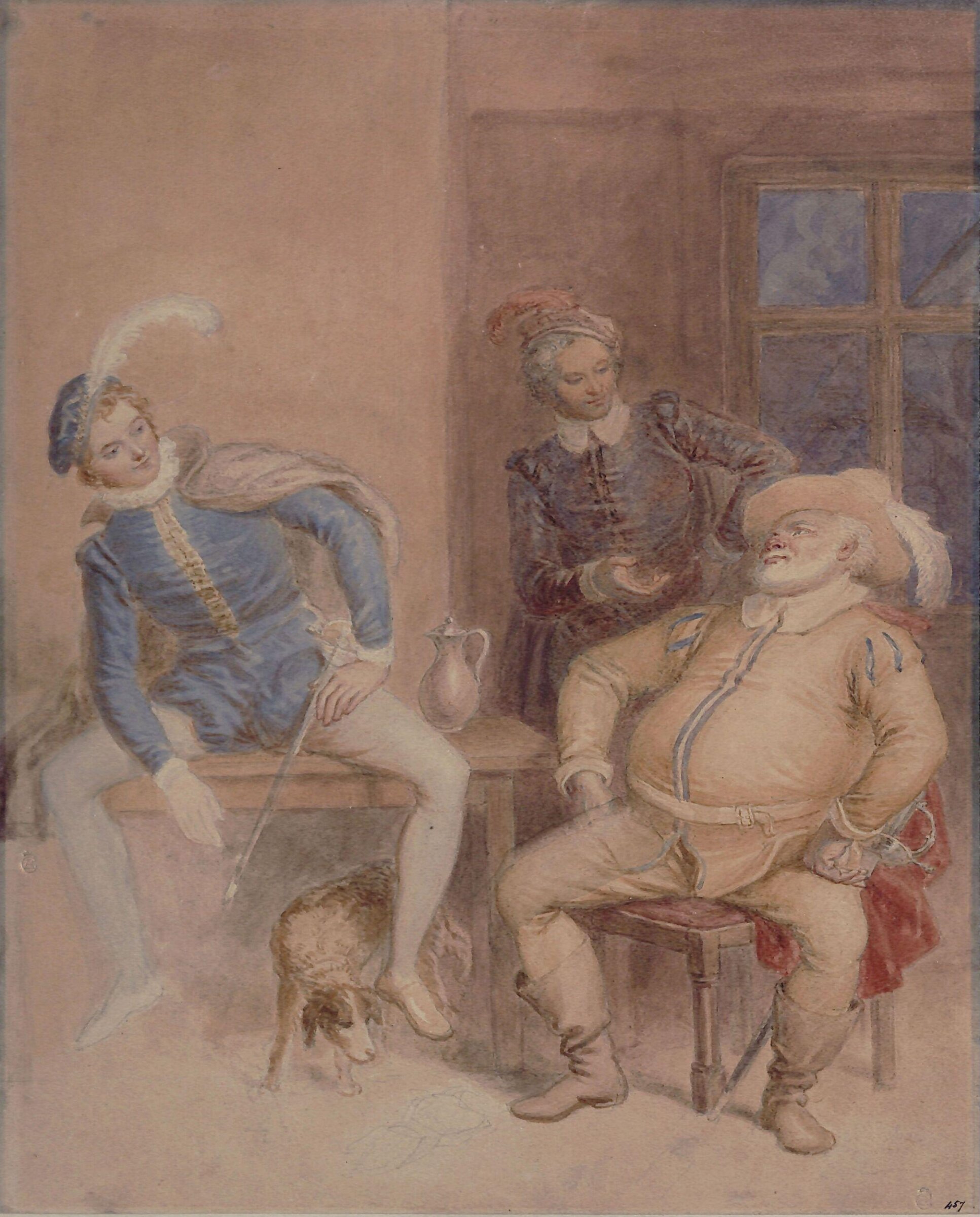
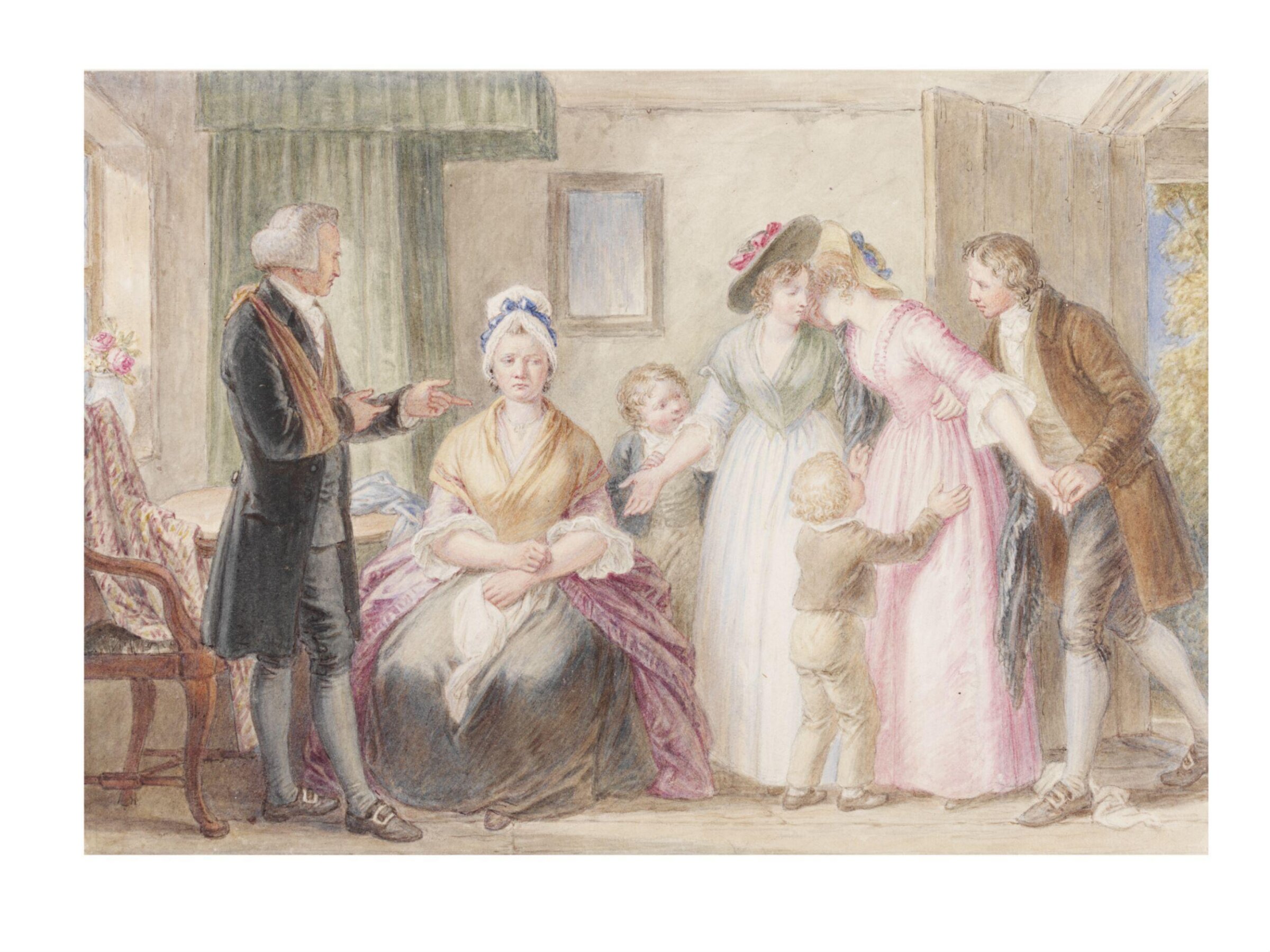
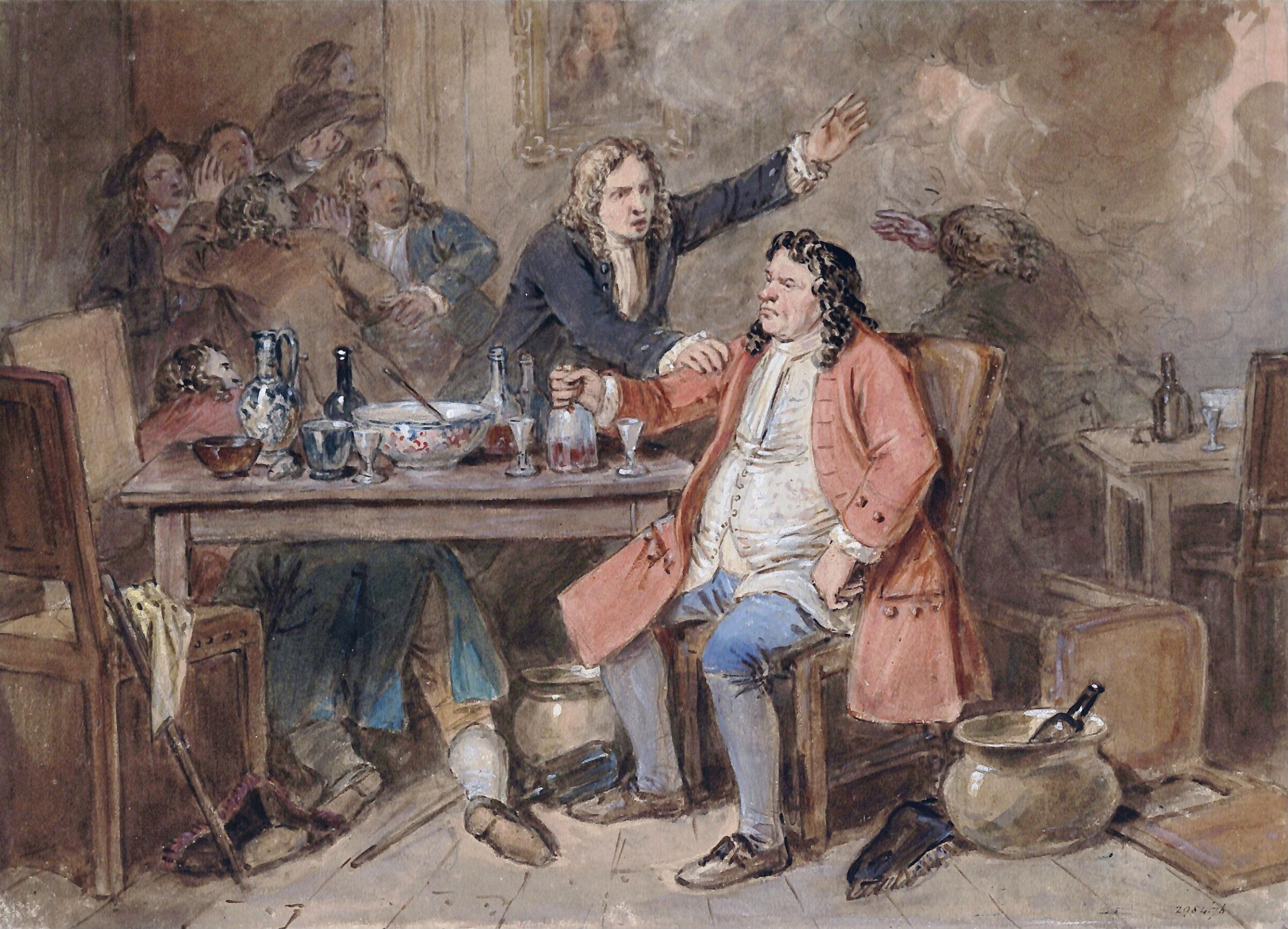
The singers and musicians in Wright's painting have assembled in a tavern. Landlords catered for lively musical get-togethers by setting aside rooms for performers who would entertain themselves and the tavern's customers, though in this picture the gentleman in the corner, possibly a clergyman, appears to be ignoring the sing-song and slumbering by the fire.
Continuar a ler
Throughout the eighteenth century music clubs and glee clubs sprang up, all male affairs whose participants sang traditional pieces and the popular songs of the day. It was from these beginnings that amateur choral societies grew. But the nineteenth century saw another development. The taverns became host to rumbustious 'free and easies', presided over by a paid chairman. Respectability was introduced in the 1830s when enterprising London proprietors opened Song and Supper Rooms, with concerts provided by professional performers. As demand increased, landlords built halls on their premises to accommodate the audiences and what had begun as do-it-yourself entertainment developed into Music Hall, with its mixture of singers, comedians and variety acts.
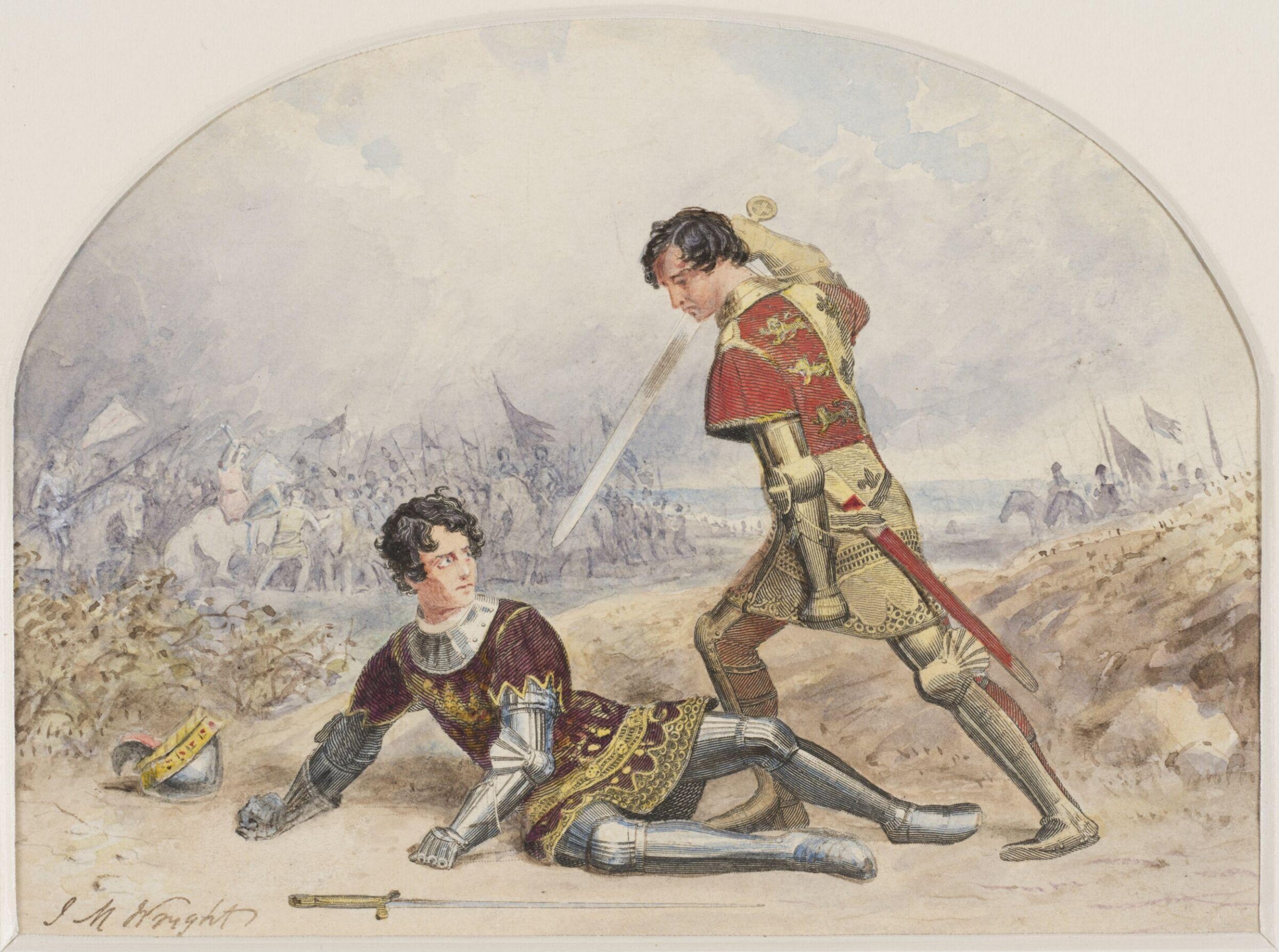
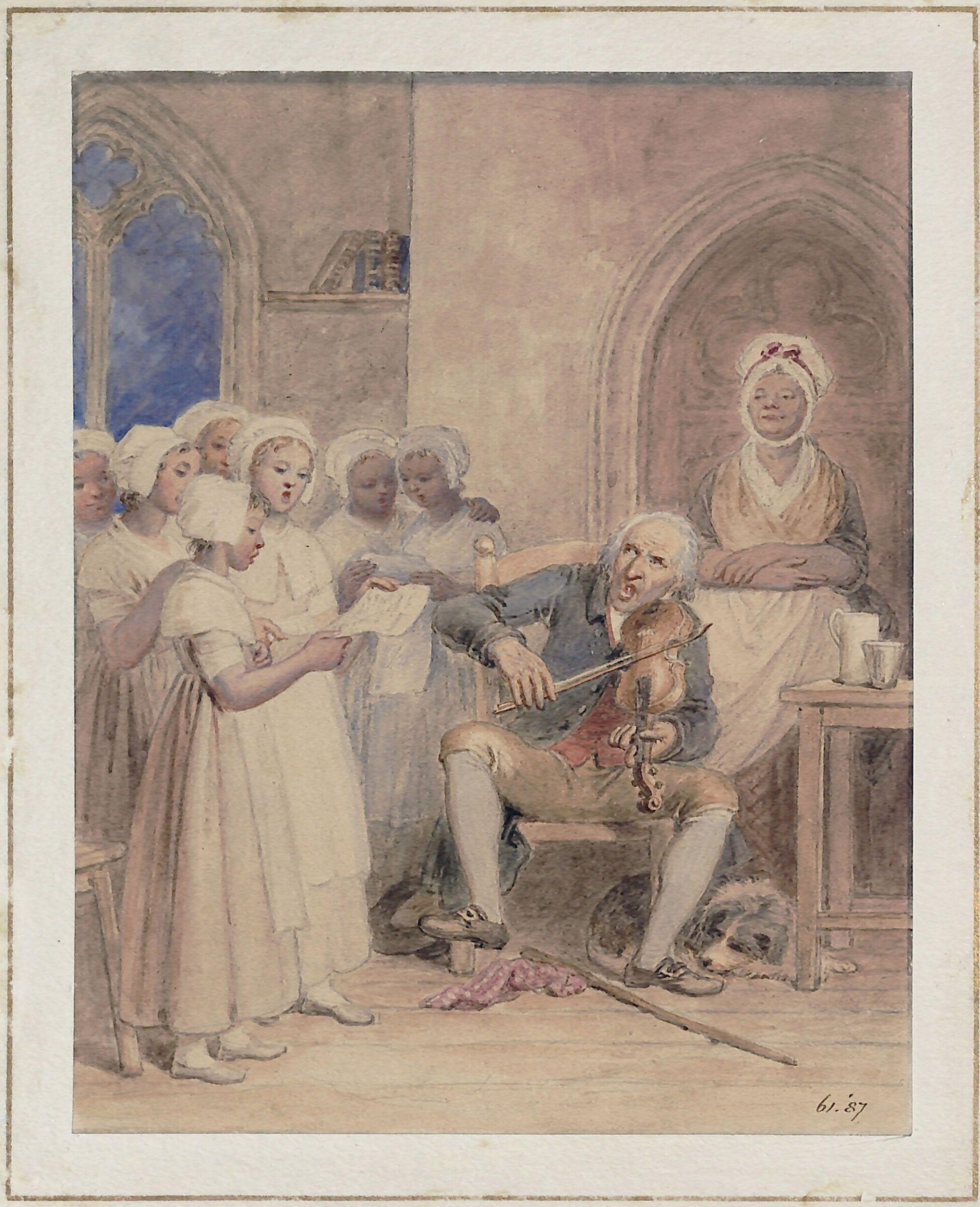
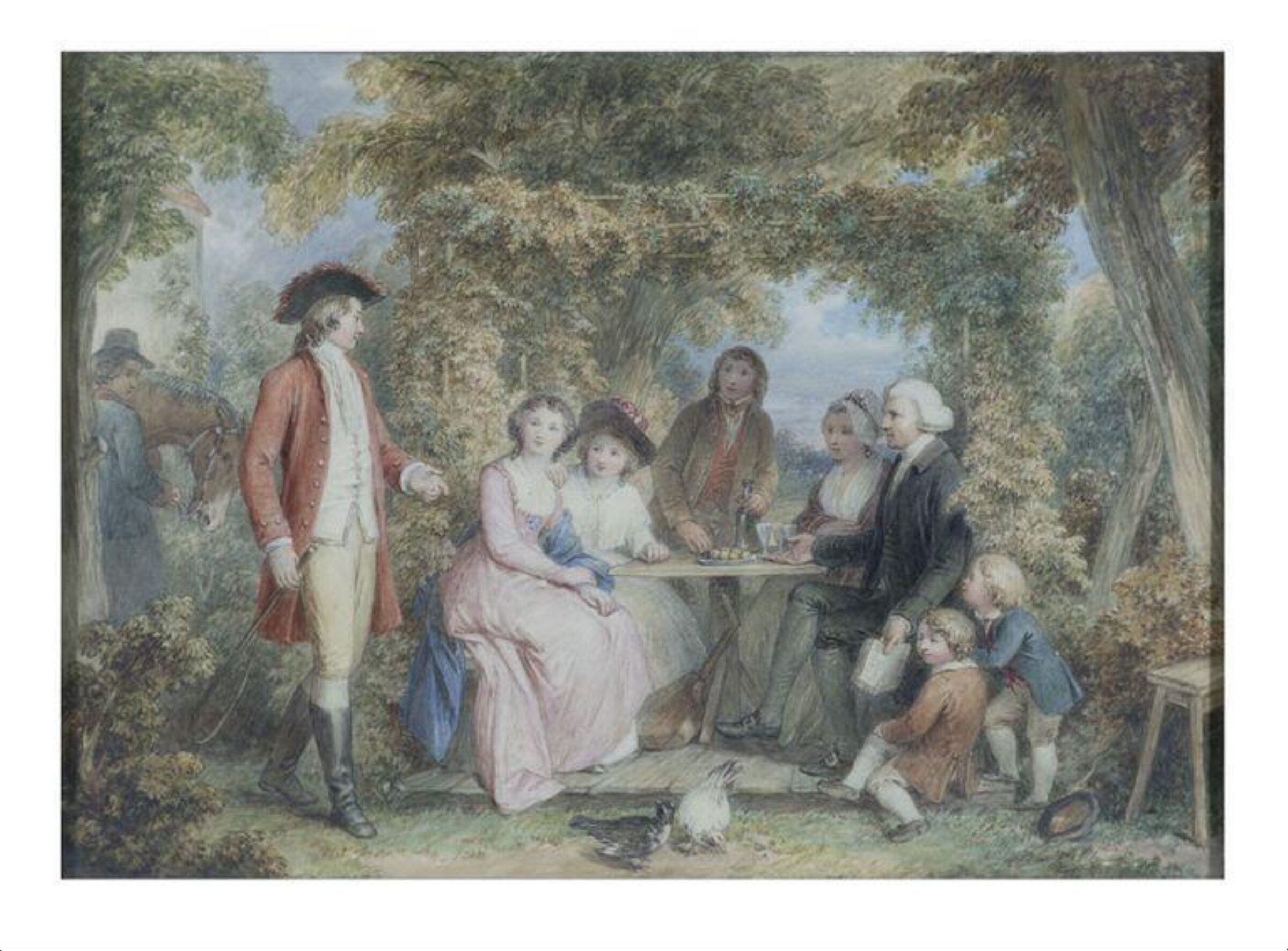
John Masey Wright (1777-1866) was painting a subject that he knew well. He was himself an excellent amateur musician and worked for an organ builder, then as a piano tuner, before becoming a professional artist and illustrator.