 Francesco FanelliItália, 1577
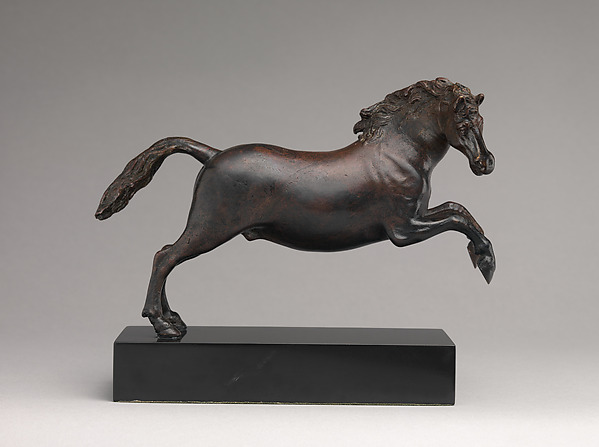
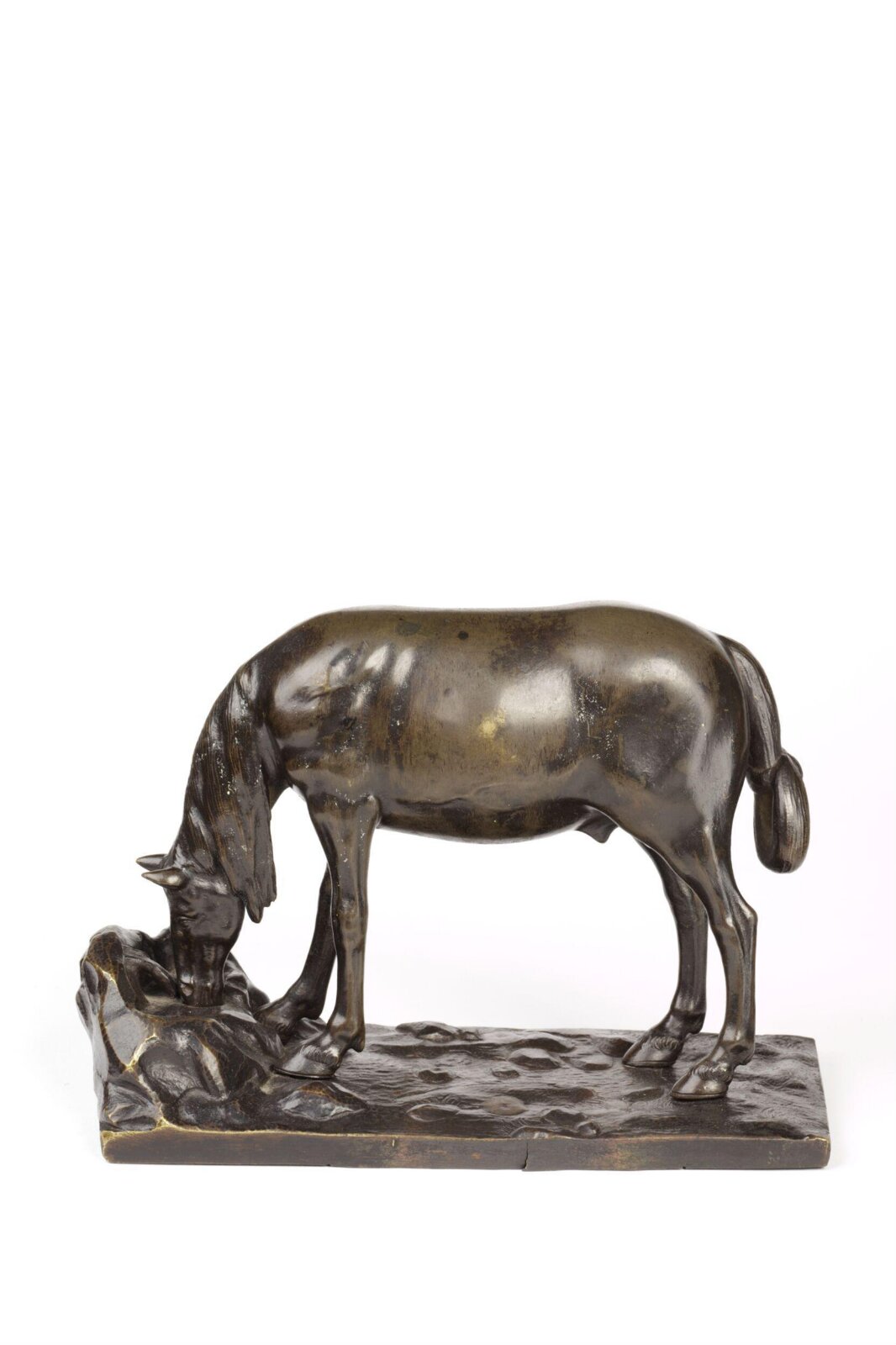
Horse Drinking from a Spring
Será possível contemplá-la?
Sim, recebe visitas

Exposta ao público. Quem o garante vem indicado abaixo.
- Verificado
- Neste estado desde
- Fonte
- O museu
Sobre a escultura
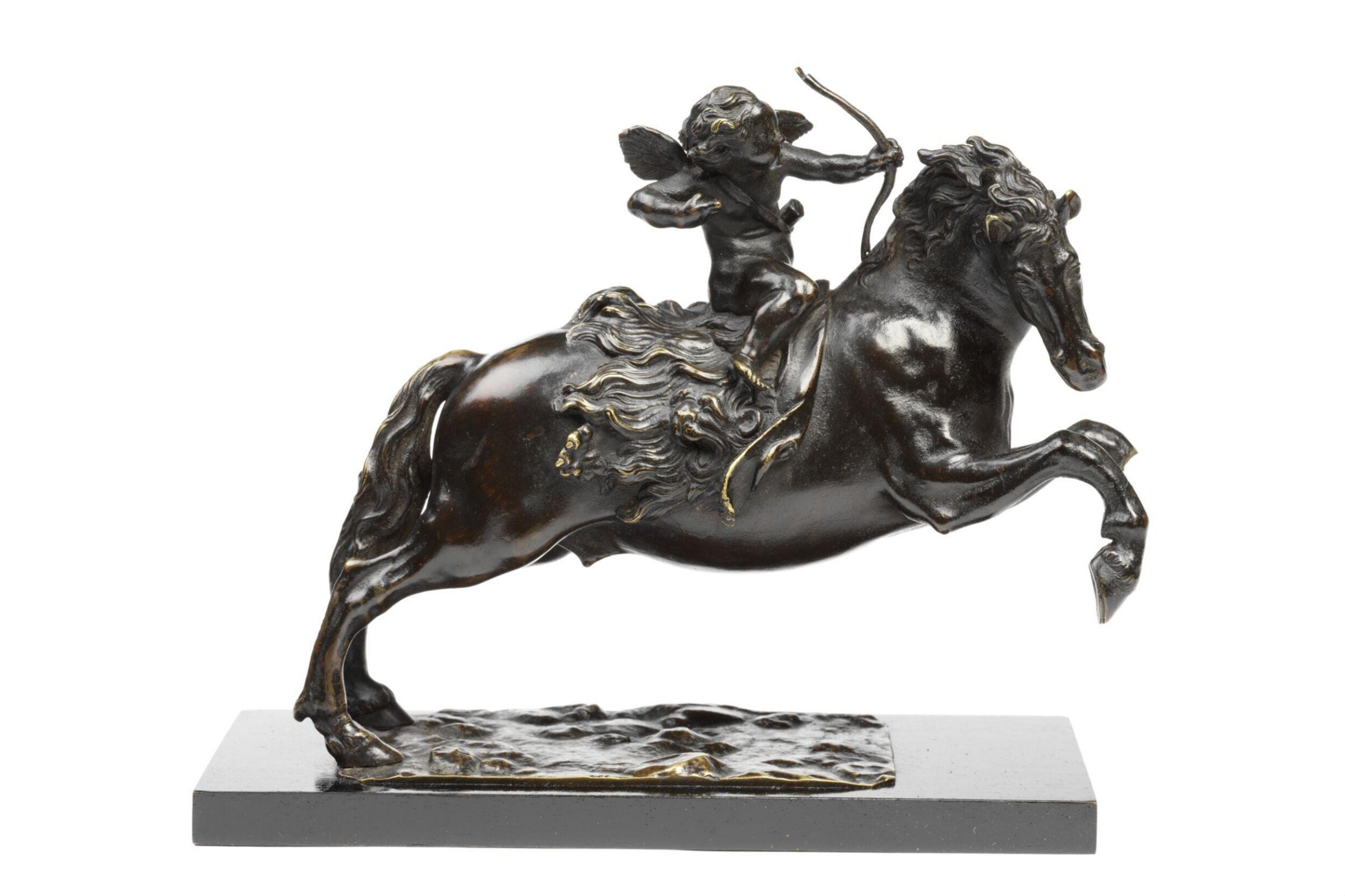
This very elegant horse, with its finely knotted tail, is calmly drinking from a natural spring that becomes a small stream flowing over the rocky ground. The horse came to the Museum with an attribution to Fanelli, which is the most appropriate name for this work. The horse is one of Fanelli's most frequently depicted subjects and there are numerous comparisons that can be made with his other bronzes. For example, the stony ground that forms the (original) base is very similar to other bronzes he made for the English Court or for the Duke of Newcastle (e.g. Cupid on Horseback A. 37-1952). As is often the case with Fanelli's bronzes, all the details of the animal were worked in wax, as can be seen from the mane, tail and hair around the hooves.
Continuar a ler
A similar model may have been seen by George Vertue among the works belonging to the Duke of Newcastle at Welbeck, when he wrote of 'a horse eating standing up'.
Of the other known versions, the one in the V&A is the only one with the rocky spring and is the most successful one. Some versions are in the Grünes Gewölbe in Dresden and the Bayerisches Nationalmuseum, Munchen.
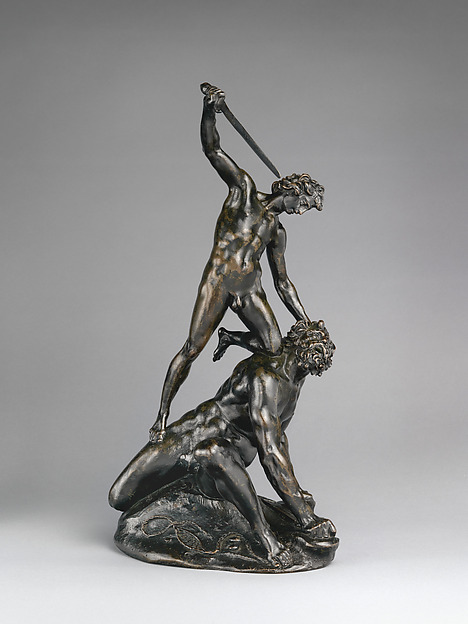
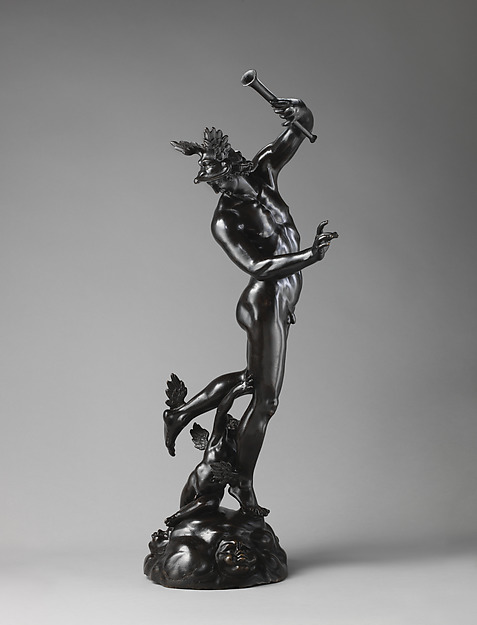
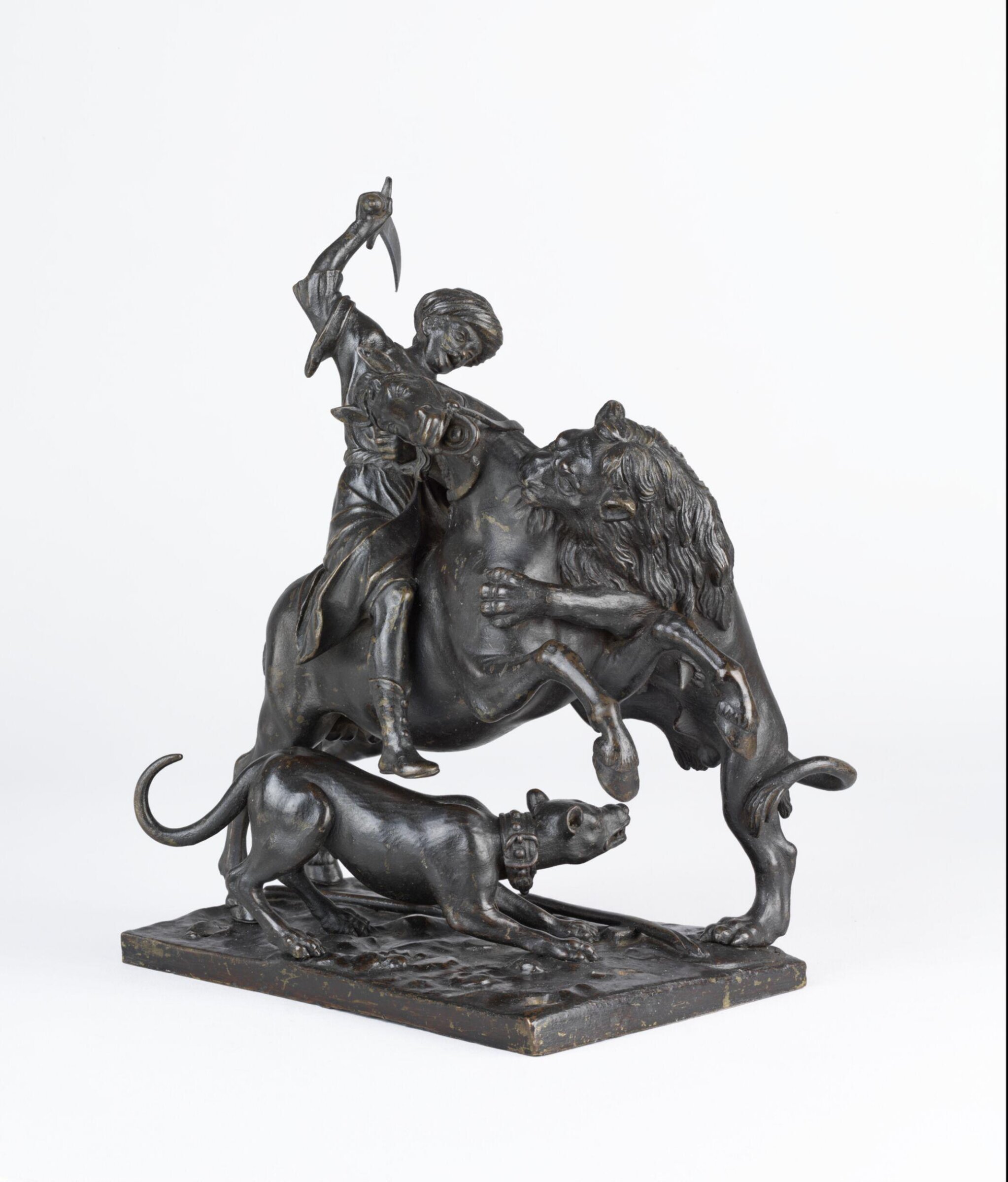
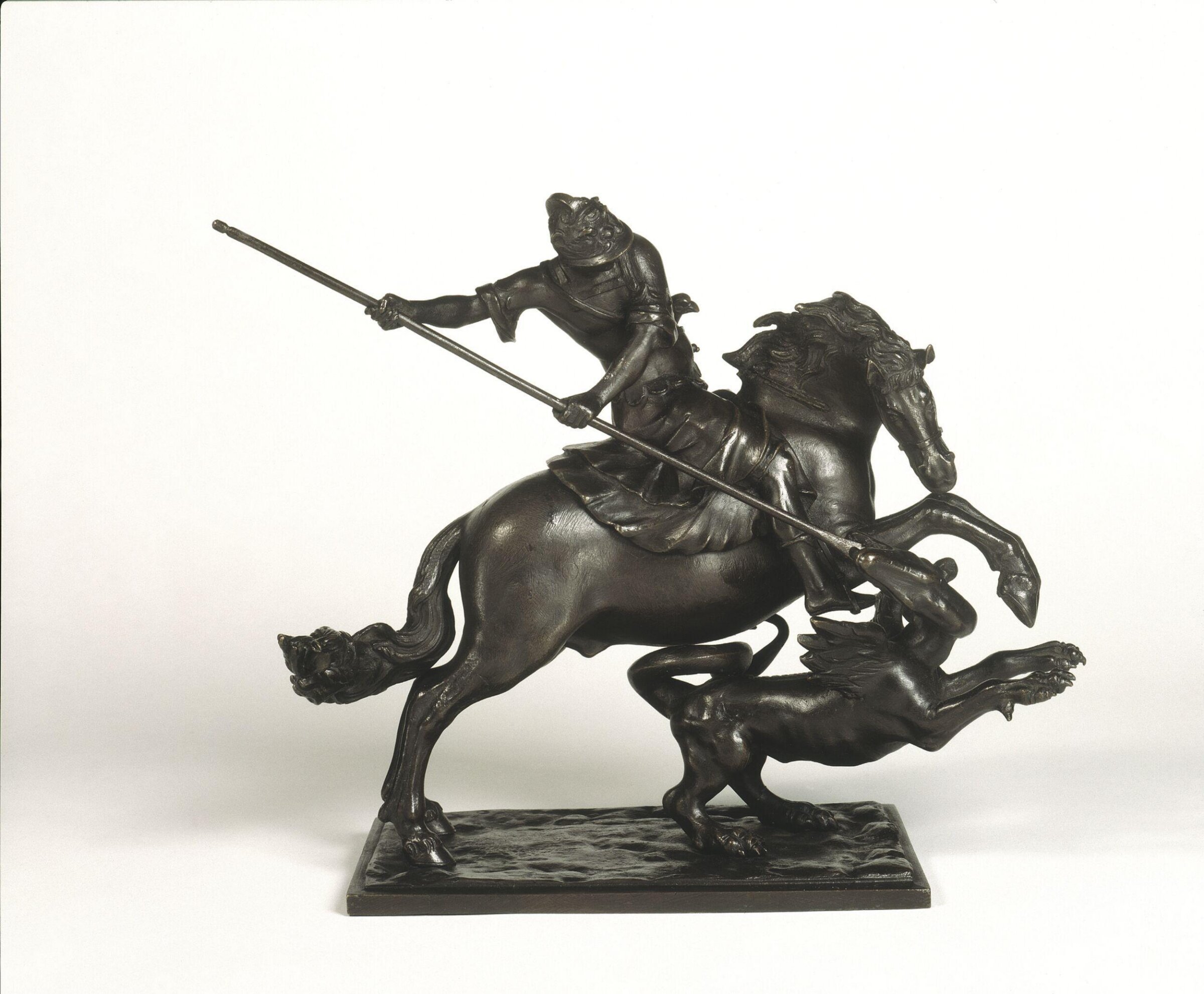
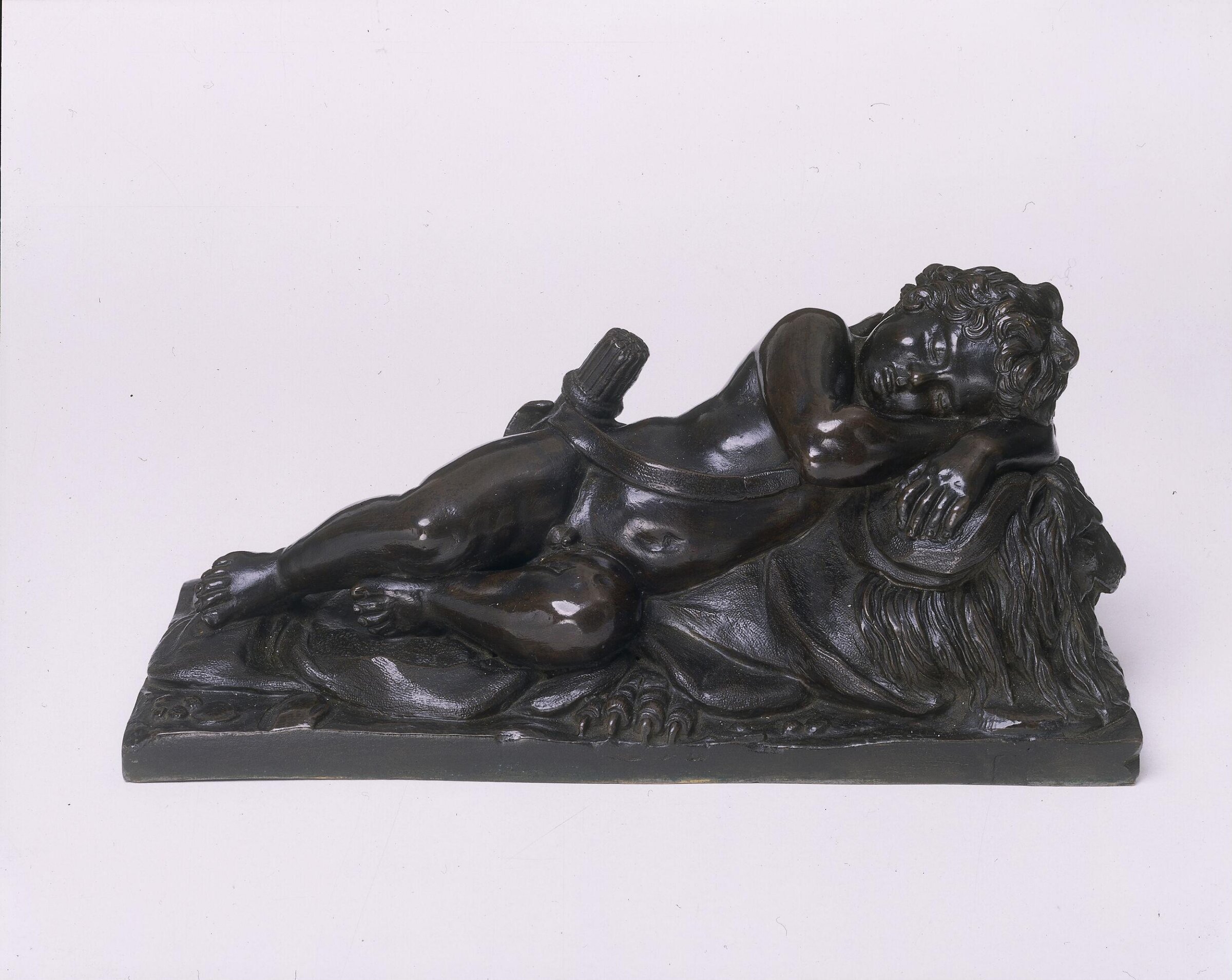
These bronzes all derived from the same composition, but all show minor variations, making each of them a unique cast. This practice is typical of the bronzes coming from the workshop of Francesco Fanelli who specialized in small bronzes made as collectable items. Like most sculptors of his time, Fanelli used the indirect lost wax technique for casting his bronzes which allowed him to keep the original model and to create replicas. However, these were never identical to another, and each had its own characteristics.
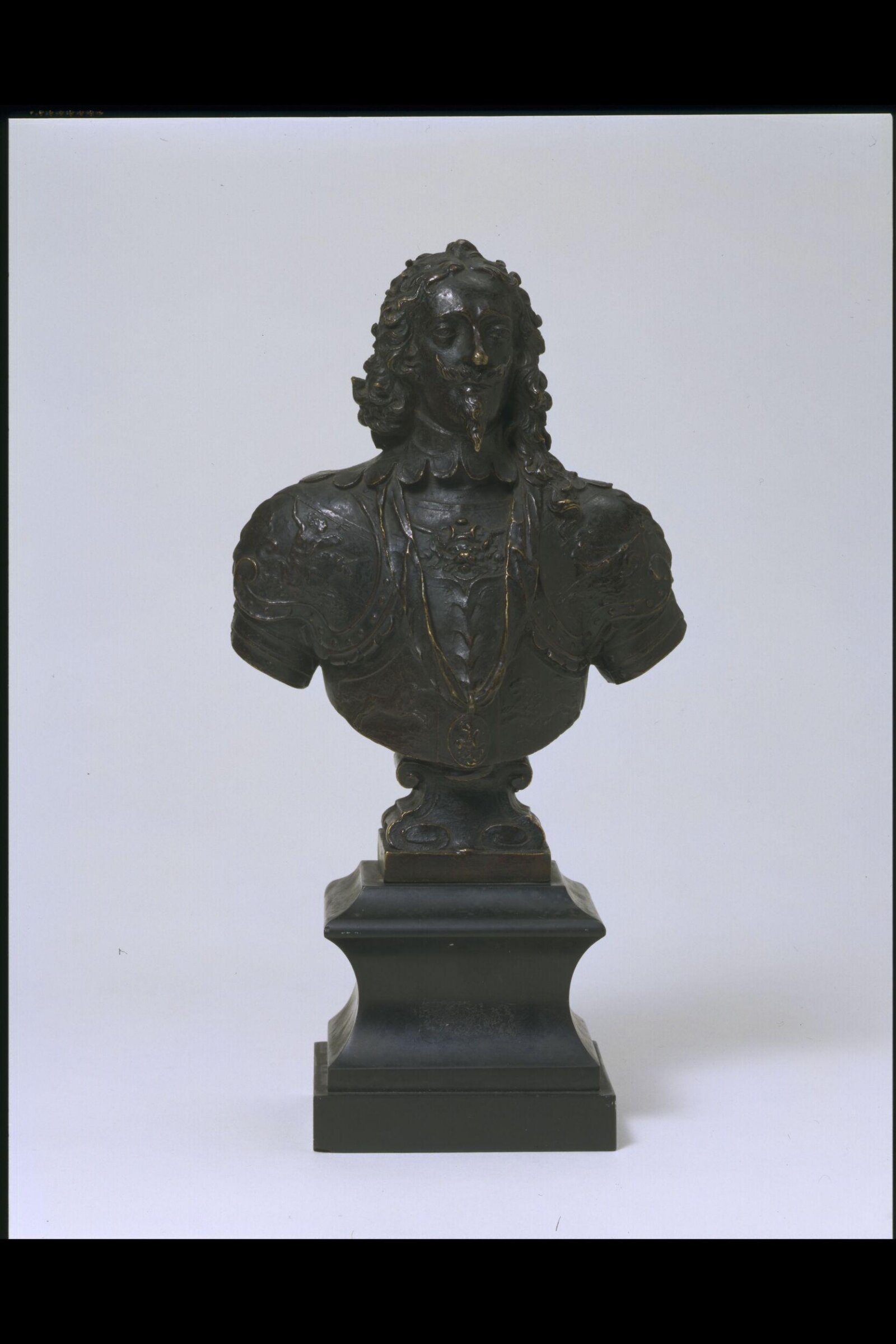
Francesco Fanelli was an Italian sculptor born in Florence on 17 December 1577. In the early years of the 17th century, he was in Genoa where he executed bronzes as well as large-scale marble sculptures, most probably with the assistance of his sons who pursued the same career as their father. Moving to England in 1632, Francesco became court sculptor to Charles I and worked for several private English patrons, among them the Duke of Newcastle. He was last recorded in 1641.
Small bronzes of different subjects were collected in Europe from the early Renaissance. Those collected in 17th century Britain were almost all secular subjects and mainly related to mythology themes. Arranged on shelves, consoles or tables, these small bronzes were displayed in the collectors' studios, rooms or galleries containing other works of art, such as paintings, sculptures or cabinets. Depending on the subject and size of the bronzes, collectors were delighted to view them from different perspectives, often admiring their shine when bathed in light.
In addition to King Charles I and the Duke of Newcastle, Fanelli received other commissions from wealthy people, even if only few are recorded in the documents. Fanelli’s bronzes had a long lasting legacy. Despite the absence of information, it is believed that he bequeathed his models to his workshop as hundreds of bronzes made from those models were likely cast after his death and lack the refinement of those made by Fanelli himself.
In the 18th century, collectors' interest in bronzes was supplemented by their taste for porcelain. Some of Fanelli's models were then translated into this material, sometimes even polychromed.
Museu Vitória e Alberto
Pormenores
- Número de inventário
- A.20-1978
O que mostra
No catálogo
Fontes
- Museu Vitória e Alberto
- Imagem: Museu Vitória e Alberto — © Victoria and Albert Museum, London