 William MorrisReino Unido, 1834–1896
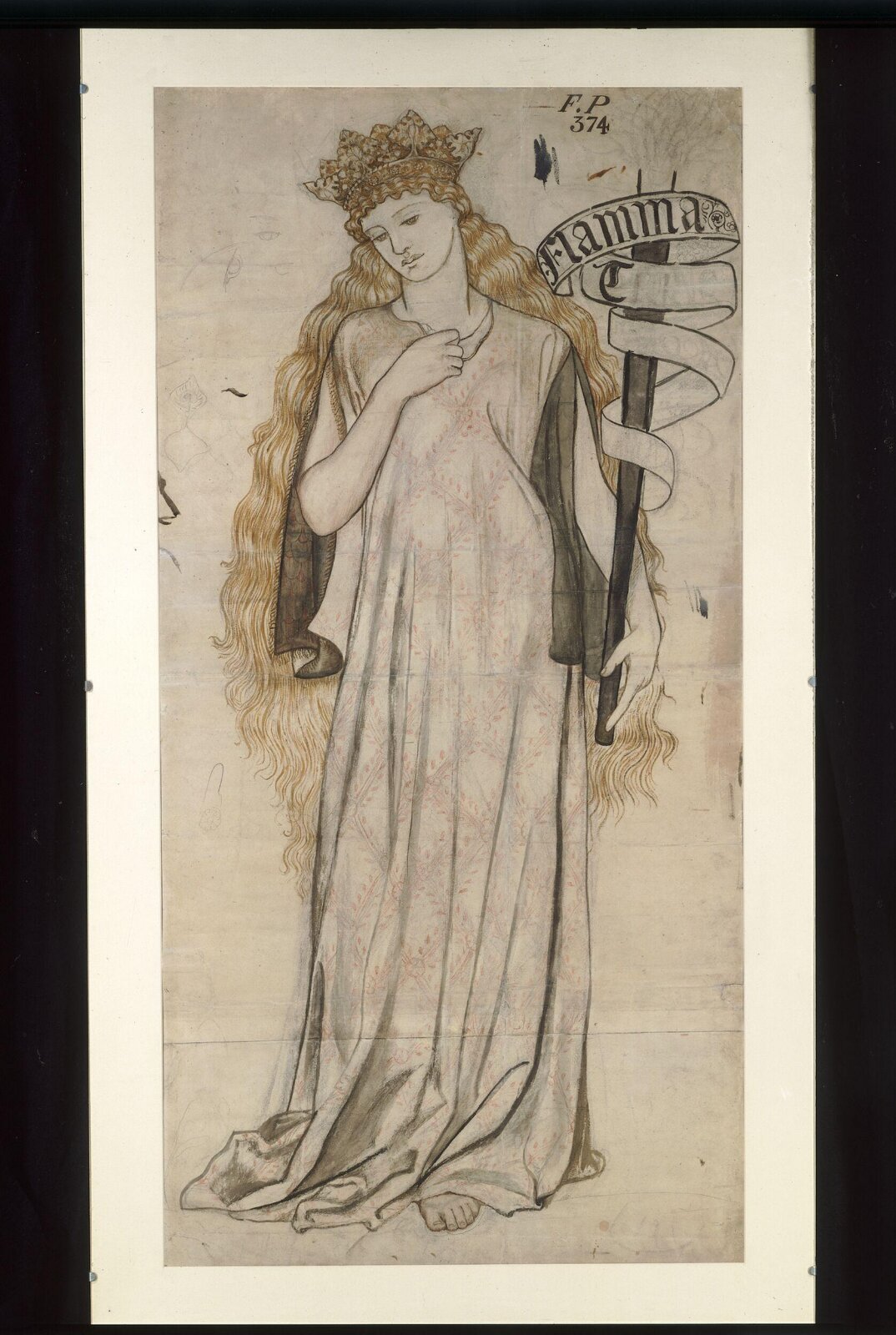
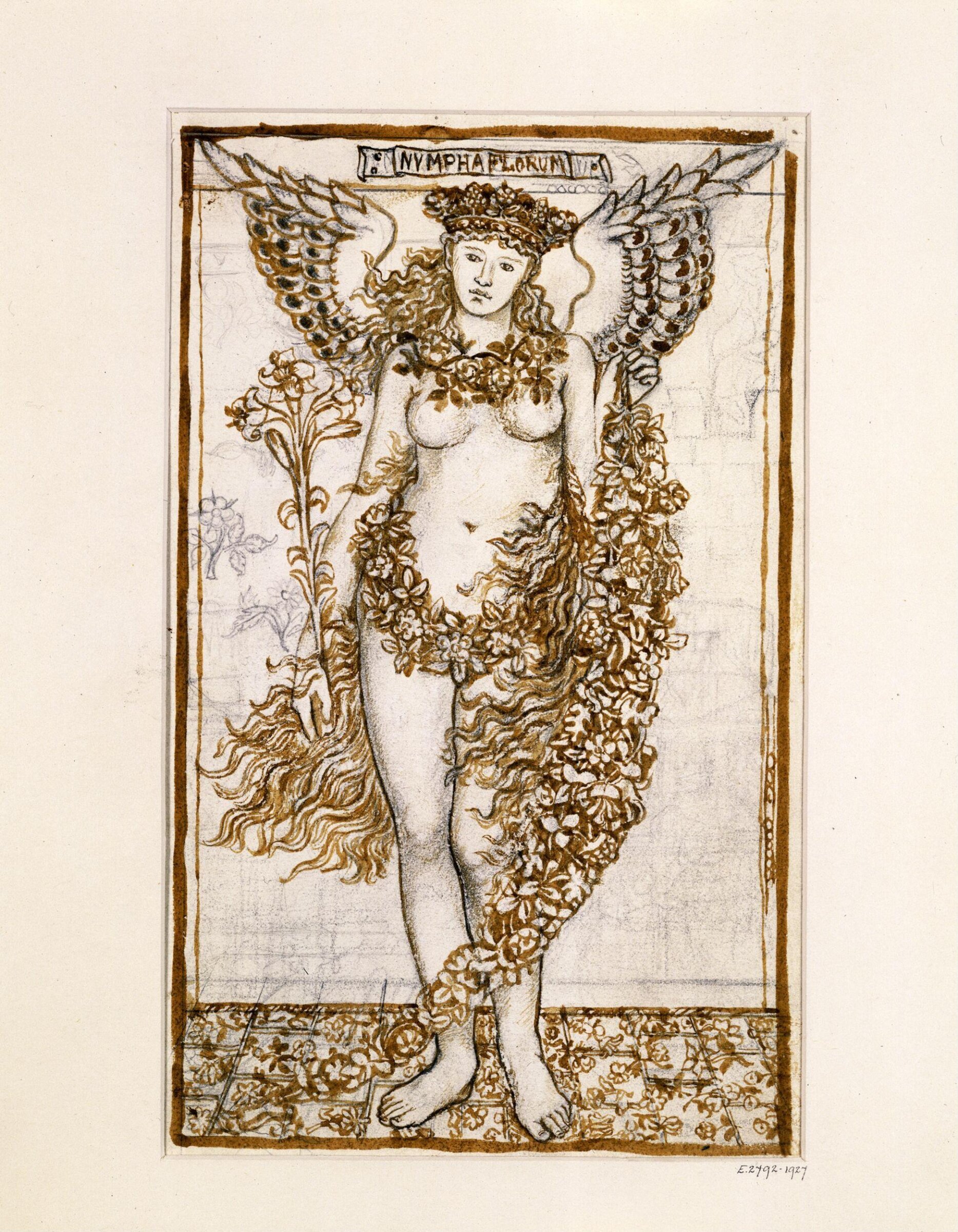
Helen (Flamma Troiae)
Posso vê-la?
Não exposta de momento
Onde está «Helen (Flamma Troiae)» hoje? Coleção: Museu Vitória e Alberto, Londres. Não exposta de momento. Verificado 25 de setembro de 2026.

Londres, Reino Unido
Pertence à coleção, mas de momento não está exposta.
- Verificado
- Neste estado desde
- Fonte
- O museu
Sobre a obra
William Morris drew this design for one of a number of embroidered panels. It was part of an elaborate decorating scheme for the drawing room at Red House, Morris's home at the time. The panels were inspired by Chaucer's14th-century poem 'The Legend of Goode Wimmen' and depict various heroines, such as Helen of Troy, as seen here. The Latin word Flamma refers to the passions she excited as well as to the flaming torch she carries.
Museu Vitória e Alberto
Pormenores
- Número de inventário
- E.571-1940
O que mostra
No catálogo
Fontes
- Museu Vitória e Alberto
- Imagem: Museu Vitória e Alberto — © Victoria and Albert Museum, London
Na vida de William Morris
A vida inteira1856–1859
The Arthurian murals at the Oxford Union
He helped Rossetti and Burne-Jones paint Arthurian murals in the debating hall of the Oxford Union (now its library), but his contribution was widely judged inferior and unskilled compared with theirs; for this work Rossetti invited Jane Burden and her sister Elizabeth to model.
26 de abril de 1859
Married: Jane Morris
1860–1865
Friends paint Red House
Friends — Burne-Jones and his wife Georgiana, Rossetti and his wife Lizzie Siddal — stayed at Red House, painting furniture, walls and ceilings with scenes from Arthurian tales, the Trojan War and Chaucer’s stories, playing hide and seek and singing to the piano; Morris designed floral embroideries for the rooms.
1861
He founds Morris, Marshall, Faulkner & Co.
In April 1861, with Burne-Jones, Rossetti, Webb, Ford Madox Brown, Charles Faulkner and Peter Paul Marshall, he founded a decorative arts company — “the Firm” at 6 Red Lion Square: they meant to reinstate decoration among the fine arts, making it affordable and anti-elitist, and took on boys from the Industrial Home for Destitute Boys in Euston as apprentices.
1862
The 1862 exhibition: the Firm’s fame
At the 1862 International Exhibition in South Kensington the Firm’s exhibit won press attention and medals of commendation; despite its anti-elitist ethos the Firm became fashionable with wealthy clients, though it met opposition from established design companies.
25 de março de 1862
Daughter born: May Morris




![[Louis XIV.; Ludwig XIV., König von Frankreich], Charles Le Brun, 1656–1700](https://diglib.hab.de/varia/haum/masson-a-v3-3594/max/000001.jpg)
