Francois BoucherFrança, 1703–1770
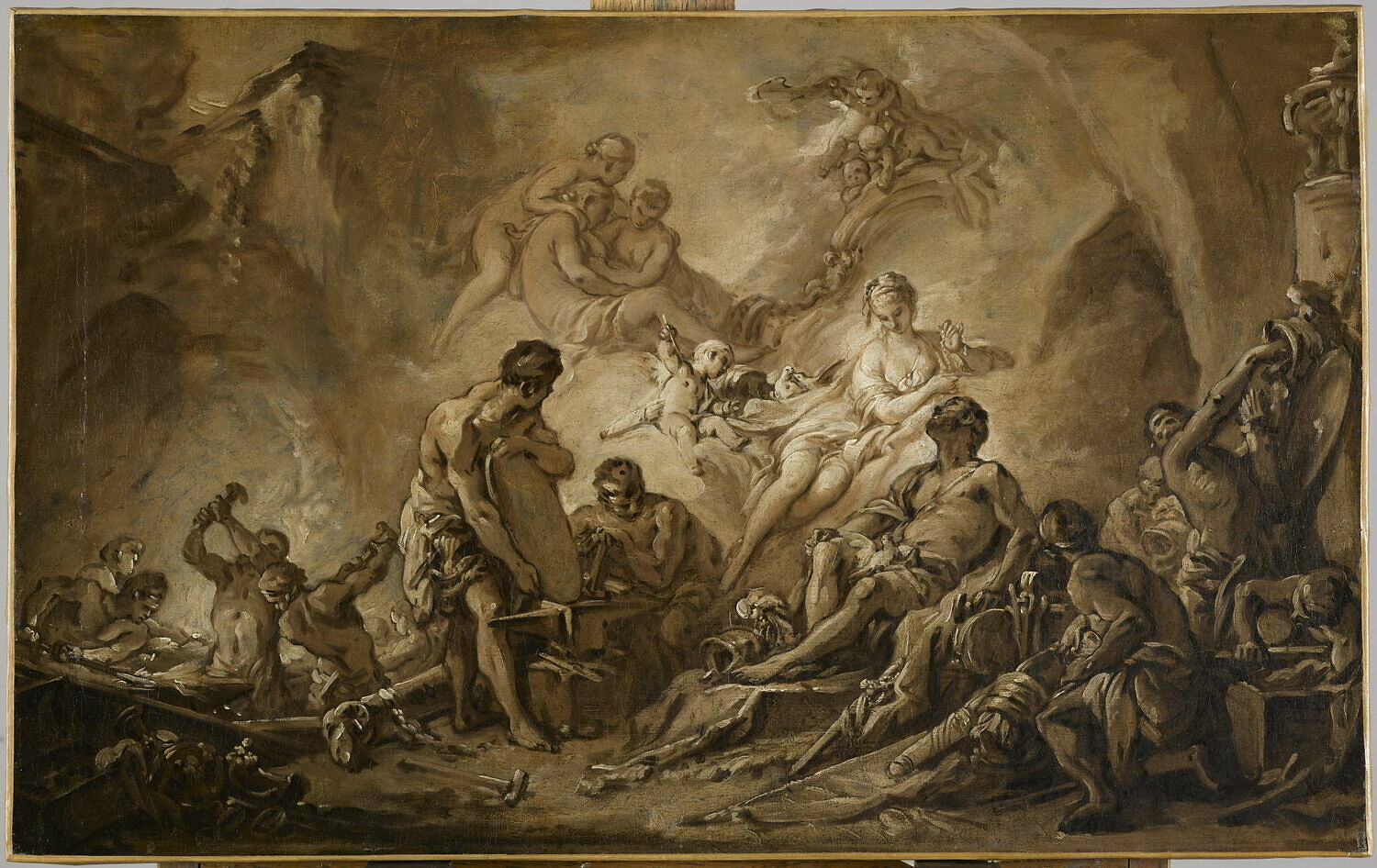
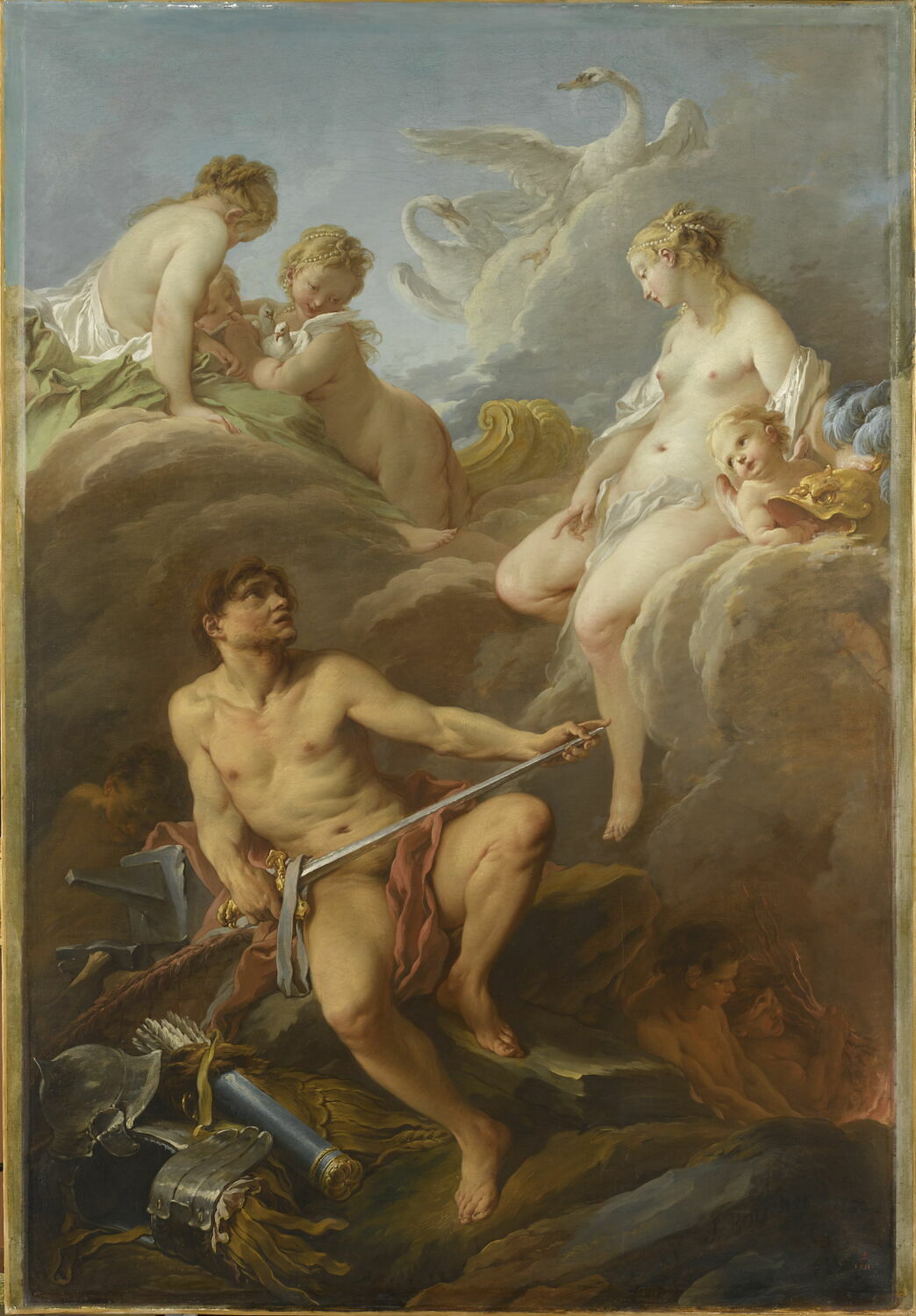
Hercules and Omphale
Posso vê-la?
Desconhecido
Onde está «Hercules and Omphale» hoje? Coleção: Museu Pushkin, Moscovo. Desconhecido.

Moscovo, Rússia
O proprietário é conhecido; não se sabe se hoje está exposta.
- Fonte
- O museu
Sobre a pintura
Hercules and Omphale is an oil-on-canvas painting by French painter François Boucher, likely completed sometime between 1731 and 1734. The painting depicts the mythological romance between the Greek hero Hercules and Omphale, queen of Lydia. The painting represents an important work from Boucher's early career, completed shortly after his studies under his mentor François Lemoyne.
Ler mais
After its creation in the 1730s, the painting appears to have remained in Boucher's possession. It was later acquired by Pierre-Louis-Paul Randon de Boisset before passing to Philippe-Guillaume Boullogne de Préninville at auction in 1777. It was then acquired by the comte de Vaudreuil in 1787. In the nineteenth, it became part of the Yusupov family collection in Saint Petersburg, where it remained until 1930. Following the Russian Revolution and subsequent nationalization of aristocratic art collections, it was transferred to the Pushkin Museum in Moscow, where it remains on display today.
Pormenores
- Número de inventário
- Ж-2764
No catálogo
Fontes
- Museu Pushkin
- Imagem: Museu Pushkin — © Pushkin State Museum of Fine Arts
Na vida de Francois Boucher
A vida inteira1720–1770 · Local de trabalho
Paris
1725–1731
Travel: Italy
1726–1728
Etchings for the Recueil Jullienne after Watteau
For the first two volumes of the Recueil Jullienne, which reproduced the works of Watteau, Boucher executed about a hundred etchings, including the frontispiece with Watteau's self-portrait; this work became a source of inspiration for him.
1730–1740s
Major Official Commissions for Versailles
He received major commissions for the decoration of the apartments of Versailles: The Royal Virtues (1735) in the Queen's chamber, hunting scenes for the Petits Appartements (1736), Venus and Vulcan (1747) in the Dauphin's apartments, and History for the Royal Library (1743–1746).
24 November 1731
Accepted as a Candidate at the Royal Academy
On his return from Italy he was accepted into the revived Royal Academy of Painting and Sculpture in the class of history painting.
21 April 1733
Marriage to Marie-Jeanne Buzeau
He married the seventeen-year-old actress Marie-Jeanne Buzeau, from whom many of his youthful "nymphs" were painted; the marriage produced three children, and his wife engraved his drawings.