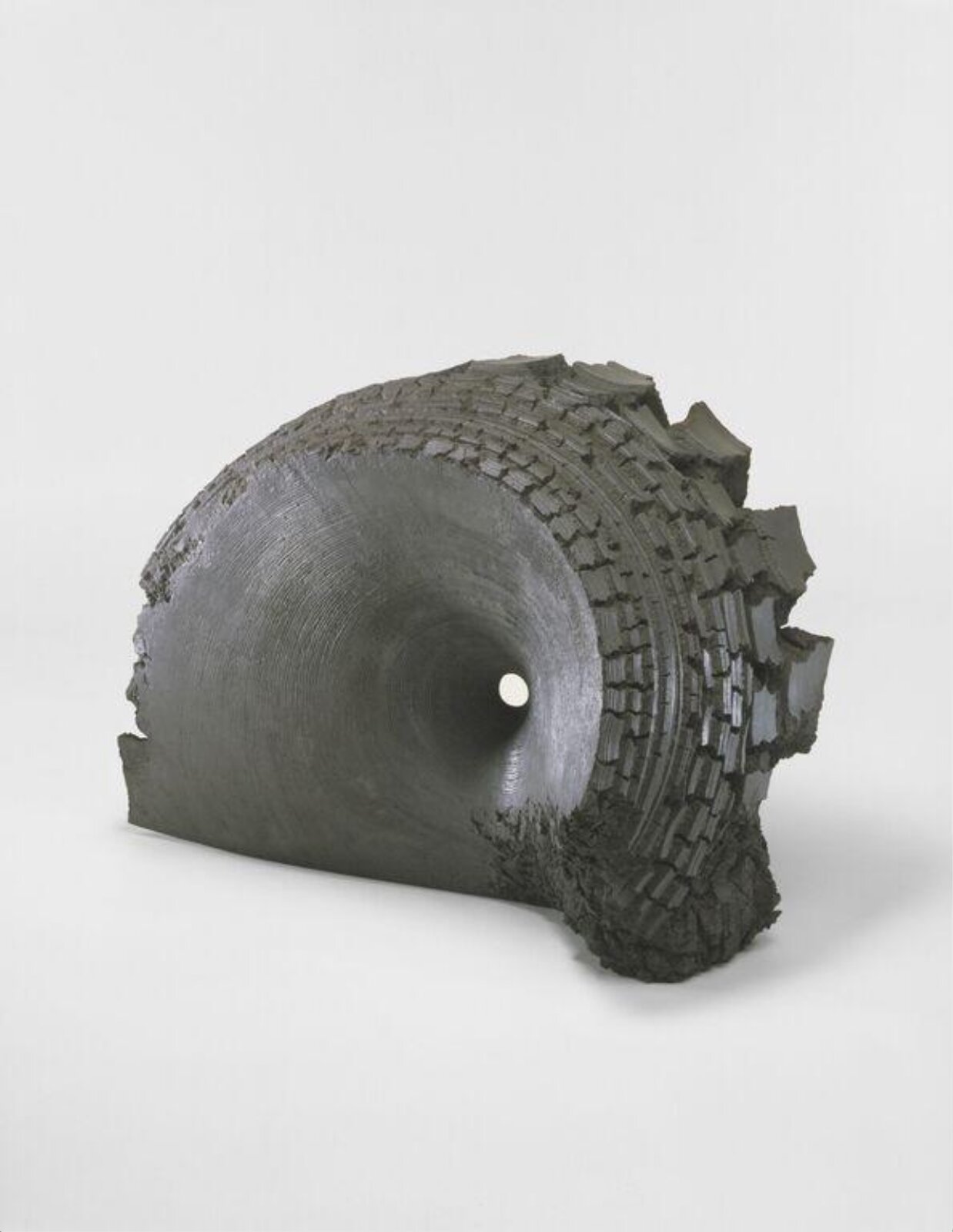
Yo Akiyama
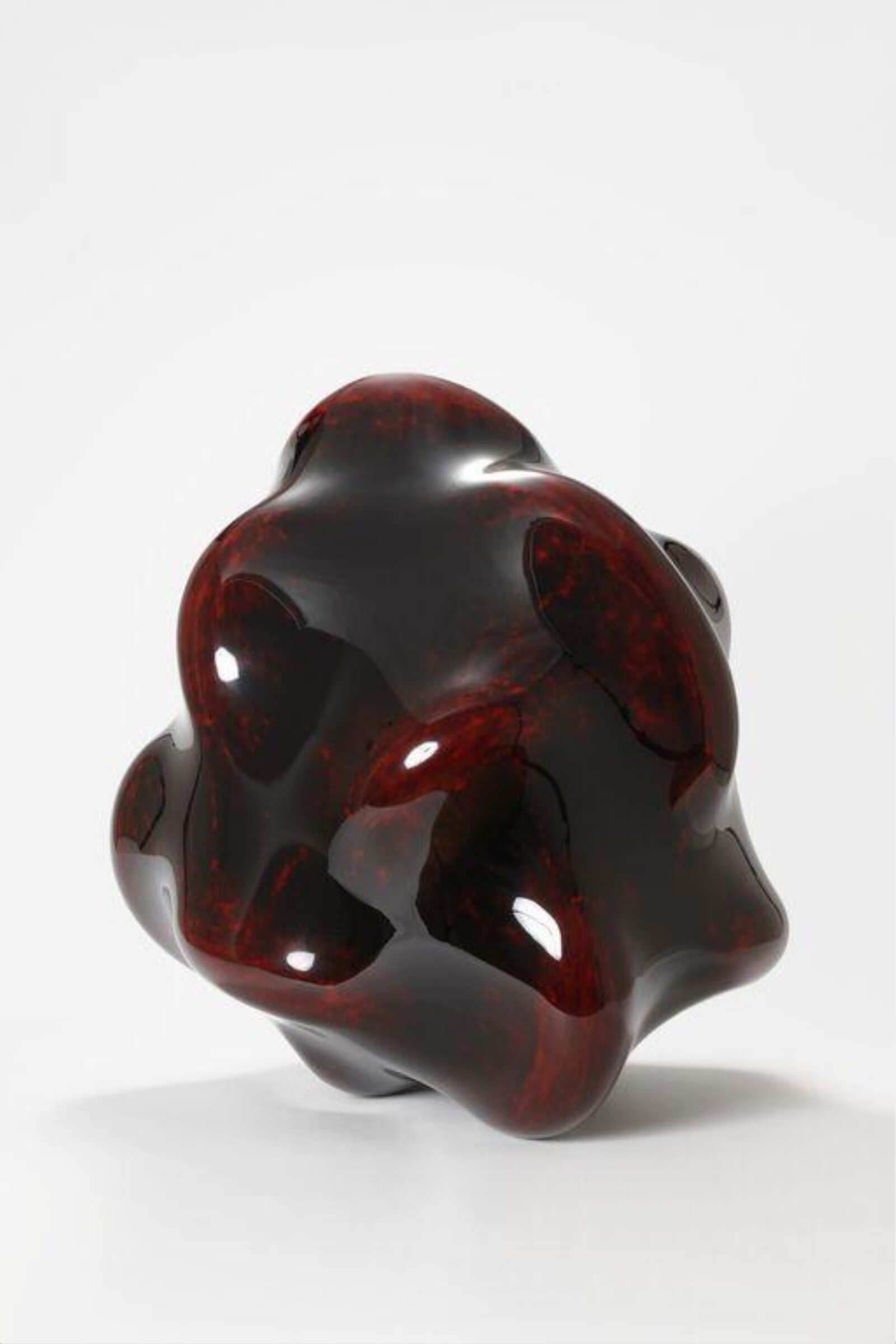
Geological Age V
Será possível contemplá-la?
Sim, recebe visitas

Exposta ao público. Quem o garante vem indicado abaixo.
- Verificado
- Neste estado desde
- Fonte
- O museu
Sobre a escultura
Akiyama Yo (1953-) is widely recognised as one of the leading Japanese ceramists of his generation. He studied at Kyoto City University of Arts, where he now teaches, and specialises in the use of 'Black Fire' ('kokuto' in Japanese, lit.'black ceramics'), a technique pioneered by his teacher Yagi Kazuo (1918-1979). 'Black Fire' involves burning large amounts of carbonising material in an earthenware firing to achieve an intense blackness which, for Yagi and his successors, has been a means to avoid the potentially obfuscating effects of glazes and also the structural movements and colour changes that tend to occur with high-temperature firings.
Continuar a ler
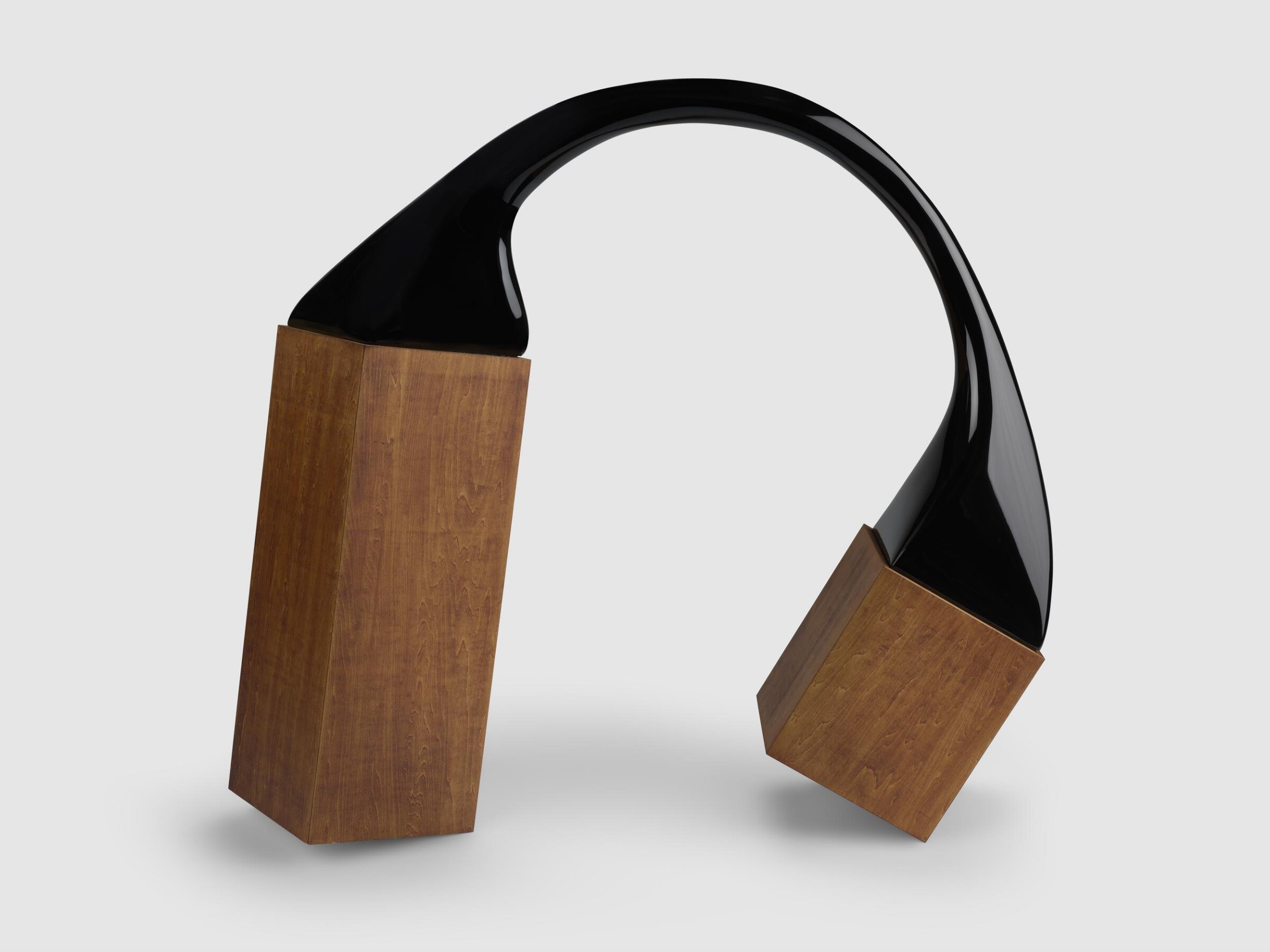
This massive semi-circular sculpture borders on the limit of what can be wielded in a kiln. It belongs to a period when Akiyama was experimenting with the use of a blow-torch to cause unfired clay to split and fissure in a manner reminiscent, as the title of work (Geological Age V) suggests, of the earth's crust.
To create this work Akiyama began by preparing a series of rings of different thicknesses and diameters. These were then blow-torched and the broken sections of each ring reversed so that the inner surface appeared on the outside as a series of concave curves separated by regularly spaced fissures. Reconstituted in this manner, the rings were stacked and modelled into a large, wedge-shaped form, the interior of which was then filled with two opposing cones of clay meeting at a small central hole. The precise turning of the inner surfaces contrasts with the ragged fracturing of the sculpture's exterior and gives emphasis to the work's rotational dynamism. Extensive use of burnishing adds to the drama of the form.
Akiyama is reported to have described his work of this period as being about the geology of our planet - the earth's crust, clouds and the surface of the sea - and also to have spoken of his indebtedness to Joseph Beuy's philosophical position on the use of materials. Speaking of how essential it was for him to use clay to express his artistic vision, he stated how, 'as clay is to earth, so too is a kiln to the earth's core.'
Museu Vitória e Alberto
Pormenores
- Número de inventário
- FE.563-1992
No catálogo
Fontes
- Museu Vitória e Alberto
- Imagem: Museu Vitória e Alberto — © Victoria and Albert Museum, London