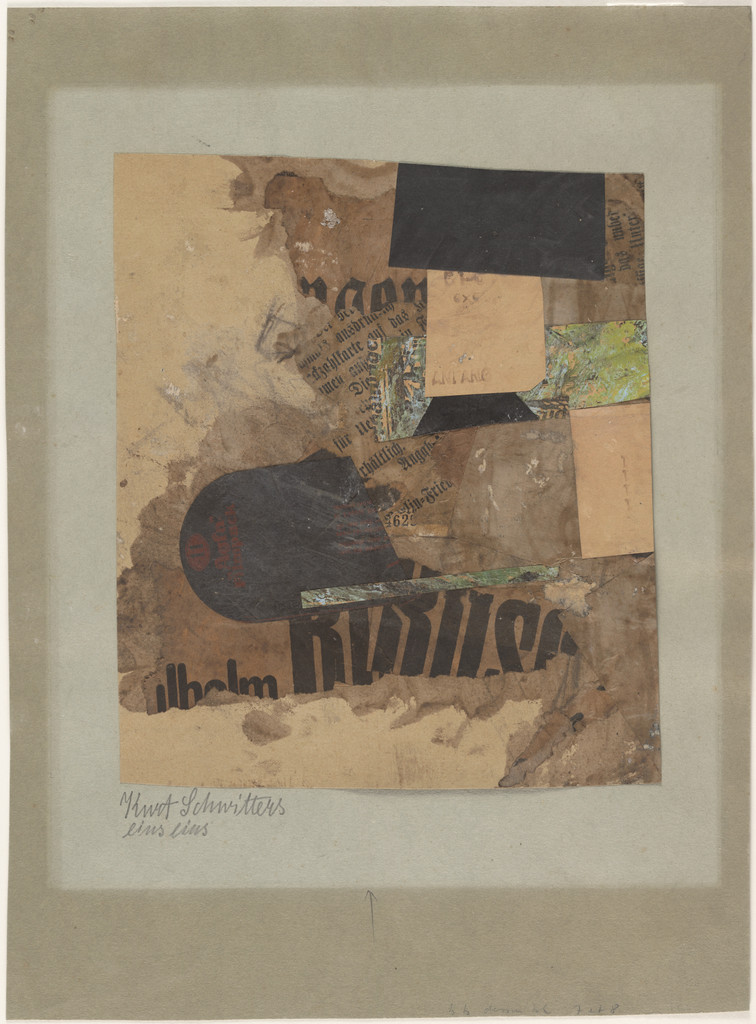
Kurt SchwittersAlemanha, 1887–1948
For Moholy
Será possível contemplá-la?
De momento, não recebe

Art Institute of Chicago
Chicago, Estados Unidos
Pertence à coleção, mas de momento não está exposta.
- Verificado
- ontem
- Neste estado desde
- 19 de ago. de 2026
- Fonte
- Os dados da própria coleção do museu
Pormenores
- Número de inventário
- 1996.638
No catálogo
Fontes
- Art Institute of Chicago: the museum's own open data · obtido há 5 dias
- Imagem: Art Institute of Chicago — © the artist or rights holder
Entretanto, na vida de Kurt Schwitters
A vida inteira1923–1932
Publishes the periodical ‘Merz’
The periodical appears from 1923 to 1932, each issue devoted to a central theme: no. 5 (1923) is a portfolio of prints by Jean Arp, and double issue 8/9 (1924) is edited and typeset by El Lissitzky, whose friendship proves particularly influential and brings Schwitters’s pictures closer to Constructivism. In all, 21 issues appeared; by numbering, the last is no. 24.
1929–1934
Official typographer to the city council
From 1929 to 1934 he is the official typographer to Hanover town council; by the late 1920s he is a well-known typographer (his best-known work is the catalogue for the Dammerstock estate in Karlsruhe) and a member of the Deutscher Werkbund. In 1934 he loses his contract with the council.
1932
Records ‘An Anna Blume’ and the ‘Ursonate’ on disc
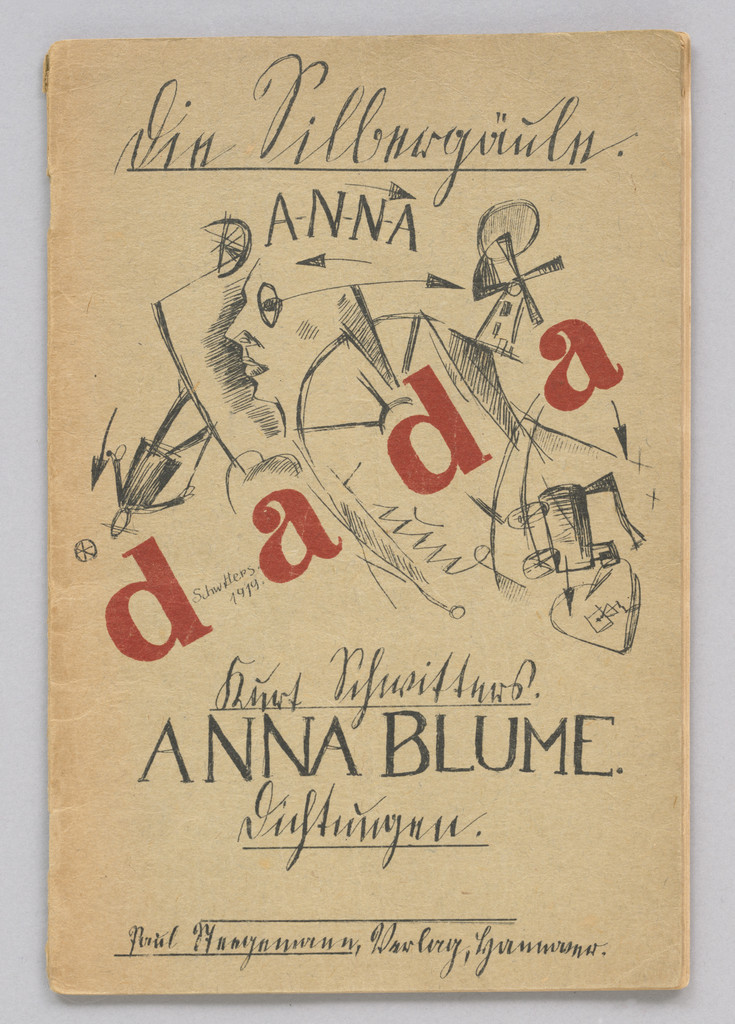
In 1932 both works — the poem ‘An Anna Blume’ and the ‘Ursonate’ — are recorded on a gramophone record in the author’s own performance.
1935
His works are confiscated from museums and ridiculed
In 1935, under the Nazis, examples of his work in German museums are confiscated and publicly ridiculed.
late 1936
Photographs of the Merzbau at MoMA
Photographs of the Merzbau, reproduced in 1933–34 in the journal of the Paris-based group abstraction-création, are exhibited at the Museum of Modern Art in New York.
August 1936
The Gestapo arrests his friends the Spengemanns
In August 1936 the Gestapo arrests his close friends Christof and Luise Spengemann and their son Walter; the situation has clearly become perilous.