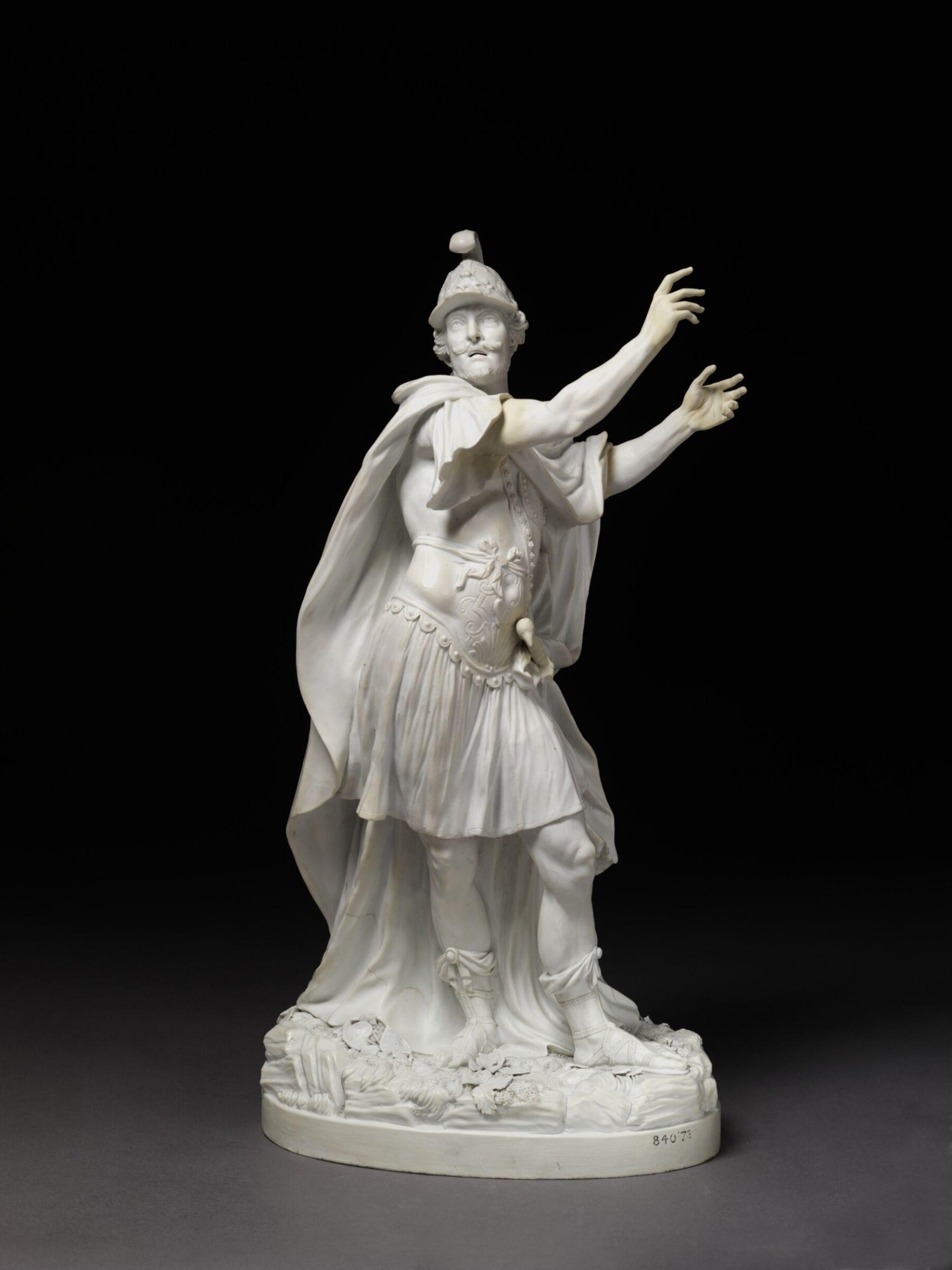
Patanazzi WorkshopItália
Figure
Será possível contemplá-la?
Sim, recebe visitas

Museu Vitória e Alberto
SalaCeramics, Room 137, The Curtain Foundation GalleryLondres, Reino Unido
Exposta ao público. Quem o garante vem indicado abaixo.
- Verificado
- há 8 dias
- Neste estado desde
- 25 de set. de 2026
- Fonte
- Os dados da própria coleção do museu
About the sculpture
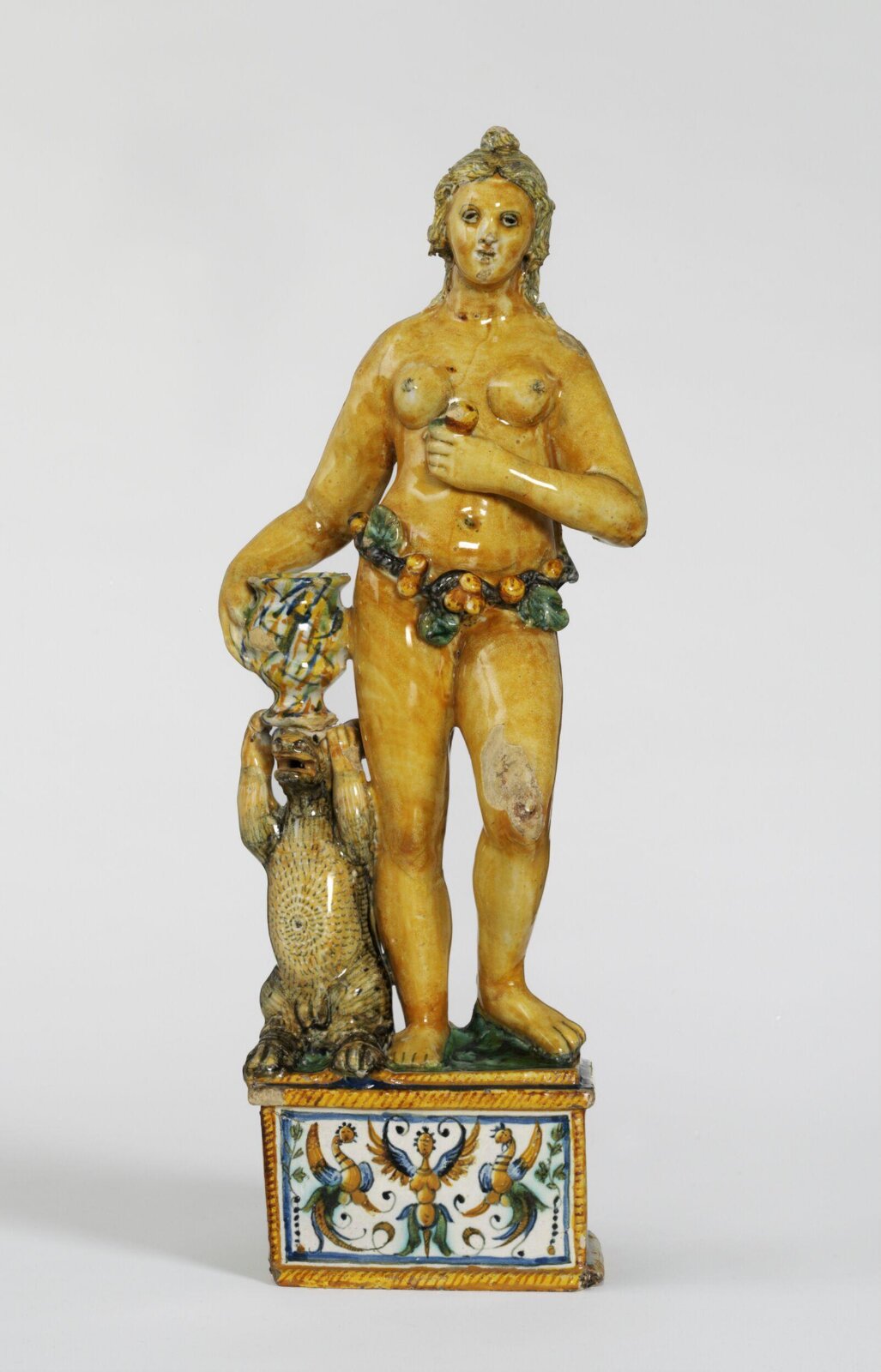
Maiolica groups are rare and dated ones much more so. This example can be attributed to Urbino, the town that, during the sixteenth century, produced some of the most exquisitely painted pottery ever made. During the second half of the century, Urbino potters developed a new type of decoration known as ‘grotesques’. Inspired by Roman wall-paintings, this combined elaborate, symmetrical scrollwork with fantastic winged creatures on a white ground as can be seen on the base of our statue. Typical for Urbino are also the fine painting on the beast, the colouring of the figure and the way the hair and eyes are modelled. However, the vast majority of Urbino maiolica in Museum collections dates from its heydays in the sixteenth century and relatively little is know about the later production. The date on this piece proves that production of good-quality maiolica groups continued for longer than we previously thought.
Read on
The meaning and function of the group is not entirely clear. The composition of the figure is almost certainly derived from an antique statue of Venus which was reproduced during the Renaissance period in drawings, prints or in bronze. It is most likely that the figure represents Venus as a personification of abundance. This would explain the apple in her hand and the wreath around her waist. The animal to her right remains an enigma but it perhaps had a specific meaning for the original owner of the object. It certainly also has a function as a support for the vulnerable legs of the group.
The urn Venus is holding is similar to the ink receptacles we find on Renaissance maiolica, sculptural inkstands. Our statue must have had a predominantly decorative function but is possible that it could have been used occasionally, as an inkwell too.
Museu Vitória e Alberto
Pormenores
- Número de inventário
- C.78-2013
No catálogo
Fontes
- Museu Vitória e Alberto: the museum's own open data · obtido há 8 dias
- Imagem: Museu Vitória e Alberto — © Victoria and Albert Museum, London