Otto DixAlemanha, 1891–1969
Dugout, from War
Será possível contemplá-la?
De momento, não recebe

Art Institute of Chicago
Chicago, Estados Unidos
Pertence à coleção, mas de momento não está exposta.
- Verificado
- Neste estado desde
- Fonte
- Os dados da própria coleção do museu
Sobre a obra
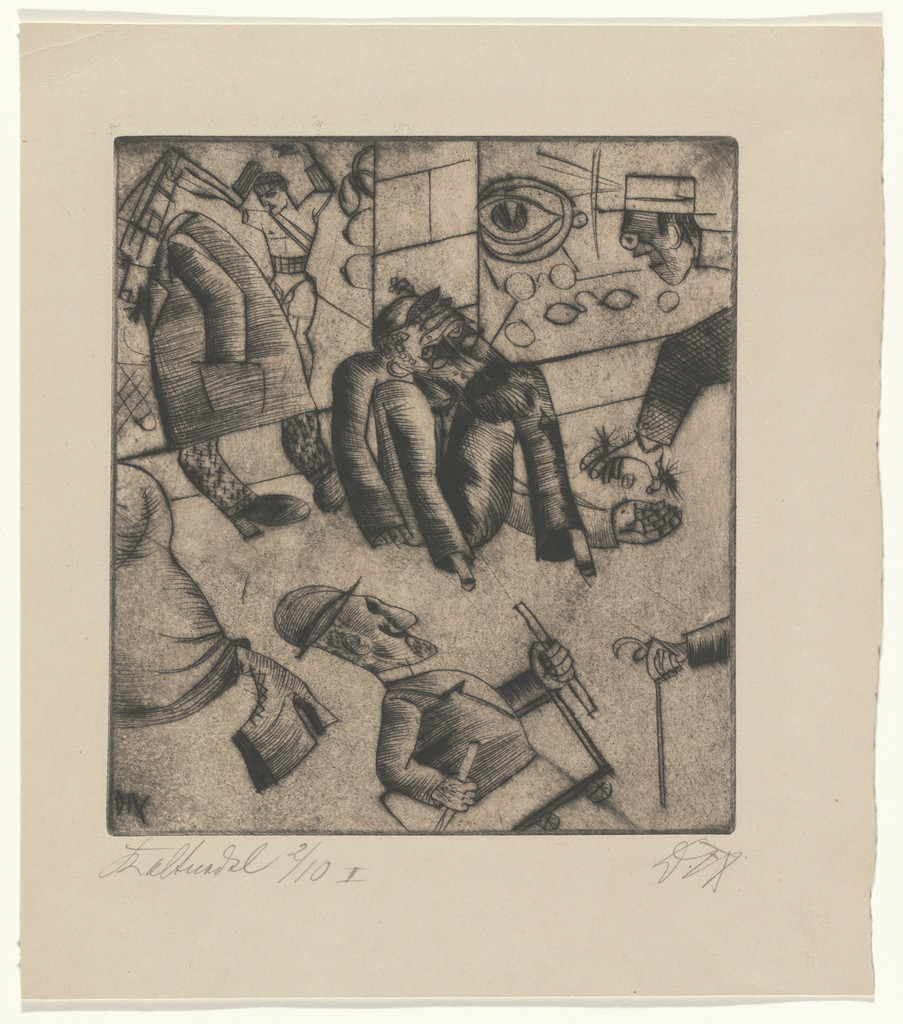
World War I dragged on for four years, making the trenches of the front line a second home for the soldiers. In this depiction, the ragtag soldiers (including Otto Dix, shown in profile as the cut-off figure in the middle) seem to be enjoying a moment away from the gassing and bombs. Still, darker sides of this life are illustrated in the stacked bunks behind the card players, an image that confuses the act of sleeping underground with death and coffins. The artist would repeat this motif in the bottom panel of his monumental painting War Triptych (1929–32).
Art Institute of ChicagoCC BY 4.0
Pormenores
- Número de inventário
- 1999.360.5
What it shows
No catálogo
Fontes
- Art Institute of Chicago: the museum's own open data · obtido há 7 dias
- Imagem: Art Institute of Chicago — © the artist or rights holder
Entretanto, na vida de Otto Dix
A vida inteira1920s
A ruthless chronicle of Weimar Germany
Like Grosz, Dix is extremely critical of contemporary German society, unsparingly depicting prostitution, violence, old age and death and often dwelling on Lustmord, or sexualized murder. His legless and disfigured veterans, a common sight on Berlin's streets in the 1920s, reveal the ugly side of war and the forgotten status of these men in German society.
1 de fevereiro de 1923
Married: Martha Dix
14 de junho de 1923
Daughter born: Nelly Dix
1924
Joining the Berlin Secession
In 1924 Dix joins the Berlin Secession.
1925
The Trench scandal: Adenauer cancels the purchase
The Trench causes such a furor that the Wallraf-Richartz Museum hides the painting behind a curtain; in 1925 the then-mayor of Cologne, Konrad Adenauer, cancels the purchase of the painting and forces the museum's director to resign.
1925
The Neue Sachlichkeit exhibition in Mannheim
Dix contributes to the Neue Sachlichkeit exhibition in Mannheim, which also features works by George Grosz, Max Beckmann, Heinrich Maria Davringhausen, Karl Hubbuch, Rudolf Schlichter, Georg Scholz and many others.