ART WIKI32 963 em exposição
MapaColeçãoArtistasMuseusExposiçõesRevista
Entrar

ART WIKI

Onde está a obra-prima, e a que horas se abre a porta.

Coleções: Art Institute of Chicago, Galeria Nacional de Arte, Galeria Tretiakov, Getty Villa, Harvard Art Museums, Hermitage, Hirshhorn Museum and Sculpture Garden, Instituto de Artes de Minneapolis, Museu de Arte de Cleveland, Museu de Arte Moderna, Museu do Louvre, Museu Estatal de Amesterdão, Museu J. Paul Getty, Museu Metropolitano de Arte, Museu Nacional de Arte da Dinamarca, Museu Pushkin, Museu Russo, Museu Smithsoniano de Arte Americana, Museu Vitória e Alberto, Museu Whitney de Arte Americana, National Museum of Asian Art, National Portrait Gallery, Catálogo Estatal do Fundo Museológico da Rússia (274 museus), Europeana (19 museus), Wikidata (6 museus), Paris Musées (12 museus) e Joconde, a base de museus do Ministério da Cultura de França (495 museus). As imagens pertencem aos titulares dos direitos.

Secções

  • Mapa
  • Pesquisa
  • Coleção
  • Obras-primas
  • Em exposição agora
  • Artistas

Mais

  • Museus e galerias
  • Exposições
  • Revista
  • De onde vêm os dados
  • Privacidade e cookies
InícioMapaCatálogo
  1. Coleção/
  2. Museu Estatal de Amesterdão/
  3. De reddingslijn
De reddingslijn, Winslow Homer, 1884
Winslow Homer, retratoWinslow HomerEstados Unidos, 1836–1910

De reddingslijn

1884 · Print

Será possível contemplá-la?

Desconhecido

Museu Estatal de Amesterdão

Amesterdão, Países Baixos

O proprietário é conhecido; não se sabe se hoje está exposta.

Fonte
O museu
No mapaPágina do museu

Sobre a obra

Nas palavras do museu — em holandês

Een vrouw wordt door een man van een reddingsbrigade met een lijn uit het water gehaald.

Museu Estatal de Amesterdão

Pormenores

1884 · aos 48 anos
18361910
Número de inventário
RP-P-1960-105

O que mostra

Drowning, shipwrecked personSaving a person from drowning

No catálogo

GravurasImpressionismoSéculo XIX

Fontes

  • Museu Estatal de Amesterdão
  • Imagem: Museu Estatal de Amesterdão — public domain

Entretanto, na vida de Winslow Homer

A vida inteira
  1. spring 1881 – November 1882

    England: the village of Cullercoats

    In 1881 Homer set off on his second and last trip abroad, to England, and from the spring of 1881 to November 1882 lived in the village of Cullercoats on the North Sea, depicting the courage of fishermen and above all of women: gutting fish, mending nets, waiting for the men at the water's edge. The period profoundly changed his later work: his palette grew sober and his pictures larger. Of the local women he wrote: “The women are the working bees.”

  2. November 1882

    Return: “a very different Homer”

    In November 1882 Homer returned to the United States and showed his English watercolours in New York. Critics noticed the change at once: “He is a very different Homer from the one we knew”, his pictures were “works of High Art”, and his women were no longer “dolls who flaunt their millinery” but sturdy, fearless wives and mothers.

  3. summer 1883

    Moves to Prouts Neck

    In the summer of 1883 Homer moved from New York to Prouts Neck, a peninsula ten miles south of Portland, Maine, and lived there for the rest of his life, using solitude to work. He settled on the family estate, in a remodelled carriage house seventy-five feet from the ocean.

  4. 1884

    Death of his mother

    In 1884 Homer's mother died: his first teacher and the strongest influence on him. After her death he became a “parent” to his ageing but domineering father, and his sister-in-law Martha (“Mattie”) became his closest female intimate.

  5. winter 1884 – 1885

    Florida, Cuba and the Bahamas

    In the winter of 1884–1885 Homer travelled to Florida, Cuba and the Bahamas, painting a series of watercolours commissioned by Century Magazine: the storm-tossed green sea of Prouts Neck gave way to the sparkling blue skies of the Caribbean, and for Edith Blake, wife of the governor of the Bahamas, he painted “Children Under a Palm Tree”. “A Garden in Nassau” (1885) is one of the best of these watercolours, but they proved too advanced for traditional buyers.
Mais obras de Winslow Homer

Todas as obras
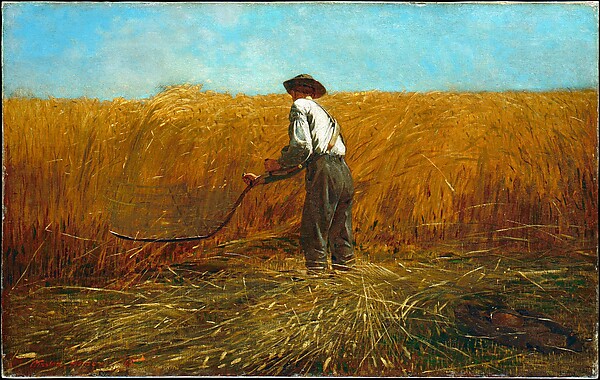
The Veteran in a New Field, Winslow Homer, 1865

The Veteran in a New Field

1865 · Museu Metropolitano de Arte

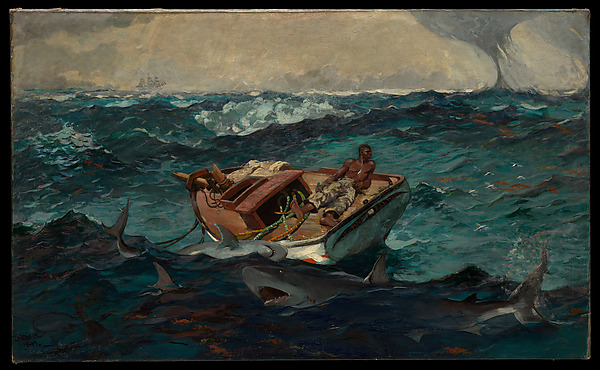
The Gulf Stream, Winslow Homer, 1899; reworked by 1906

The Gulf Stream

1899; reworked by 1906 · Museu Metropolitano de Arte

Home, Sweet Home, Winslow Homer, c. 1863

Home, Sweet Home

c. 1863 · Galeria Nacional de Arte

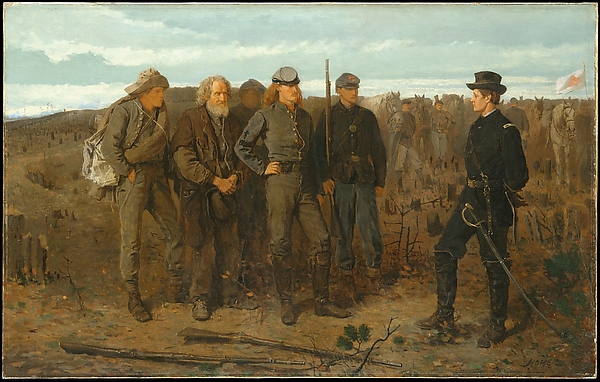
Prisoners from the Front, Winslow Homer, 1866

Prisoners from the Front

1866 · Museu Metropolitano de Arte

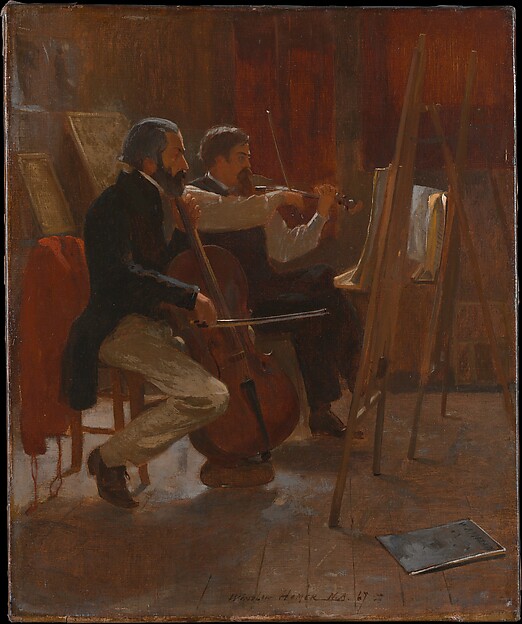
The Studio, Winslow Homer, 1867

The Studio

1867 · Museu Metropolitano de Arte

Coming through the Rye, Winslow Homer, 1867

Coming through the Rye

1867 · Museu Metropolitano de Arte

The Dinner Horn (Blowing the Horn at Seaside), Winslow Homer, 1870

The Dinner Horn (Blowing the Horn at Seaside)

1870 · Galeria Nacional de Arte

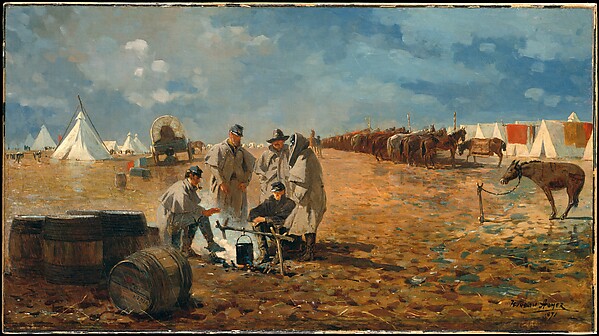
Rainy Day in Camp, Winslow Homer, 1871

Rainy Day in Camp

1871 · Museu Metropolitano de Arte

Vizinhas de sala: Museu Estatal de Amesterdão

Página do museu
Self-portrait, Vincent van Gogh, 1887

Vincent van Gogh

Self-portrait, 1887

La Corniche near Monaco, Claude Monet, 1884

Claude Monet

La Corniche bij Monaco, 1884

De Nachtwacht, Rembrandt van Rijn, 1642

Rembrandt van Rijn

A Ronda Nocturna, 1642

Portrait of a Woman, Probably Maria Trip (1619-1683), Rembrandt van Rijn, 1639

Rembrandt van Rijn

Portrait of a Woman, Probably Maria Trip (1619-1683), 1639

Still Life with Peacocks, Rembrandt van Rijn, c. 1639

Rembrandt van Rijn

Still Life with Peacocks, c. 1639

Landscape with a Stone Bridge, Rembrandt van Rijn, c. 1638

Rembrandt van Rijn

Ponte de Pedra, c. 1638

Man in Oriental Dress, Rembrandt van Rijn, 1635

Rembrandt van Rijn

Man in Oriental Dress, 1635

Portrait of Haesje Jacobsdr van Cleyburg, Rembrandt van Rijn, 1634

Rembrandt van Rijn

Portrait of Haesje Jacobsdr van Cleyburg, 1634