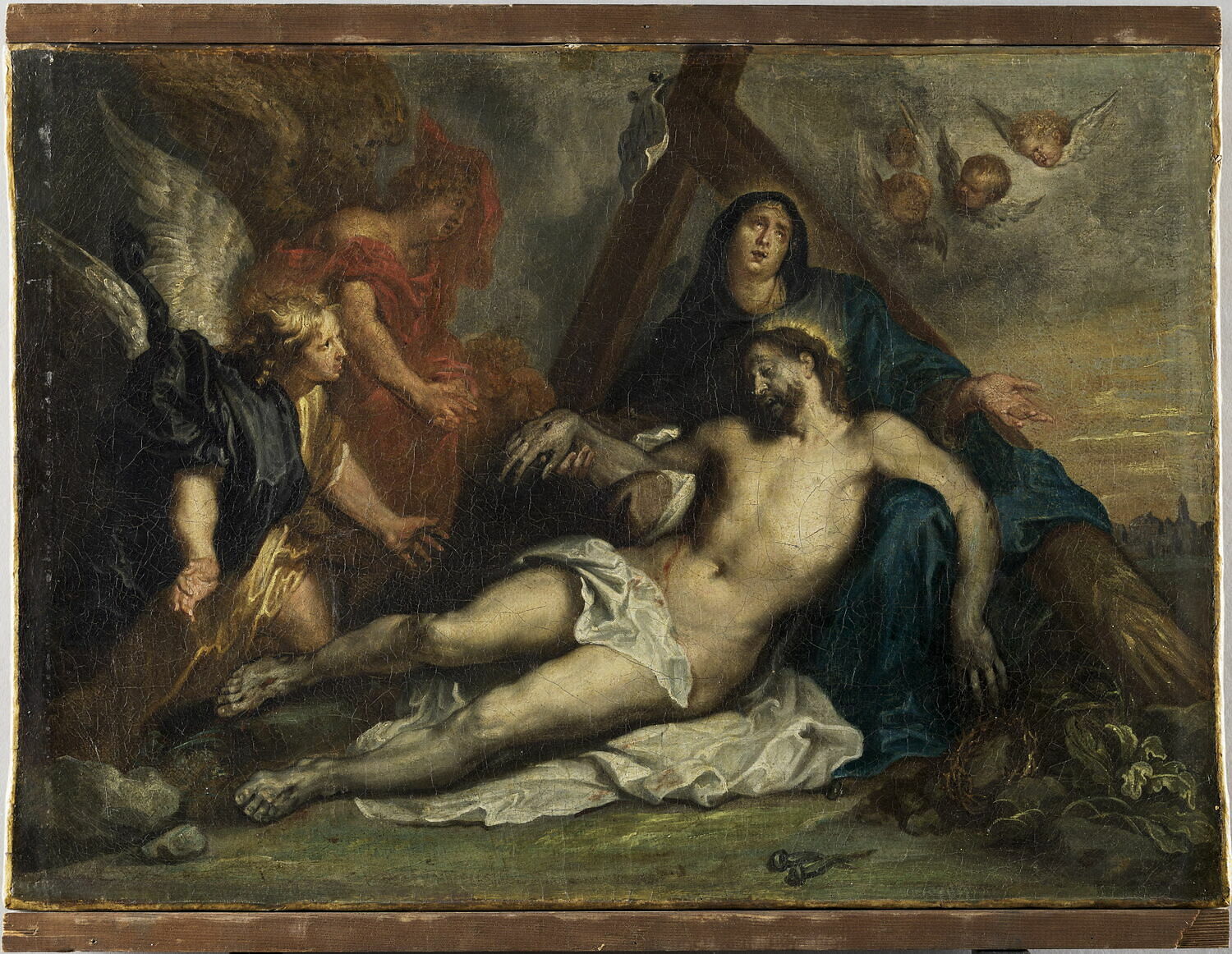
Anthony van DyckFlandres, 1599–1641
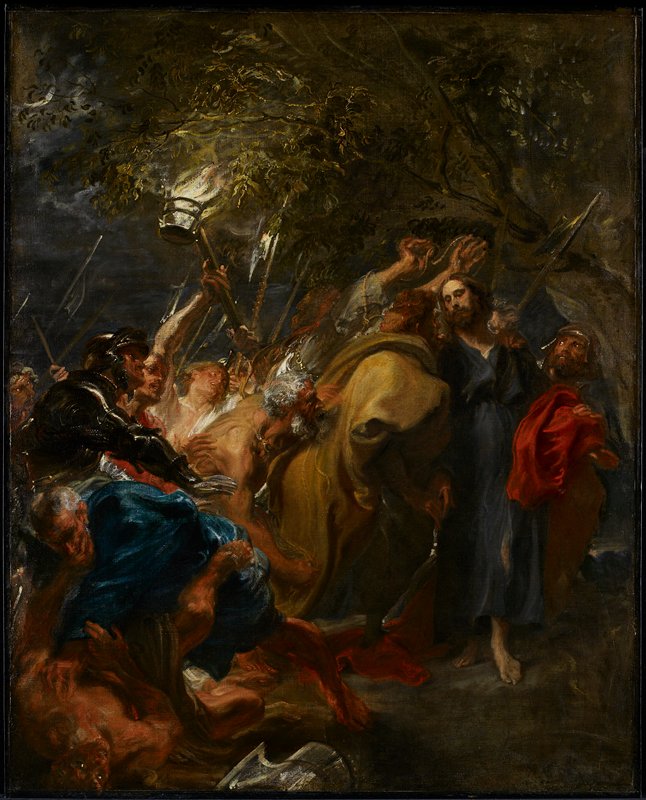
De bespotting van Christus
Posso vê-la?
Desconhecido
Onde está «De bespotting van Christus» hoje? Coleção: Museu Estatal de Amesterdão, Amesterdão. Desconhecido.

Amesterdão, Países Baixos
O proprietário é conhecido; não se sabe se hoje está exposta.
- Fonte
- O museu
Sobre a obra
Nas palavras do museu — em holandês
De bespotting van Christus door twee mannen, een man reikt hem spottend de rietstaf aan en een soldaat hangt hem een mantel om de schouders. Met vier regels Latijnse tekst in de marge onderaan.
Museu Estatal de Amesterdão
Pormenores
- Número de inventário
- RP-P-BI-7441
O que mostra
No catálogo
Fontes
- Museu Estatal de Amesterdão
- Imagem: Museu Estatal de Amesterdão — public domain
Na vida de Anthony van Dyck
A vida inteira1626–1632
The Iconography Print Series
After returning to Antwerp, Van Dyck conceived a large series of engraved portraits of his contemporaries, the Iconography; he etched eighteen plates himself, executing the preparatory drawings mainly between 1626 and 1633. The first edition (80 plates) appeared in Antwerp in 1632.
1629
Beginning of His Relationship with Charles I
Van Dyck's relationship with Charles I began in 1629: through the intermediary Sir Endymion Porter, the king acquired his painting Rinaldo and Armida.
by 1630
Court Painter to Archduchess Isabella
From 1630 Van Dyck was court painter to Archduchess Isabella Clara Eugenia of Habsburg, regent of the Spanish Netherlands; for her portrait he received a gold chain.
1632 · Local de trabalho
London
1632
Post: court painter
5 July 1632
Principal Painter to King Charles I
On 5 July 1632 Charles I officially appointed Van Dyck principal painter to the king, guaranteeing an annual income of two hundred pounds sterling; the king gave him a large house with a garden on the banks of the Thames.