ART WIKI32 963 em exposição
MapaColeçãoArtistasMuseusExposiçõesRevista
Entrar

ART WIKI

Onde está a obra-prima, e a que horas se abre a porta.

Coleções: Art Institute of Chicago, Galeria Nacional de Arte, Galeria Tretiakov, Getty Villa, Harvard Art Museums, Hermitage, Hirshhorn Museum and Sculpture Garden, Instituto de Artes de Minneapolis, Museu de Arte de Cleveland, Museu de Arte Moderna, Museu do Louvre, Museu Estatal de Amesterdão, Museu J. Paul Getty, Museu Metropolitano de Arte, Museu Nacional de Arte da Dinamarca, Museu Pushkin, Museu Russo, Museu Smithsoniano de Arte Americana, Museu Vitória e Alberto, Museu Whitney de Arte Americana, National Museum of Asian Art, National Portrait Gallery, Catálogo Estatal do Fundo Museológico da Rússia (274 museus), Europeana (19 museus), Wikidata (6 museus), Paris Musées (12 museus) e Joconde, a base de museus do Ministério da Cultura de França (495 museus). As imagens pertencem aos titulares dos direitos.

Secções

  • Mapa
  • Pesquisa
  • Coleção
  • Obras-primas
  • Em exposição agora
  • Artistas

Mais

  • Museus e galerias
  • Exposições
  • Revista
  • De onde vêm os dados
  • Privacidade e cookies
InícioMapaCatálogo
  1. Coleção/
  2. Museu Estatal de Amesterdão/
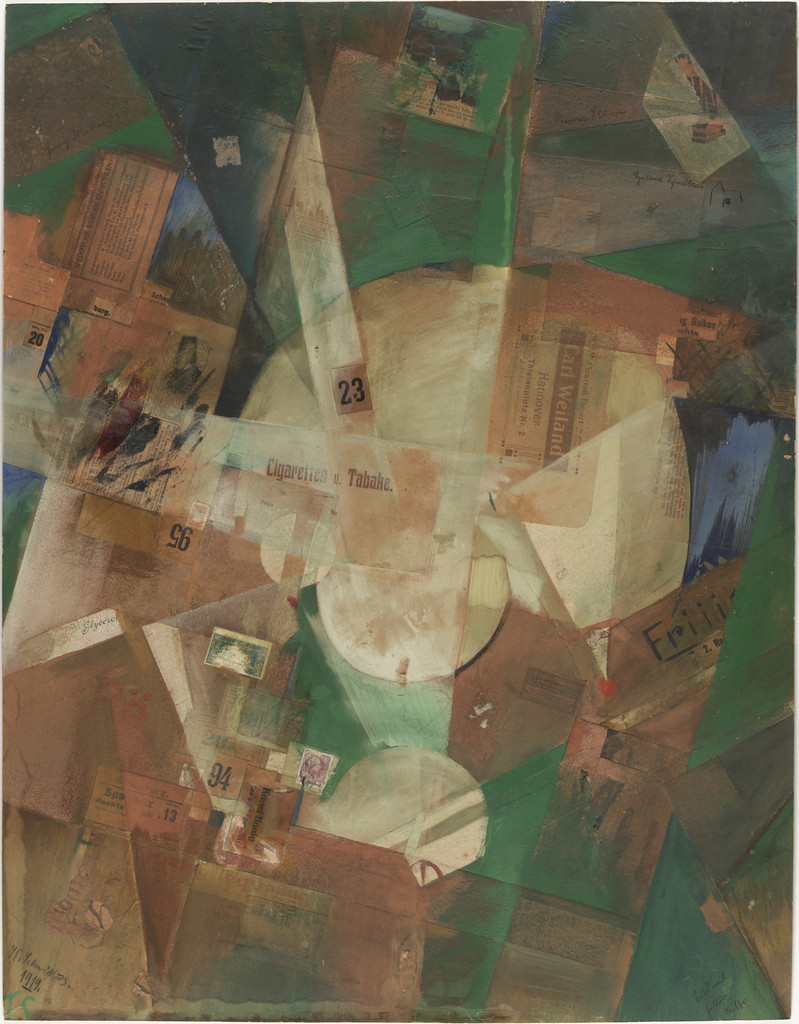
  3. Compositie met typografische elementen
Compositie met typografische elementen, Kurt Schwitters, 1923
Kurt Schwitters, retratoKurt SchwittersAlemanha, 1887–1948

Compositie met typografische elementen

1923 · Print

Será possível contemplá-la?

Desconhecido

Museu Estatal de Amesterdão

Amesterdão, Países Baixos

O proprietário é conhecido; não se sabe se hoje está exposta.

Fonte
O museu
No mapaPágina do museu

Pormenores

1923 · aos 36 anos
18871948
Número de inventário
RP-P-1924-29

O que mostra

Abstract, Non-representational Art

No catálogo

GravurasModernismoSéculo XX

Fontes

  • Museu Estatal de Amesterdão
  • Imagem: Museu Estatal de Amesterdão — public domain

Entretanto, na vida de Kurt Schwitters

A vida inteira
  1. 1920s

    Lecture and recital tours across Europe

    Together with other members of the international avant-garde — Jean Arp, Raoul Hausmann and Tristan Tzara — he organises and takes part in tours of provocative evening recitals and lectures in Czechoslovakia, the Netherlands and Germany.

  2. 1922

    Answers Huelsenbeck with an absurdist story

    Huelsenbeck had ridiculed him as ‘the Caspar David Friedrich of the Dadaist Revolution’; in reply Schwitters publishes in the magazine Der Sturm the story ‘Franz Mullers Drahtfrühling’, about an innocent bystander who starts a revolution ‘merely by being there’.

  3. 1922–1923

    Dada evenings in the Netherlands with Van Doesburg

    In 1922 Theo van Doesburg organises Dada performances in Amsterdam, Leiden, Utrecht and The Hague: the Dadaists he invites decline, and the programme is carried by Theo van Doesburg, Nelly van Doesburg (performing as Petrò van Doesburg), Schwitters and sometimes Vilmos Huszár. Schwitters’s solo evening takes place on 13 April 1923 in Drachten, where he later stays often with the local painter Thijs Rinsema and makes collages, probably together with him.

  4. 1923–1932

    Publishes the periodical ‘Merz’

    The periodical appears from 1923 to 1932, each issue devoted to a central theme: no. 5 (1923) is a portfolio of prints by Jean Arp, and double issue 8/9 (1924) is edited and typeset by El Lissitzky, whose friendship proves particularly influential and brings Schwitters’s pictures closer to Constructivism. In all, 21 issues appeared; by numbering, the last is no. 24.

  5. after 1924

    Runs the advertising agency Merzwerbe

    After the demise of the Der Sturm gallery in 1924 he runs an advertising agency, Merzwerbe, whose clients include Pelikan inks and Bahlsen biscuits. Designs, test prints and proof sheets from these jobs often crop up in his Merz pictures.

  6. 14 February 1925

    First performance of the ‘Ursonate’

    He performs the ‘Ursonate’ for the first time at the home of Irmgard Kiepenheuer in Potsdam, then performs it regularly, developing and extending it; in 1932 he publishes the notation in the last ‘Merz’ (no. 24, typography by Jan Tschichold) and continues to develop the piece for at least ten more years.
Mais obras de Kurt Schwitters

Todas as obras
Picture with Light Center (Bild mit heller Mitte), Kurt Schwitters, 1919

Picture with Light Center (Bild mit heller Mitte)

1919 · Museu de Arte Moderna

Untitled, Kurt Schwitters, c. 1946

Untitled

c. 1946 · Art Institute of Chicago

For the Modern, Kurt Schwitters, 1947

For the Modern

1947 · Art Institute of Chicago

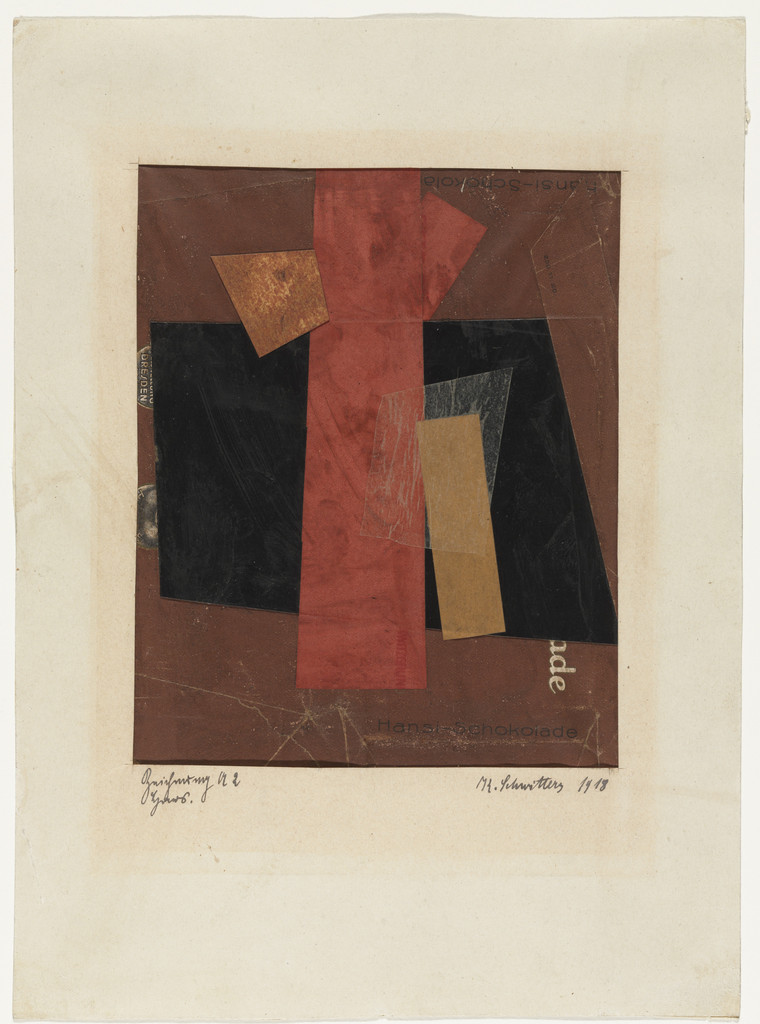
Drawing A2: Hansi, Kurt Schwitters, 1918

Drawing A2: Hansi

1918 · Não exposta · Museu de Arte Moderna

Untitled, Kurt Schwitters, 1919

Untitled

1919 · Não exposta · Galeria Nacional de Arte

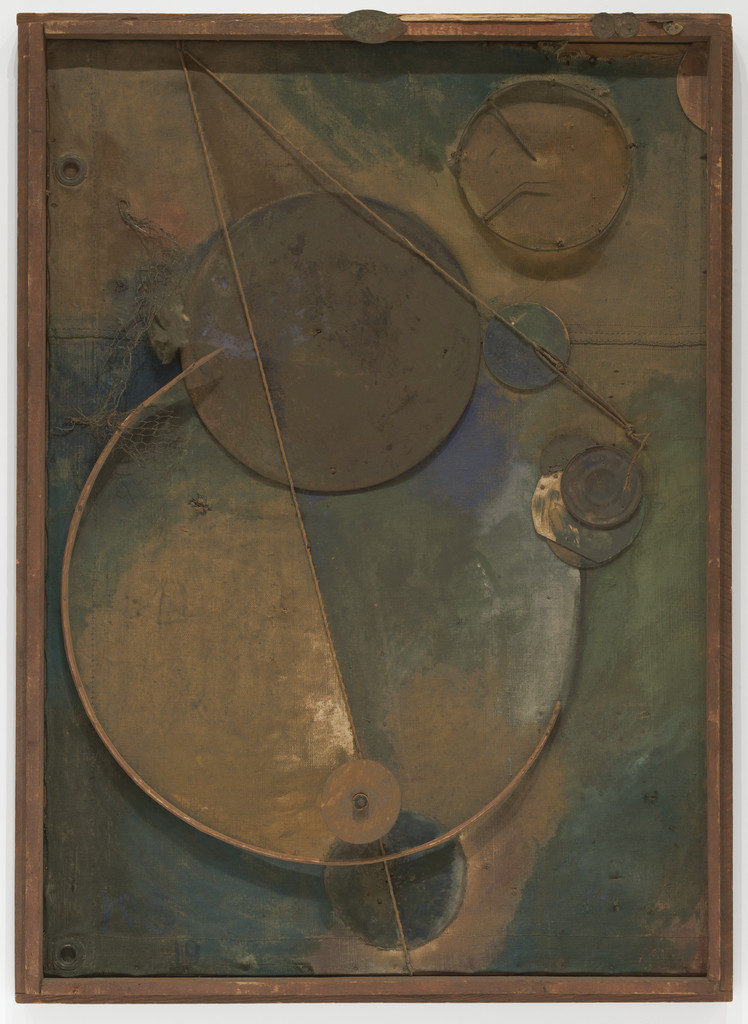
Revolving, Kurt Schwitters, 1919

Revolving

1919 · Não exposta · Museu de Arte Moderna

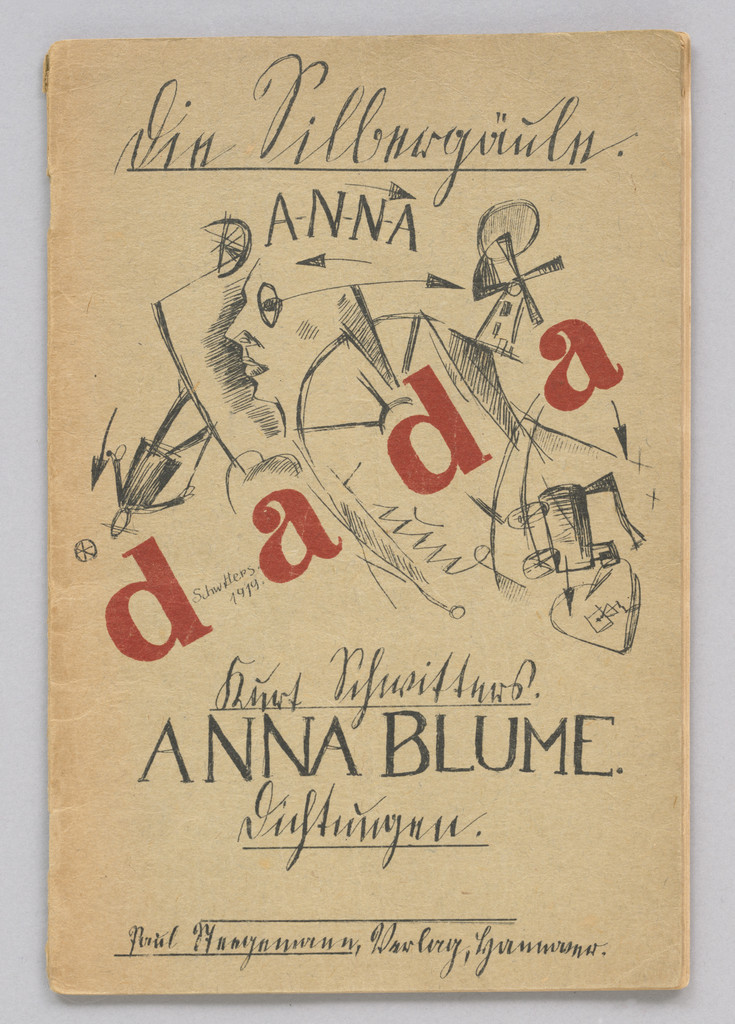
Anna Blume: Dichtungen (Die Silbergäule, vol. 39/40), Kurt Schwitters, 1919

Anna Blume: Dichtungen (Die Silbergäule, vol. 39/40)

1919 · Não exposta · Museu de Arte Moderna

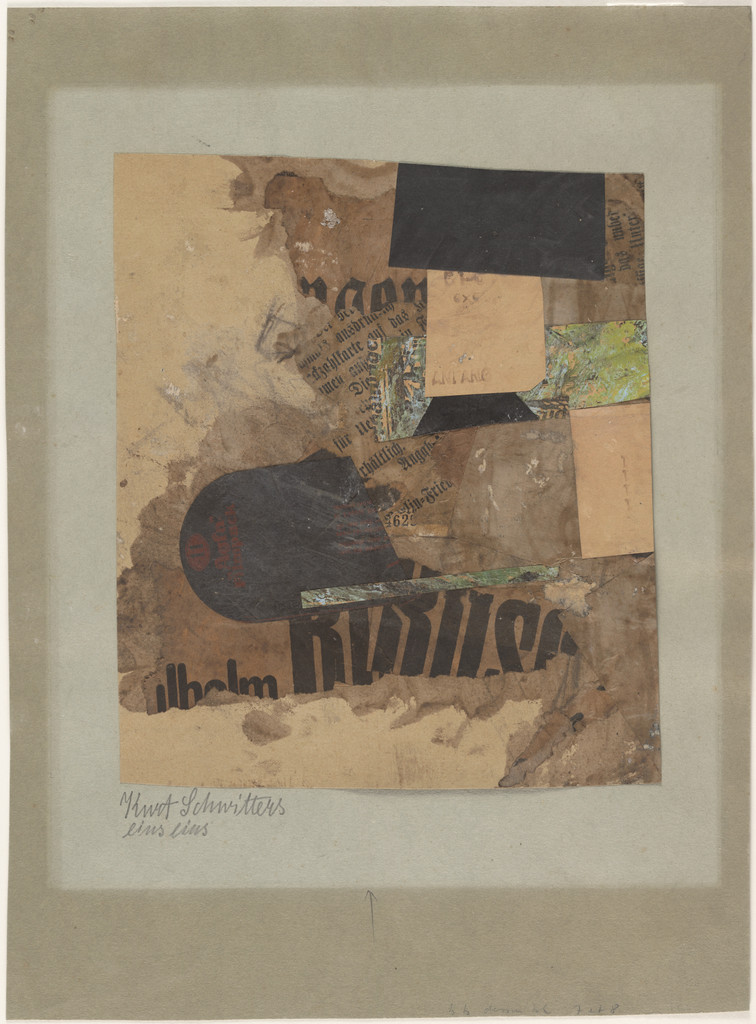
One One (Eins Eins), Kurt Schwitters, 1919–20

One One (Eins Eins)

1919–20 · Não exposta · Museu de Arte Moderna

Vizinhas de sala: Museu Estatal de Amesterdão

Página do museu
Self-portrait, Vincent van Gogh, 1887

Vincent van Gogh

Self-portrait, 1887

La Corniche near Monaco, Claude Monet, 1884

Claude Monet

La Corniche bij Monaco, 1884

De Nachtwacht, Rembrandt van Rijn, 1642

Rembrandt van Rijn

A Ronda Nocturna, 1642

Portrait of a Woman, Probably Maria Trip (1619-1683), Rembrandt van Rijn, 1639

Rembrandt van Rijn

Portrait of a Woman, Probably Maria Trip (1619-1683), 1639

Still Life with Peacocks, Rembrandt van Rijn, c. 1639

Rembrandt van Rijn

Still Life with Peacocks, c. 1639

Landscape with a Stone Bridge, Rembrandt van Rijn, c. 1638

Rembrandt van Rijn

Ponte de Pedra, c. 1638

Man in Oriental Dress, Rembrandt van Rijn, 1635

Rembrandt van Rijn

Man in Oriental Dress, 1635

Portrait of Haesje Jacobsdr van Cleyburg, Rembrandt van Rijn, 1634

Rembrandt van Rijn

Portrait of Haesje Jacobsdr van Cleyburg, 1634