 Alexandre BenoisRússia, 1870–1960
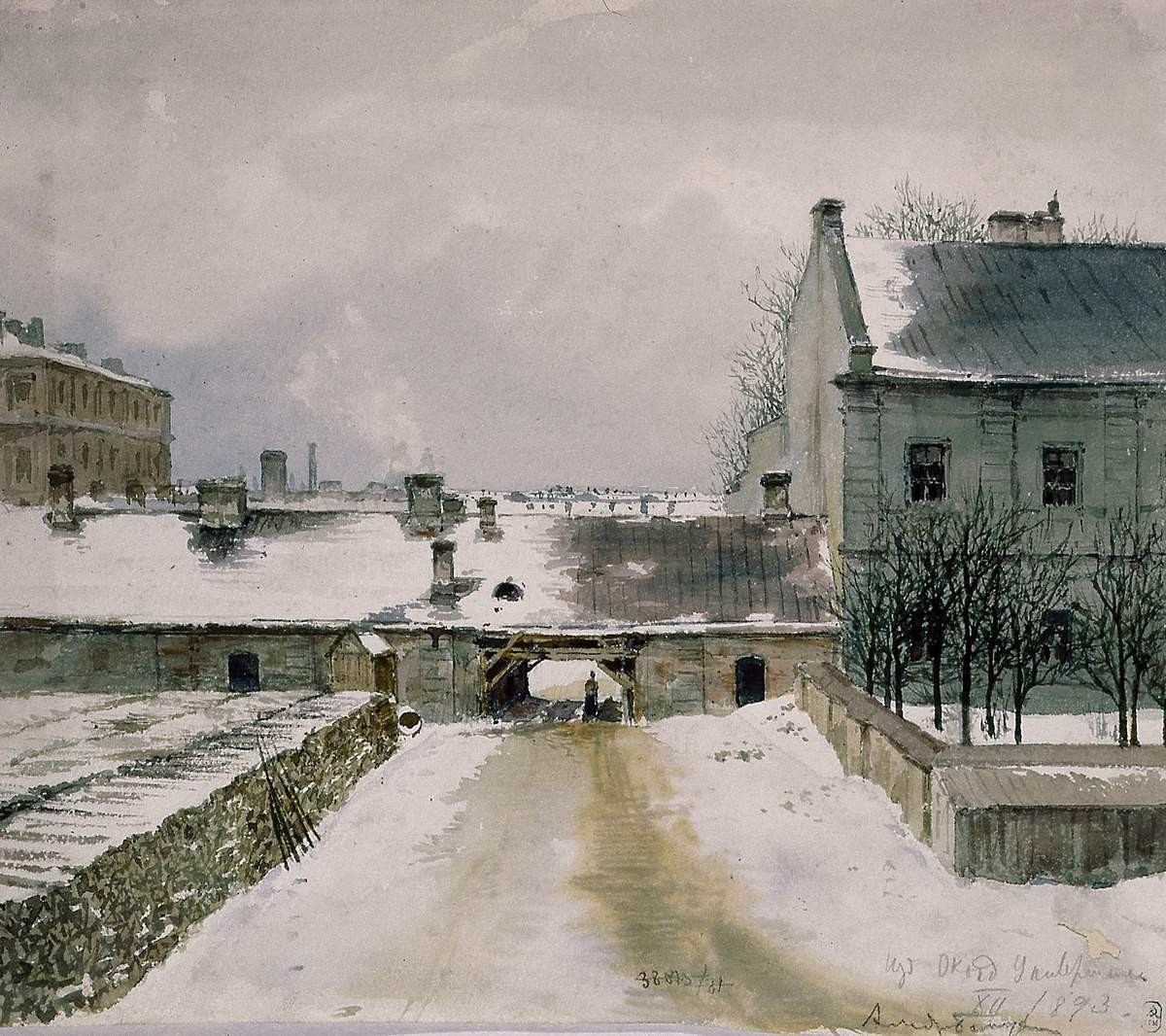
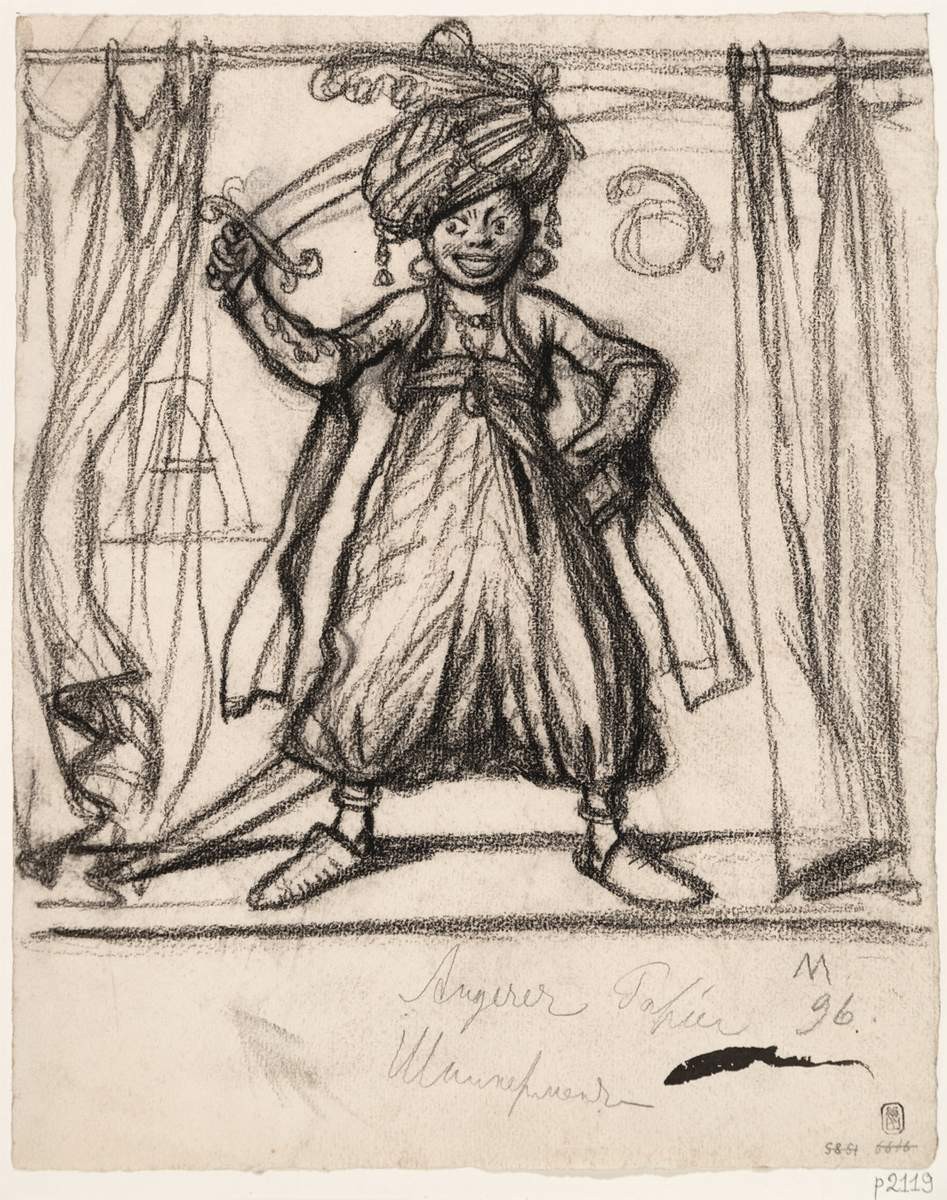
Буква «А». Арап
Posso vê-la?
Desconhecido
Onde está «Буква «А». Арап» hoje? Coleção: Museu Russo, São Petersburgo. Desconhecido.

São Petersburgo, Rússia
O proprietário é conhecido; não se sabe se hoje está exposta.
- Neste estado desde
- Fonte
- O museu
Pormenores
- Número de inventário
- Р-2119
No catálogo
Fontes
- Museu Russo
- Imagem: Museu Russo — © State Russian Museum
Na vida de Alexandre Benois
A vida inteira1887–1926 · Local de trabalho
Saint Petersburg
1902
“History of Russian Painting in the 19th Century” is published
The fundamental monograph “History of Russian Painting in the 19th Century” appears, grown out of his section for Richard Muther's German edition.
1904
“Alphabet in Pictures”
Works for about a year on the “Alphabet in Pictures”, almost his only major work for children, playing with his two-year-old son Kolya as he draws. The censor's permission is dated 24 October 1904, and the book is printed in chromolithography with silver and gold at the Expedition for the Preparation of State Papers in 2,500 copies.
1905–1907 · Local de trabalho
Paris
1905–1907
Second trip to France
During his second trip to France he prepares the publications “The Russian Museum of Emperor Alexander III” and “The Russian School of Painting”, works with the magazine Golden Fleece, prints his “Parisian Notes” in the newspaper Slovo and takes part in exhibitions in Moscow, Saint Petersburg, Paris and Berlin. Other accounts say he moved to Paris in 1905 and from then on devoted himself chiefly to stage design.
1906
The “Russian Art Exhibition” in Paris
Following the Tauride exhibition of 1905, he organizes the “Russian Art Exhibition” in Paris together with Diaghilev and Bakst — an undertaking from which the theatrical Russian Seasons abroad will grow.