William BlakeReino Unido, 1757–1827
Bathsheba at the Bath
Dá para ver?
Desconhecido
Onde está “Bathsheba at the Bath” hoje? Coleção: Tate, Cidade de Westminster. Se está exposta hoje, não se sabe.
Cidade de Westminster, Reino Unido
O proprietário é conhecido; não se sabe se hoje está exposta.
- Com este status desde
- Fonte
- O museu
Sobre a pintura
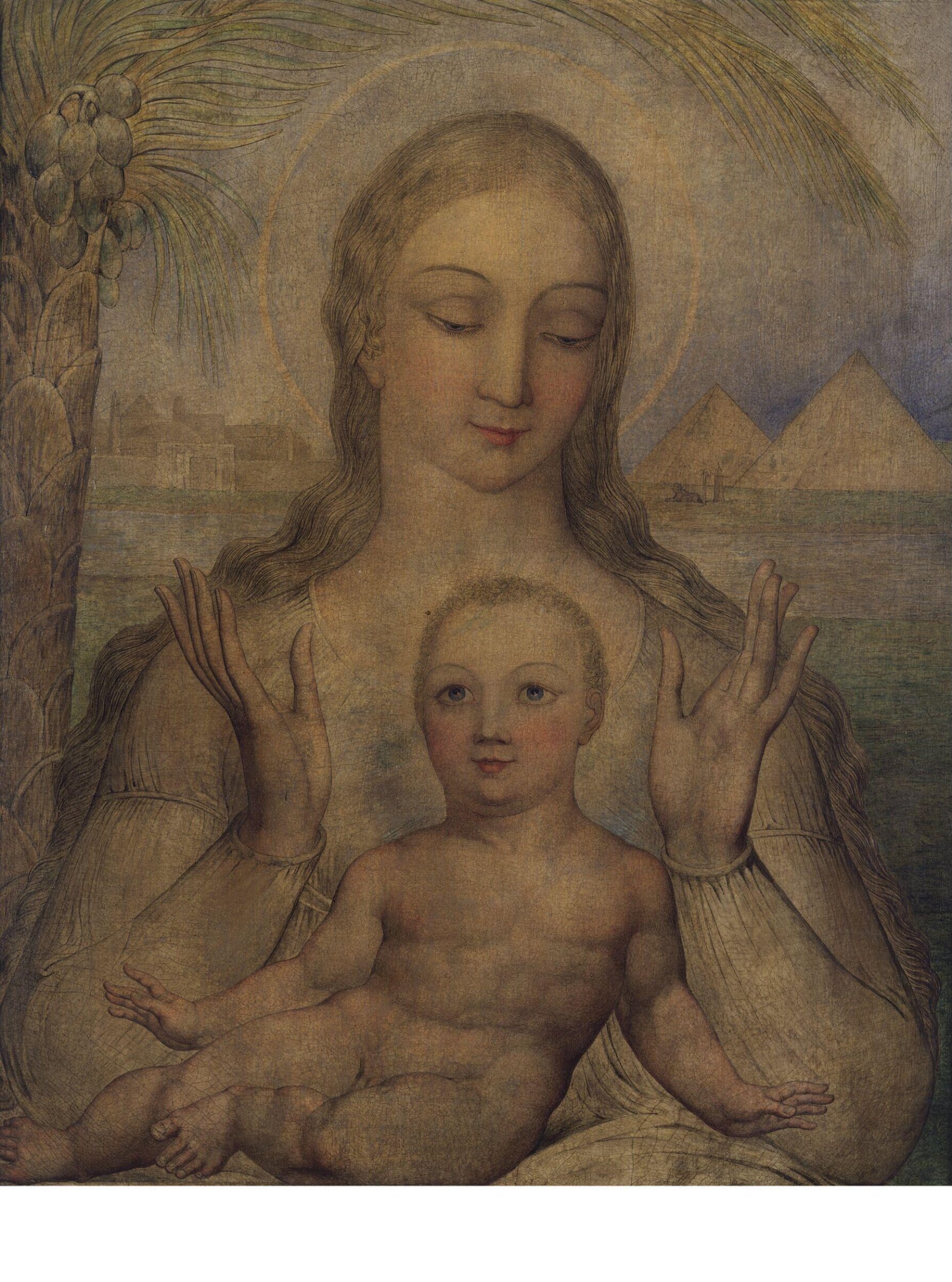
Betsabá no banho, de William Blake, pintura da década de 1790 no acervo da Tate, em Londres, mostra Davi observando do alto, à direita. Betsabá é a mulher de Urias, que o rei observa do terraço de seu palácio no episódio bíblico. Blake acrescentou duas crianças que estão ausentes dessa passagem. A pequena tela de têmpera foi encomendada por Thomas Butts e montada depois em tábua.
Detalhes
- Número de inventário
- N03007
No catálogo
Histórico de exposição
Se está exposta hoje, não se sabe
Tate · 13 de out. de 2026 — agora · Não confirmado
Não se sabe se estava exposta
National Gallery · 29 de set. de 2026 — 13 de out. de 2026 · Não confirmado
Fontes
- Wikidata
- Imagem: Tate — William Blake · Public domain · Wikimedia Commons
Na vida de William Blake
A vida inteira1780–1808
Exhibits six times at the Royal Academy
Despite his antagonism towards Reynolds, Blake submitted works to the Royal Academy on six occasions between 1780 and 1808.
1785–1791 · Residência
Poland Street
1788
Invents relief etching
In 1788, aged 31, Blake invented relief etching, or “illuminated printing”: text and designs are drawn on a copper plate in acid-resistant ink and etched so that the protected areas stand in relief, and the printed pages are coloured by hand in watercolours. He used it for most of his well-known works, including “Songs of Innocence and of Experience”, “The Book of Thel”, “The Marriage of Heaven and Hell” and “Jerusalem”.
1791 · Residência
Hercules Buildings
1800
Moves to Felpham for his patron Hayley
In 1800 Blake moved to a cottage at Felpham, in Sussex, to take up a job illustrating the works of William Hayley, a minor poet.
setembro de 1800 – setembro de 1803 · Local de trabalho
Felpham