ART WIKI32 963 em exposição
MapaColeçãoArtistasMuseusExposiçõesRevista
Entrar

ART WIKI

Onde está a obra-prima, e a que horas se abre a porta.

Coleções: Art Institute of Chicago, Galeria Nacional de Arte, Galeria Tretiakov, Getty Villa, Harvard Art Museums, Hermitage, Hirshhorn Museum and Sculpture Garden, Instituto de Artes de Minneapolis, Museu de Arte de Cleveland, Museu de Arte Moderna, Museu do Louvre, Museu Estatal de Amesterdão, Museu J. Paul Getty, Museu Metropolitano de Arte, Museu Nacional de Arte da Dinamarca, Museu Pushkin, Museu Russo, Museu Smithsoniano de Arte Americana, Museu Vitória e Alberto, Museu Whitney de Arte Americana, National Museum of Asian Art, National Portrait Gallery, Catálogo Estatal do Fundo Museológico da Rússia (274 museus), Europeana (19 museus), Wikidata (6 museus), Paris Musées (12 museus) e Joconde, a base de museus do Ministério da Cultura de França (495 museus). As imagens pertencem aos titulares dos direitos.

Secções

  • Mapa
  • Pesquisa
  • Coleção
  • Obras-primas
  • Em exposição agora
  • Artistas

Mais

  • Museus e galerias
  • Exposições
  • Revista
  • De onde vêm os dados
  • Privacidade e cookies
InícioMapaCatálogo
  1. Coleção/
  2. Art Institute of Chicago/
  3. Bathers by a River
Bathers by a River, Henri Matisse, 1909–10, 1913, and 1916–1917
Henri Matisse, retratoHenri MatisseFrança, 1869–1954

Bathers by a River

1909–10, 1913, and 1916–1917 · Painting

Sobre a pintura

Bathers by a River (French: Les Demoiselles à la rivière), also known as Bathers at the River and occasionally referred to as simply Bathers, is a large 1917 oil-on-canvas painting by French artist Henri Matisse. Matisse began painting the canvas in 1909 and finished the painting in the fall of 1917, making it one of three pictures he painted (along with Piano Lesson and The Moroccans) during the Battle of Verdun.

Wikipédia · CC BY-SA

Nas palavras do museu

Henri Matisse considered Bathers by a River to be one of the five most “pivotal” works of his career, and with good reason: it facilitated the evolution of the artist’s style over the course of nearly a decade. Originally, the work was related to a 1909 commission by the Russian collector Sergei Shchukin, who wanted two large canvases to decorate the staircase of his Moscow home. Matisse proposed three pastoral images, though Shchukin decided to purchase only two works, Dance II and Music (both State Hermitage Museum, Saint Petersburg).

Continuar a ler

Four years later, Matisse returned to this canvas, the rejected third image, altering the idyllic scene and changing the pastel palette to reflect his new interest in Cubism. He reordered the composition, making the figures more columnar, with faceless, ovoid heads. Over the next years, Matisse transformed the background into four vertical bands and turned the formerly blue river into a thick black vertical band. With its restricted palette and severely abstracted forms, Bathers by a River is far removed from Dance II and Music, which convey a graceful lyricism. The sobriety and hint of danger in Bathers by a River may in part reflect the artist’s concerns during the terrible, war-torn period during which he completed it.

Art Institute of Chicago · CC BY 4.0

Pormenores

1909–10, 1913, and 1916–1917
18691954
Número de inventário
1953.158

Entretanto, na vida de Henri Matisse

A vida inteira
  1. 1908

    Shchukin's Commission for "Dance" and "Music"

    The Russian collector Sergei Shchukin commissioned three decorative panels from Matisse for his Moscow house: "Dance," "Music," and "Bathing" (which remained at the sketch stage). The money of Russian collectors allowed the artist to finally overcome his financial difficulties.

  2. 25 December 1908

    "Notes of a Painter"

    "Notes of a Painter" was published in La Grande Revue, in which Matisse formulated his artistic principles — the need to convey emotion directly through simple means.

  3. January 1908

    Opening of the Académie Matisse

    With the support of the Steins, Hans Purrmann, and other patrons, Matisse founded a private, non-commercial painting school, where he taught from January 1908 to 1911. About 100 students studied at the academy during that time.

  4. 1911

    Visit to Russia

    In connection with the installation of the panels, Matisse visited Saint Petersburg and Moscow at Shchukin's invitation and was given an enthusiastic reception. The artist admired ancient Russian icons: "Now that is great art."

  5. 1912

    First Exhibition in the United States

    Matisse's first American exhibition was held in New York, organized by Alfred Stieglitz at Gallery 291.

Mais obras de Henri Matisse

Todas as obras

Na mesma sala · Gallery 391, Art Institute of Chicago

Página do museu

Sobre o mesmo tema · Mulher

Todas as obras sobre o tema

1912–1913

Seven Months in Morocco

Matisse spent about seven months in Morocco, producing roughly 24 paintings and numerous drawings. His Orientalist motifs — odalisques and goldfish in aquariums — date from this period.

Será possível contemplá-la?

Sim, recebe visitas

Art Institute of Chicago

Chicago, Estados Unidos

Sala391

Exposta ao público. Quem o garante vem indicado abaixo.

Verificado
há 3 dias
Neste estado desde
19 de ago. de 2026
Fonte
O museu
No mapaPágina do museu

O que mostra

MulherGray (color)Pink (color)White (color)Black (color)Blue (color)Green (color)BathersRiversNu artísticoPlantsFoliageSnakesWaterfalls

No catálogo

PinturasÓleoPintura francesaModernismoSéculo XXFrança

Fontes

  • Art Institute of Chicago
  • Imagem: Art Institute of Chicago — © the artist or rights holder
Young Sailor II, Henri Matisse, 1906

Young Sailor II

1906 · Museu Metropolitano de Arte

Vase of Sunflowers, Henri Matisse, 1890s

Vase of Sunflowers

1890s · Hermitage

Blue Pot and Lemon, Henri Matisse, 1897

Blue Pot and Lemon

1897 · Hermitage

Fruit and Coffeepot, Henri Matisse, 1898

Fruit and Coffeepot

1898 · Hermitage

Crockery on a Table, Henri Matisse, 1900

Crockery on a Table

1900 · Hermitage

La coiffure, Henri Matisse, 1901

La coiffure

1901 · Galeria Nacional de Arte

Luxembourg Gardens, Henri Matisse, c. 1901

Luxembourg Gardens

c. 1901 · Hermitage

Dishes and Fruit, Henri Matisse, 1901

Dishes and Fruit

1901 · Hermitage

Portrait of Pablo Picasso, Juan Gris, January–February 1912

Juan Gris

Portrait of Pablo Picasso, January–February 1912

Daniel-Henry Kahnweiler, Pablo Picasso, autumn 1910

Pablo Picasso

Daniel-Henry Kahnweiler, autumn 1910

Jacques and Berthe Lipchitz, Amedeo Modigliani, 1916

Amedeo Modigliani

Retrato de Jacques e Berthe Lipchitz, 1916

Little Harbor in Normandy, Georges Braque, spring 1909

Georges Braque

Little Harbor in Normandy, spring 1909

The Leap of the Rabbit, Amadeo de Souza Cardoso, 1911

Amadeo de Souza Cardoso

The Leap of the Rabbit, 1911

Madam Pompadour, Amedeo Modigliani, 1915

Amedeo Modigliani

Madam Pompadour, 1915

Apples, Henri Matisse, 1916

Henri Matisse

Apples, 1916

Farm near Duivendrecht, Piet Mondrian, c. 1916

Piet Mondrian

Farm near Duivendrecht, c. 1916

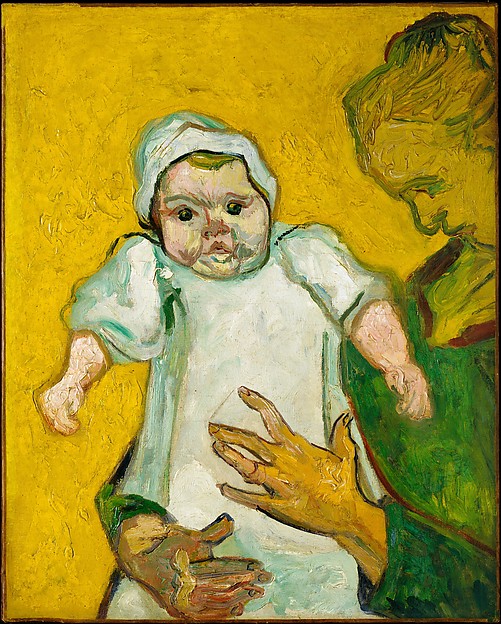
Madame Roulin and Her Baby, Vincent van Gogh, 1888

Vincent van Gogh

Madame Roulin and Her Baby, 1888

Museu Metropolitano de Arte

Garden at Sainte-Adresse, Claude Monet, 1867

Claude Monet

Jardim em Sainte-Adresse, 1867

Museu Metropolitano de Arte

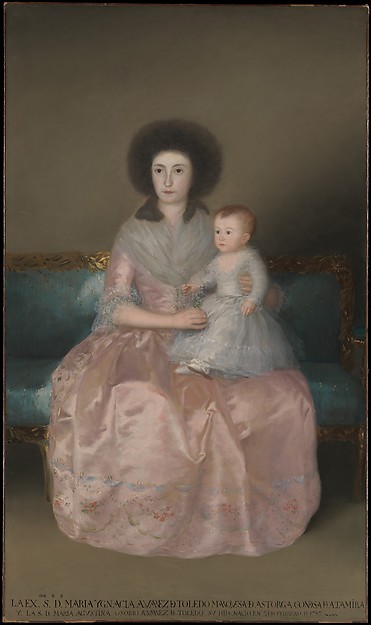
Condesa de Altamira and Her Daughter, María Agustina, Goya, 1787–88

Francisco de Goya

Condesa de Altamira and Her Daughter, María Agustina, 1787–88

Museu Metropolitano de Arte

Two Women on the Shore, Edvard Munch, 1898

Edvard Munch

Two Women on the Shore, 1898

Museu Estatal de Amesterdão

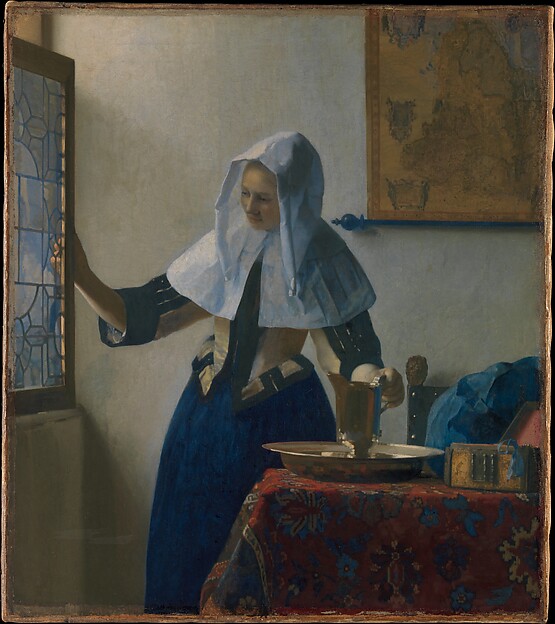
Young Woman with a Water Pitcher, Johannes Vermeer, ca. 1662

Johannes Vermeer

Jovem com uma jarra de água, ca. 1662

Museu Metropolitano de Arte

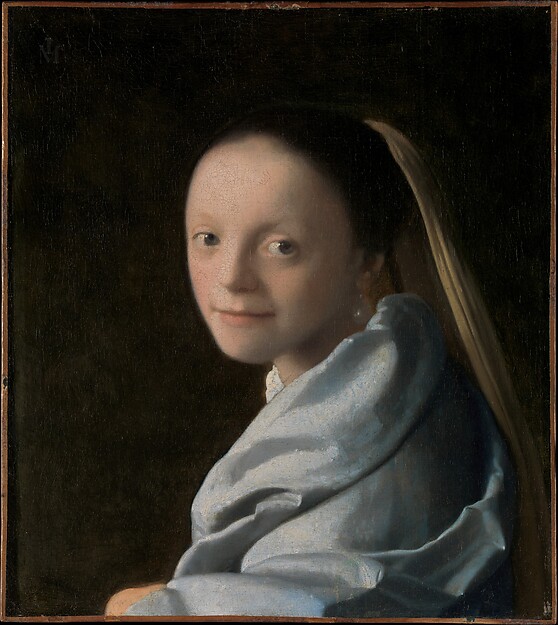
Study of a Young Woman, Johannes Vermeer, ca. 1665–67

Johannes Vermeer

Retrato de uma jovem, ca. 1665–67

Museu Metropolitano de Arte

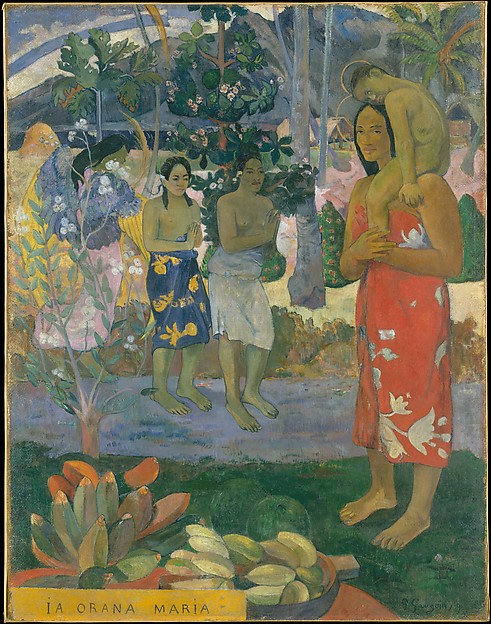
Ia Orana Maria (Hail Mary), Paul Gauguin, 1891

Paul Gauguin

Ia Orana Maria (Ave Maria), 1891

Museu Metropolitano de Arte

Rubens, Helena Fourment (1614–1673), and Their Son Frans (1633–1678), Peter Paul Rubens, ca. 1635

Peter Paul Rubens

Rubens, Helena Fourment (1614–1673), and Their Son Frans (1633–1678), ca. 1635

Museu Metropolitano de Arte