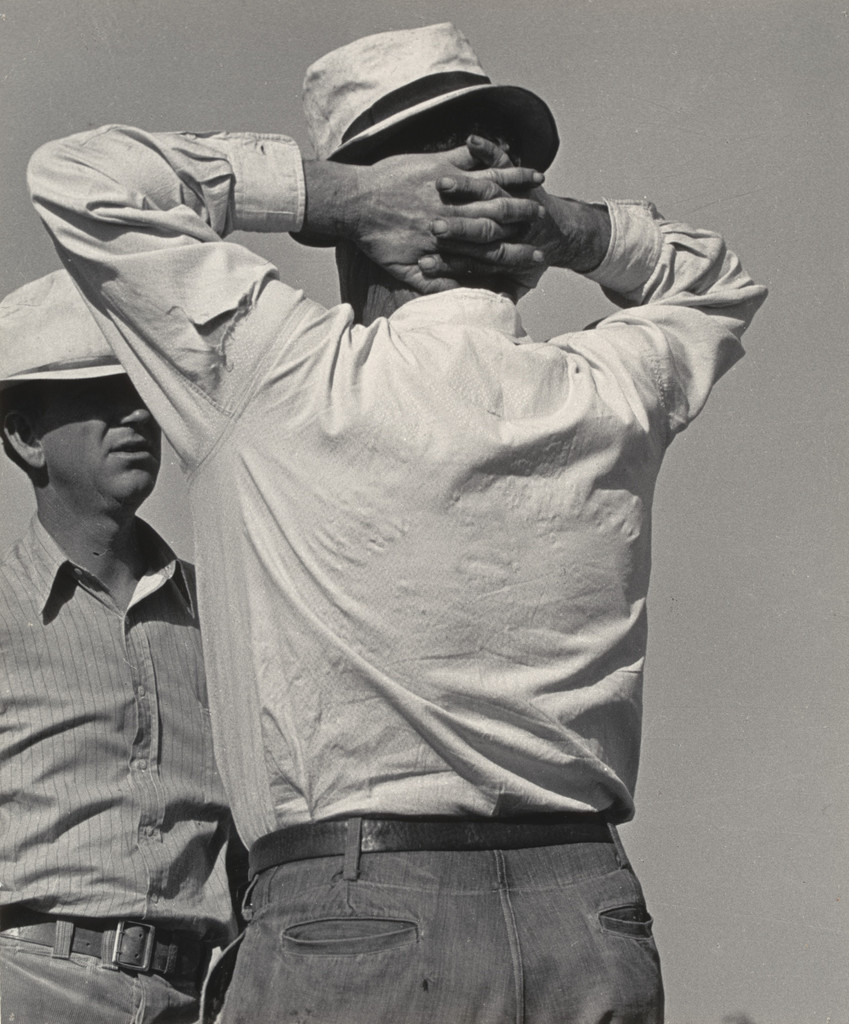
 Dorothea LangeEstados Unidos, 1895–1965
Back
Será possível contemplá-la?
De momento, não recebe

Museu de Arte Moderna
Nova Iorque, Estados Unidos
Pertence à coleção, mas de momento não está exposta.
- Verificado
- há 6 dias
- Fonte
- Os dados da própria coleção do museu
Pormenores
- Número de inventário
- 800.1968
Fontes
- Museu de Arte Moderna: the museum's own open data · obtido há 13 dias
- Imagem: Museu de Arte Moderna — © the artist or rights holder
Entretanto, na vida de Dorothea Lange
A vida inteira1935–1940
Five years on the road with Paul Taylor
For the next five years the couple travelled the California coast and the Midwest, documenting rural poverty, above all the exploitation of sharecroppers and migrant labourers: Taylor interviewed people and gathered economic data while Lange made photographs and the accompanying records. They lived and worked from Berkeley for the rest of her life.
1936
Nipomo: aid is sent to the camp after her photographs
On her way home from weeks of shooting, Lange drove past a camp of pea-pickers at Nipomo, turned back and made five exposures of a woman with her children, Florence Owens Thompson. She showed the pictures to a San Francisco newspaper editor, who informed the federal authorities and published an article, and the government rushed aid to the camp to prevent starvation.
1936
Her photographs in Steinbeck’s “The Harvest Gypsies”
Twenty-two photographs Lange had made for the FSA were included in John Steinbeck’s “The Harvest Gypsies” when it was first published in The San Francisco News in 1936.
1939
The book “An American Exodus” with Paul Taylor
Lange and her husband, the economist Paul Schuster Taylor, were the authors of the book “An American Exodus: A Record of Human Erosion” (first published in 1939).
1940
Her photographs inspire the film “The Grapes of Wrath”
Lange’s photographs served as an inspiration for the 1940 film adaptation of “The Grapes of Wrath”.