 Wenceslaus HollarChéquia, Inglaterra, 1607–1677
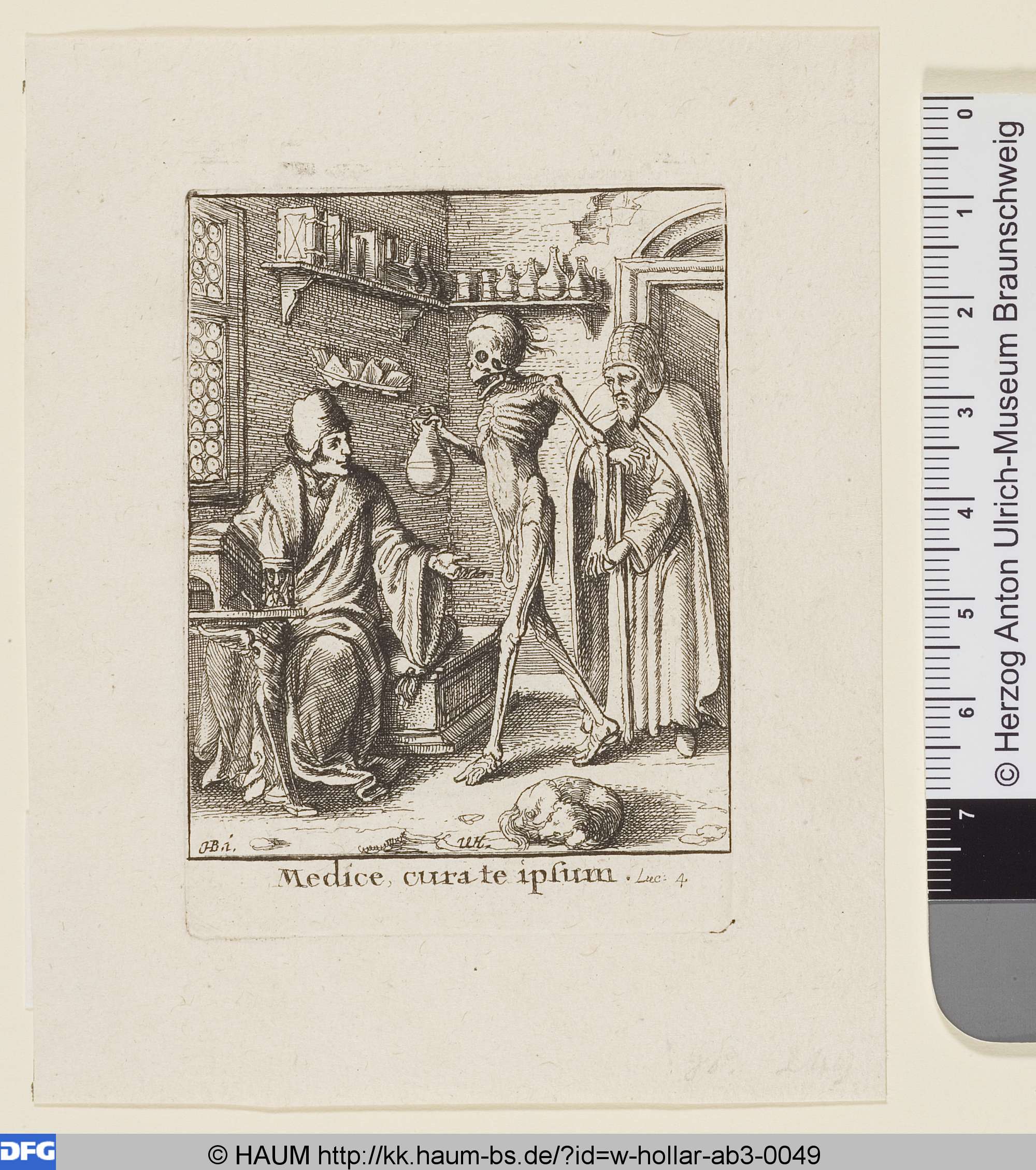
Arzt
Será possível contemplá-la?
Desconhecido: o museu guarda silêncio

Herzog Anton Ulrich-Museum
Brunsvique, Alemanha
O dono é conhecido. Se hoje está exposta, o museu não o diz, e adivinhar não é da nossa competência.
- Neste estado desde
- Fonte
- Os dados da própria coleção do museu
Pormenores
O que mostra
No catálogo
Fontes
- Herzog Anton Ulrich-Museum: os dados abertos do museu · obtido há 8 dias
- Imagem: Herzog Anton Ulrich-Museum — CC BY-NC-SA 4.0
Entretanto, na vida de Wenceslaus Hollar
A vida inteira1646–1652
Works in Antwerp during the Civil Wars
During the unrest of the Civil Wars he works in Antwerp, where he produces many of his most renowned works: Dutch cityscapes, seascapes, depictions of nature, his “muffs” and “shells”.
1652
Returns to London
In 1652 he returns to London and lives for a time with the engraver William Faithorne near Temple Bar.
after 1654
Loses his young son to the plague
His young son, who was reputed to have artistic ability, dies of the plague.
1668
The king sends him to Tangier
In 1668 the king sends him to Tangier to draw the town and its forts. The success of his “Views of London”, made after the Great Fire, and of other cityscapes such as the 1649 Great View of Prague may have prompted the commission.
c. 1669
A sea battle on the voyage home from Tangier
His ship, the Mary Rose, under Captain John Kempthorne, fights a desperate and successful engagement against seven Algerian men-of-war; Hollar etches the battle for Ogilby’s “Africa”, published in 1670.
25 de março de 1677
Died
![Bride, from "Dance of Death", Wenceslaus Hollar, [1651] late 18th century printing](https://images.metmuseum.org/CRDImages/dp/web-large/DP822840.jpg)


