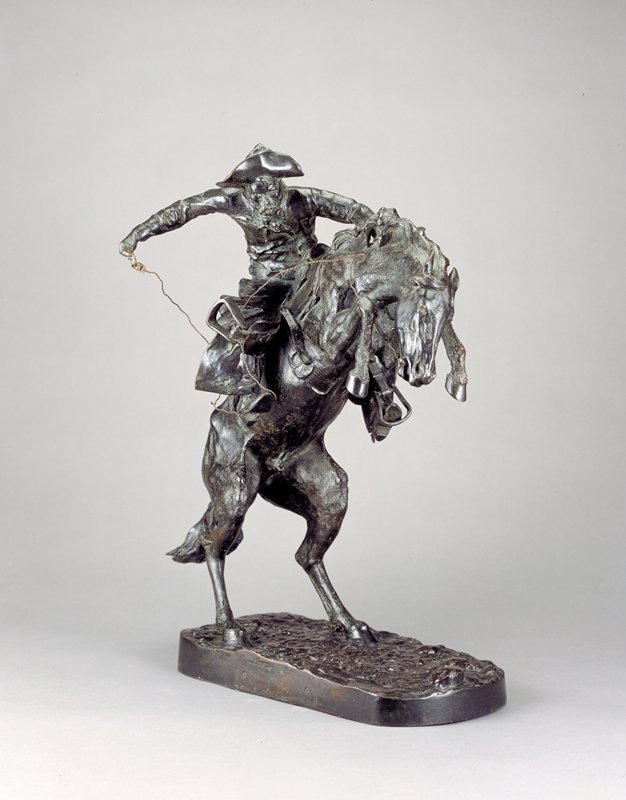
Frederic RemingtonEstados Unidos, 1861–1909
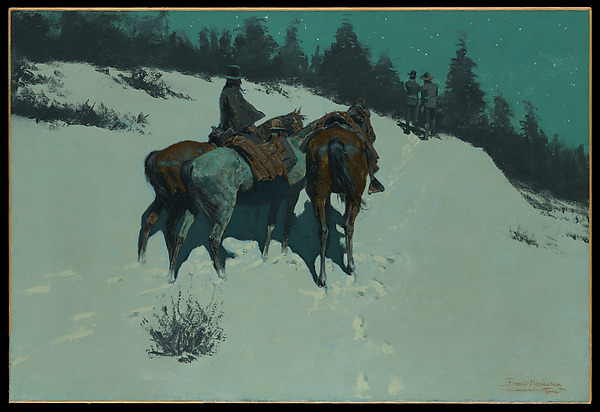
Aiding a Comrade
Dá para ver?
Desconhecido
Onde está “Aiding a Comrade” hoje? Coleção: Museu de Belas-Artes de Houston, Houston. Se está exposta hoje, não se sabe.
Houston, Estados Unidos
O proprietário é conhecido; não se sabe se hoje está exposta.
- Com este status desde
- Fonte
- O museu
Detalhes
- Número de inventário
- 43.23
No catálogo
Fontes
- Wikidata
- Imagem: Museu de Belas-Artes de Houston — Frederic Remington · Public domain · Wikimedia Commons
Na vida de Frederic Remington
A vida inteira1887–1889
“Return of the Blackfoot War Party” at the National Academy
His full-colour oil painting Return of the Blackfoot War Party is exhibited at the National Academy of Design, and the New York Herald comments that Remington will one day be listed among America's great painters. Not all critics admire him, but his work is deemed distinctive and modern.
1889
A second-class medal at the Paris Exposition
He wins a second-class medal at the Paris Exposition: the American committee chose him to represent American painting over Albert Bierstadt, whose majestic large-scale landscapes with tiny figures of pioneers and Indians were by then considered passé. His status as the new trendsetter in Western art is solidified.
c. 1889
A gentleman's agreement with Harper's Weekly
He makes a gentleman's agreement with Harper's Weekly, giving the magazine an informal first option on his output while keeping his independence to sell elsewhere. As a bonus the magazine launches a massive promotional campaign for him, laced with blatant puffery claiming he was a bona fide cowboy and Indian scout; it raises Remington to the equal of the era's top illustrators, Howard Pyle and Charles Dana Gibson.
1890
First solo show at the American Art Galleries
Remington's first one-man show, twenty-one paintings at the American Art Galleries, is very well received. With success all but assured, he becomes established in society: his personality, his “pseudo-cowboy” manner of speaking and his “Wild West” reputation are strong social attractions. His biography falsely promoted some of the myths he encouraged about his Western experiences.
1890
At the scene of the Wounded Knee massacre
He arrives on the scene just after the massacre at Wounded Knee on the Pine Ridge Indian Reservation in South Dakota, in which about 150 Sioux, mostly women and children, were killed. In his report, “The Sioux Outbreak in South Dakota”, he hails the Army's “heroic” actions toward the Indians.
1890
Moves to New Rochelle: the house “Endion”
He and his wife move to New Rochelle, New York, for more living space and studio facilities and in the hope of getting more exercise; the town is close to New York's publishers and galleries yet rural enough for horseback riding. Remington calls their substantial Gothic revival house at 301 Webster Avenue, on Lathers Hill, Endion, an Ojibwa word meaning “the place where I live”; their neighbours in the artists' colony include writers, actors and artists.