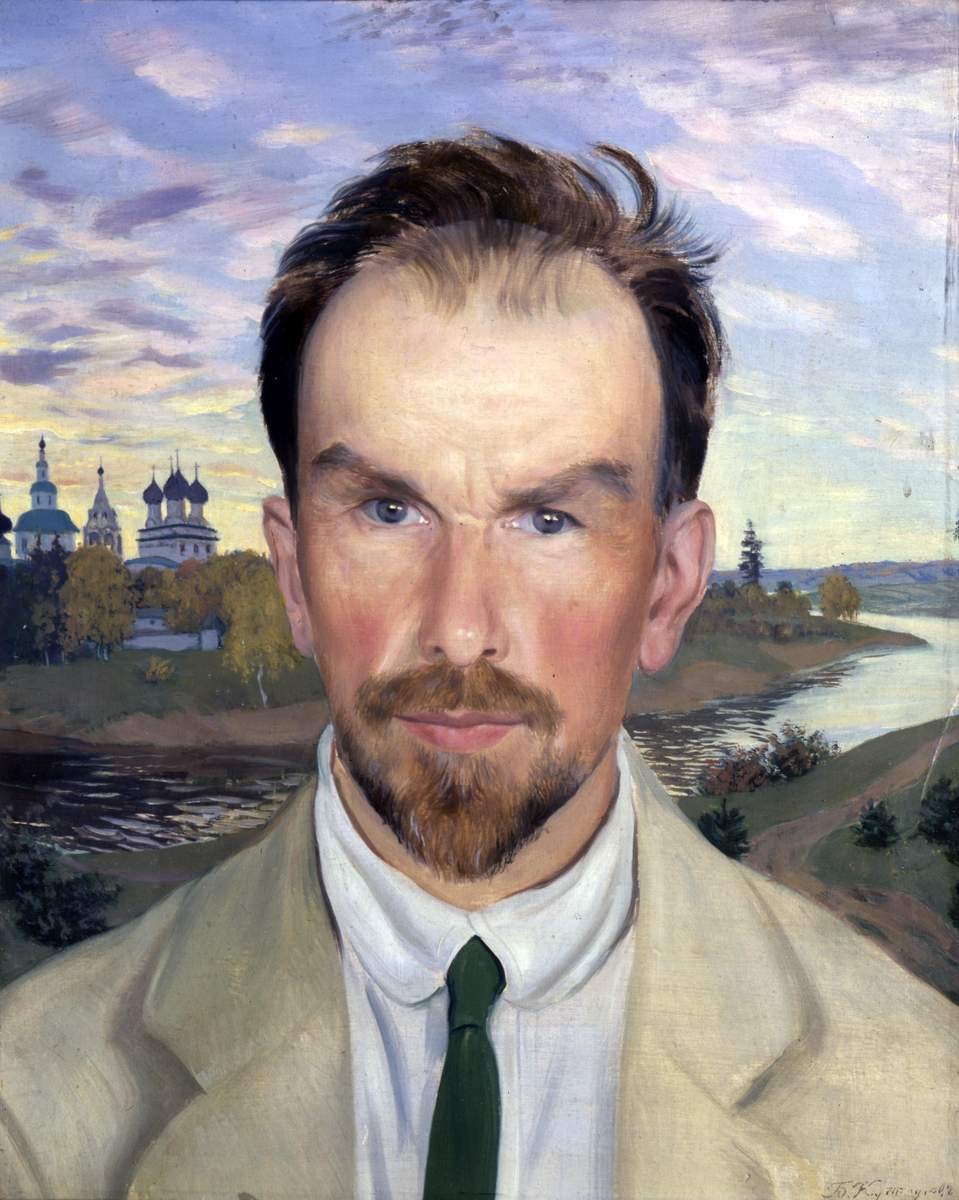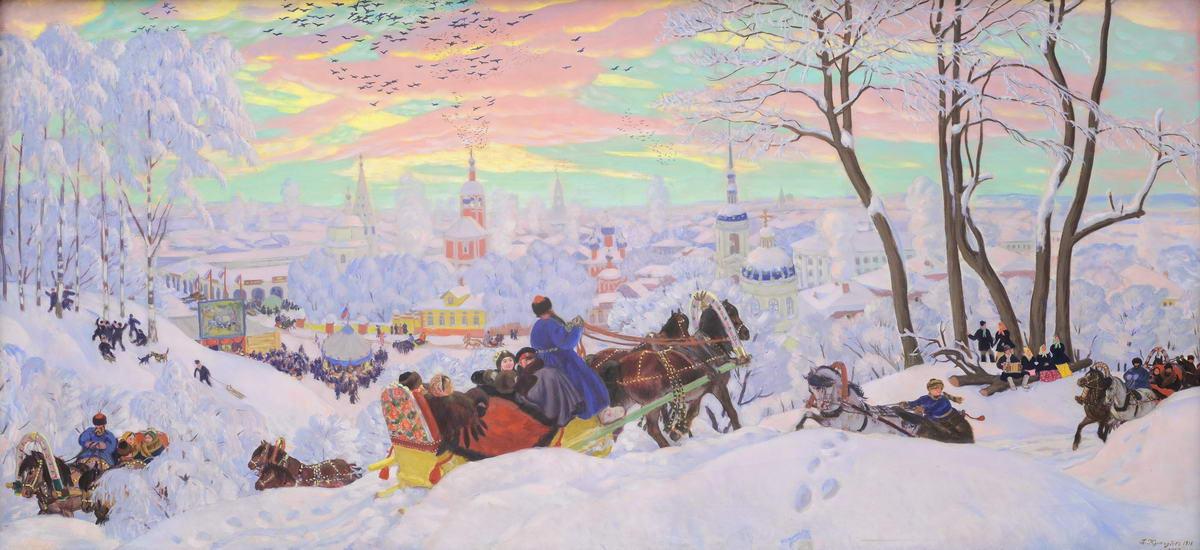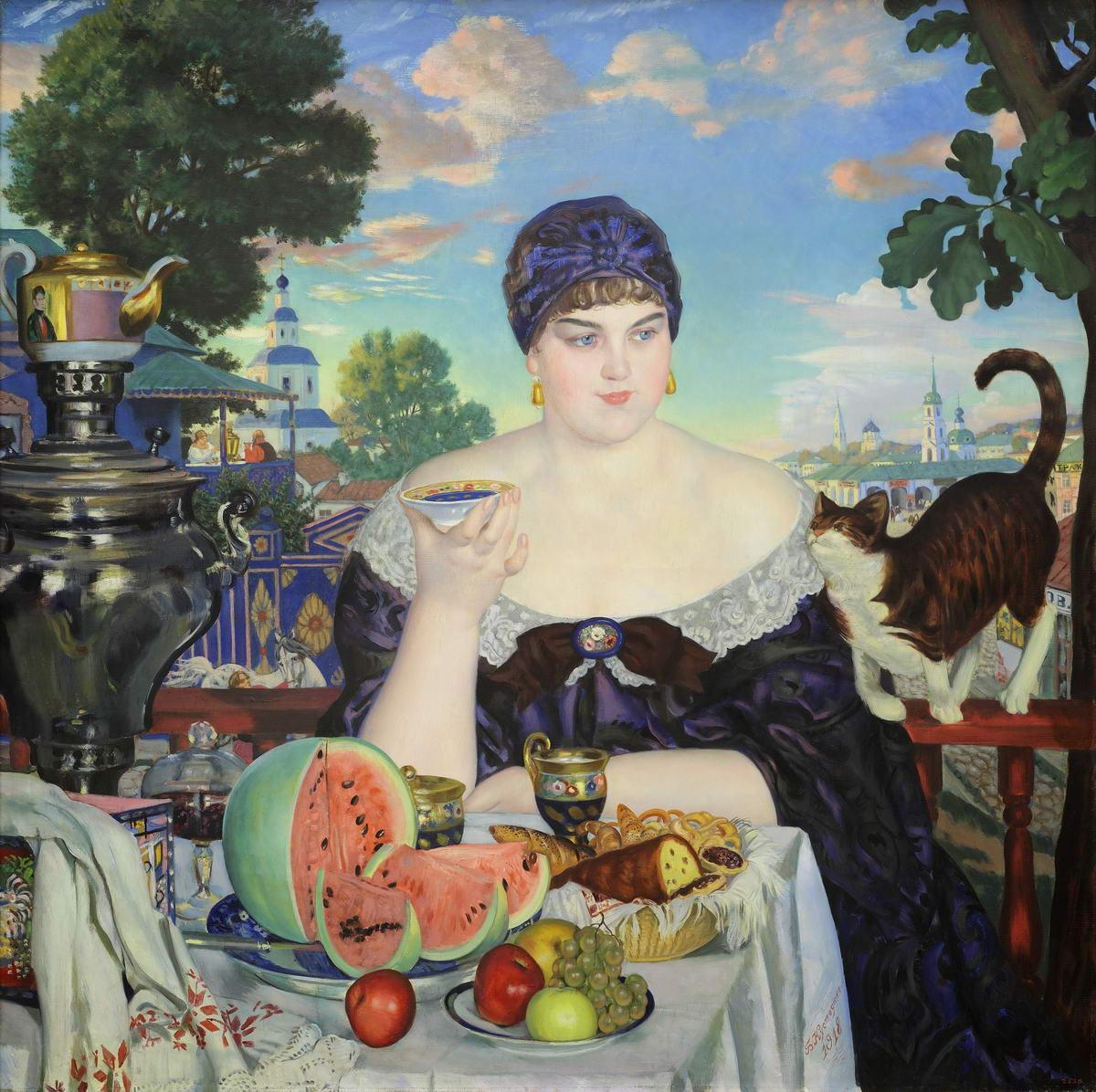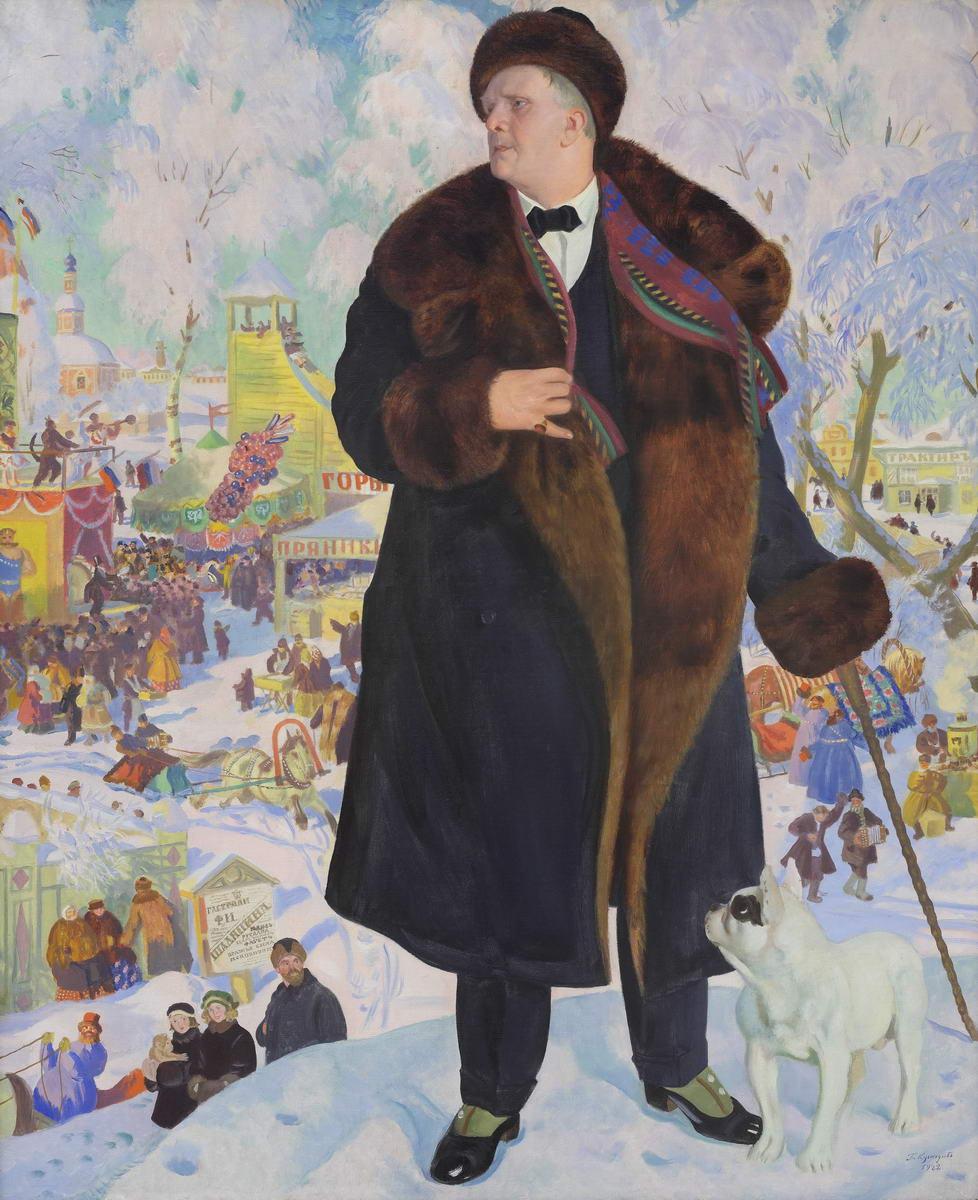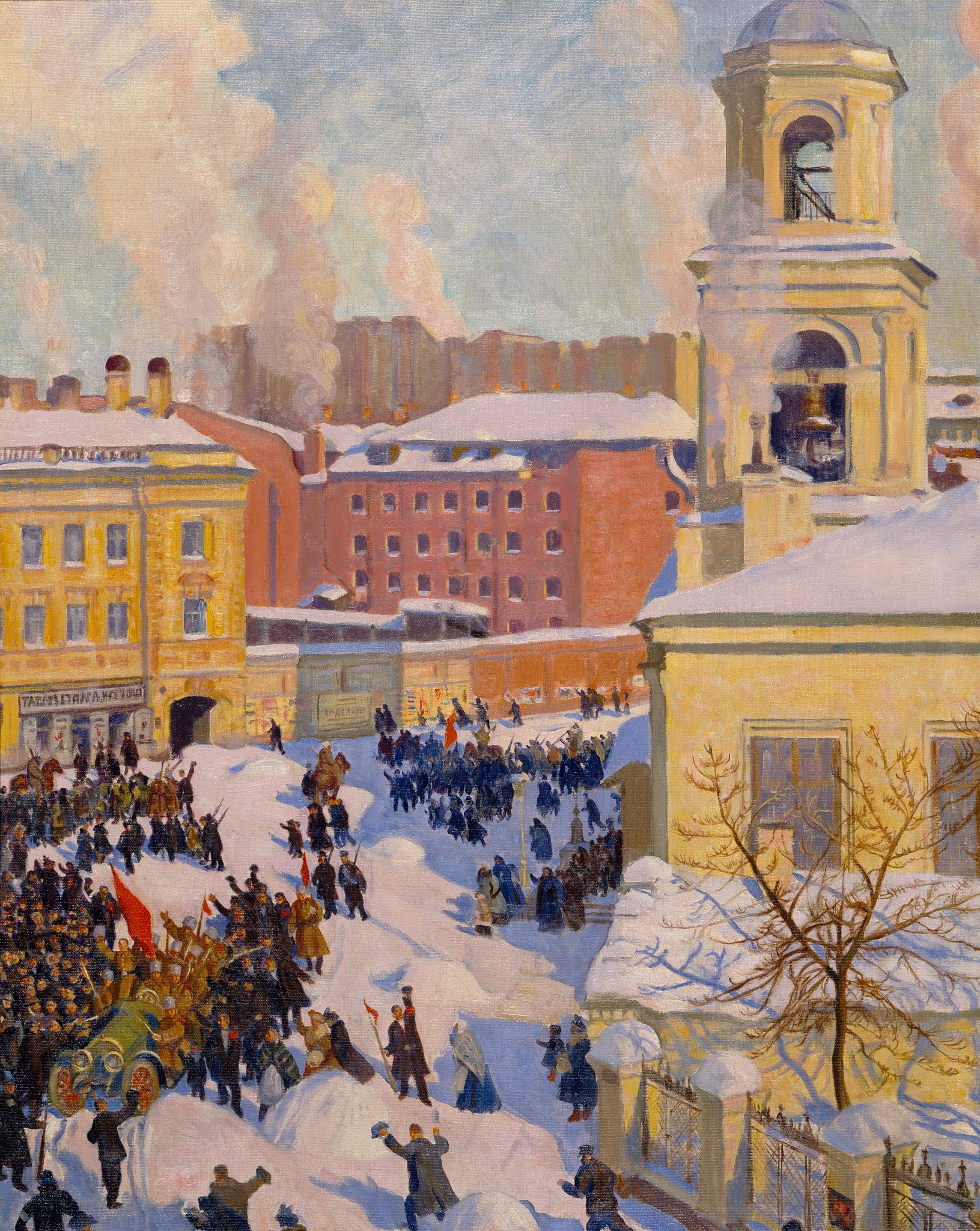
 Boris Kustodiev1878–1927
27 февраля 1917 года
Será possível contemplá-la?
Desconhecido: o museu guarda silêncio

Galeria Tretiakov
Moscovo, Rússia
O dono é conhecido. Se hoje está exposta, o museu não o diz, e adivinhar não é da nossa competência.
- Fonte
- Os dados da própria coleção do museu
Pormenores
- Número de inventário
- ЖС-136
Fontes
- Galeria Tretiakov: the museum's own open data · obtido há 4 dias
- Imagem: Galeria Tretiakov — © State Tretyakov Gallery
Entretanto, na vida de Boris Kustodiev
A vida inteira1915
“Autumn Violins” at the Art Theatre, and nightmares
Kustodiev came to Moscow to design I. D. Surguchev's Autumn Violins at the Art Theatre already gravely ill: at night he screamed with pain, haunted by the same nightmare of black cats sinking their claws into his back and tearing his vertebrae.
1915
Settles on Vvedenskaya Street
After renting a flat on Yekateringofsky Prospekt in 1914, from 1915 until the end of his life Kustodiev lived in E. P. Mikhailov's apartment house at 7 Vvedenskaya Street.
1916
Surgery and paralysis: confined to a wheelchair
When the pain in his arm returned, Kustodiev underwent surgery in Petrograd: the arm was saved, but his legs began to fail. In his last years he was confined to a wheelchair and painted lying down — and it was then that he created his brightest, most joyful works.
summer 1917
A summer at the Konkala sanatorium in Vyborg
After his second operation Kustodiev spent the summer at the Konkala sanatorium in Vyborg, painting there portraits of Countess S. A. Grabowska against a pine park, of Lopatina and of Anita Budengof, the picture “On the Bridge” and the landscapes “Konkola (Finland)” and “Forest Lake at Konkola”.
1918
Decorates Petrograd for the first anniversary of October
After the Revolution Kustodiev helped decorate Petrograd for the first anniversary of the October Revolution, and drew posters, popular prints and pictures on revolutionary themes.
1918–1921
Opera designs: “The Snow Maiden”, “The Tsar's Bride”
His opera designs were a success: “The Snow Maiden” for the Bolshoi Theatre (1918, never staged), “The Tsar's Bride” at the Bolshoi Opera Theatre of the People's House (1920), and set and costume designs for Serov's “The Power of the Fiend” at the former Mariinsky Theatre (1921).