ART WIKI37 788 na wystawie
MapaKolekcjaArtyściMuzeaWystawyMagazyn
Zaloguj się

ART WIKI

Gdzie zobaczyć sztukę i kiedy się wybrać.

Kolekcje: Art Institute of Chicago, Cleveland Museum of Art, Cooper Hewitt, Smithsonian Design Museum, Ermitaż, Galeria Tretiakowska, Getty Villa, Harvard Art Museums, Hirshhorn Museum and Sculpture Garden, J. Paul Getty Museum, Luwr, Metropolitan Museum of Art, Minneapolis Institute of Art, Museum of Modern Art, Muzeum Sztuk Pięknych im. Puszkina w Moskwie, Muzeum Wiktorii i Alberta, National Gallery of Art, National Museum of Asian Art, National Portrait Gallery, Państwowe Muzeum Rosyjskie, Państwowe Muzeum Sztuki w Kopenhadze, Rijksmuseum, Smithsonian American Art Museum and the Renwick Gallery, Whitney Museum of American Art, Yale Center for British Art, Yale University Art Gallery, Państwowy Katalog Zbiorów Muzealnych Rosji (274 muzea), Europeana (19 muzeów), Wikidata (44 muzea), Paris Musées (12 muzeów), Joconde, baza muzealna francuskiego Ministerstwa Kultury (495 muzeów) i Catalogo generale dei Beni Culturali włoskiego Ministerstwa Kultury (25 muzeów). Prawa do zdjęć należą do ich właścicieli.

Działy

  • Mapa
  • Szukaj
  • Kolekcja
  • Najsłynniejsze dzieła
  • Skradzione i zaginione
  • Umieść status dzieła na stronie
  • Teraz na wystawie
  • Artyści

Więcej

  • Muzea i galerie
  • Wystawy
  • Magazyn
  • Skąd mamy dane
  • Prywatność i pliki cookie
  • O nas
  • Warunki korzystania
Strona głównaMapaPrzeglądaj

Przeglądaj

Akwaforta

130 252 dzieła z 146 muzeów133 teraz na wystawieWyczyść wszystko

/
Technika
  • Wszystkie
  • Akwaforta130 252
  • Litografia89 179
  • Rytownictwo63 364
  • Drzeworyt56 703
  • Sucha igła9308
  • Sitodruk8459
  • Akwatinta7452
  • Druk fotomechaniczny6933
  • Mezzotinta6751
  • Linoryt2658
Baltasar Carlos, Francisco Goya after Diego Velázquez, 1778Francisco de GoyaBaltasar Carlos1778National Gallery of Art
Quien mas rendido?  (Which of Them Is the More Overcome?), Francisco Goya, published 1799Francisco de GoyaQuien mas rendido? (Which of Them Is the More Overcome?)published 1799National Gallery of Art
Fiero monstruo! (Fierce Monster!), Francisco Goya, 1810/1820Francisco de GoyaFiero monstruo! (Fierce Monster!)1810/1820National Gallery of Art
Un caballero espanol en plaza quebrando rejoncillos sin auxilio de los chulos (A Spanish Mounted Knight in the Ring Breaking Short Spears without the Help of Assistants), Francisco Goya, in or before 1816Francisco de GoyaUn caballero espanol en plaza quebrando rejoncillos sin auxilio de los chulos (A Spanish Mounted Knight in the Ring Breaking Short Spears without the Help of Assistants)in or before 1816National Gallery of Art
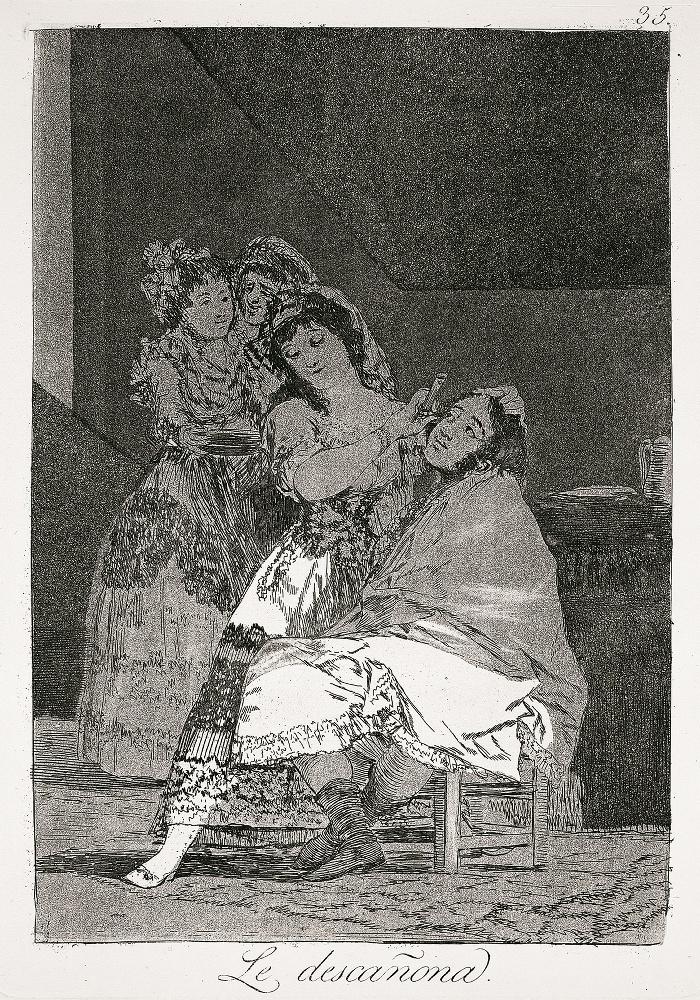
Les Caprices (Planche 35) : Elle le plume ; Le descañona, Francisco Goya, 1797-1799Francisco de GoyaLes Caprices (Planche 35) : Elle le plume ; Le descañona1797-1799Muzeum Goi w Castres
Al cementerio. (To the Cemetery.), pl. 56 from the series Los desastres de la guerra (The Disasters of War), Francisco Goya, ca. 1810–20, published 1863Francisco de GoyaAl cementerio. (To the Cemetery.), pl. 56 from the series Los desastres de la guerra (The Disasters of War)ca. 1810–20, published 1863Yale University Art Gallery
Madre infeliz! (Unhappy Mother!), Plate 50 from Los desastres de la guerra (The Disasters of War), Francisco Goya, 1863Francisco de GoyaMadre infeliz! (Unhappy Mother!), Plate 50 from Los desastres de la guerra (The Disasters of War)1863Yale University Art Gallery
Capean otro encerrado (They Play Another with the Cape in the Enclosure), Plate 4 from La tauromaquia, Francisco Goya, 1816Francisco de GoyaCapean otro encerrado (They Play Another with the Cape in the Enclosure), Plate 4 from La tauromaquia1816Yale University Art Gallery
Extraña devocion! (Strange Devotion!), pl. 66 from the series Los desastres de la guerra (The Disasters of War), Francisco Goya, ca. 1810–20, published 1863Francisco de GoyaExtraña devocion! (Strange Devotion!), pl. 66 from the series Los desastres de la guerra (The Disasters of War)ca. 1810–20, published 1863Yale University Art Gallery
Grande hazaña! Con muertos! (A Heroic Feat! With Dead Men!), Plate 39 from Los desastres de la guerra (The Disasters of War), Francisco Goya, 1863Francisco de GoyaGrande hazaña! Con muertos! (A Heroic Feat! With Dead Men!), Plate 39 from Los desastres de la guerra (The Disasters of War)1863Yale University Art Gallery
Amarga presencia. (Bitter To Be Present.), pl. 13 from the series Los desastres de la guerra (The Disasters of War), Francisco Goya, ca. 1810–20, published 1863Francisco de GoyaAmarga presencia. (Bitter To Be Present.), pl. 13 from the series Los desastres de la guerra (The Disasters of War)ca. 1810–20, published 1863Yale University Art Gallery
Otro modo de cazar a pie (Another Way of Hunting on Foot), Francisco Goya, in or before 1816Francisco de GoyaOtro modo de cazar a pie (Another Way of Hunting on Foot)in or before 1816National Gallery of Art
El animoso moro Gazul es el primero que lanceo toros en regla (The Spirited Moor Gazul is the First to Spear Bulls According to Rules), Francisco Goya, in or before 1816Francisco de GoyaEl animoso moro Gazul es el primero que lanceo toros en regla (The Spirited Moor Gazul is the First to Spear Bulls According to Rules)in or before 1816National Gallery of Art
Yo lo vi (I Saw It), Francisco Goya, published 1863Francisco de GoyaYo lo vi (I Saw It)published 1863National Gallery of Art
El amour y la muerte (Love and Death), Francisco Goya, published 1799Francisco de GoyaEl amour y la muerte (Love and Death)published 1799National Gallery of Art
Carlos V. lanceando un toro en la plaza de Valladolid (Charles V Spearing a Bull in the Ring at Valladolid), Francisco Goya, in or before 1816Francisco de GoyaCarlos V. lanceando un toro en la plaza de Valladolid (Charles V Spearing a Bull in the Ring at Valladolid)in or before 1816National Gallery of Art
No quieren [sic] (They Don't Like It), pl. 9 from Fatales consequencias de la sangrienta guerra en España con Buonaparte: Y otros caprichos enfaticos (The Fatal Consequences of Spain's Bloody War with Bonaparte: And Other Emphatic Caprices), published as Los desastres de la guerra (The Disasters of War), Francisco Goya, 1810–20, published 1863Francisco de GoyaNo quieren [sic] (They Don't Like It), pl. 9 from Fatales consequencias de la sangrienta guerra en España con Buonaparte: Y otros caprichos enfaticos (The Fatal Consequences of Spain's Bloody War with Bonaparte: And Other Emphatic Caprices), published as Los desastres de la guerra (The Disasters of War)1810–20, published 1863Yale University Art Gallery
Valor varonil de la célebre Pajuelera en la de Zaragoza (Manly Courage of the Celebrated Pajuelera in [the ring] at Saragossa), Plate 22 from La tauromaquia, Francisco Goya, 1876Francisco de GoyaValor varonil de la célebre Pajuelera en la de Zaragoza (Manly Courage of the Celebrated Pajuelera in [the ring] at Saragossa), Plate 22 from La tauromaquia1876Yale University Art Gallery
Caida de un picador de su caballo debajo del toro (A Picador is Unhorsed and Falls Under the Bull), Plate 26 from La tauromaquia, Francisco Goya, 1876Francisco de GoyaCaida de un picador de su caballo debajo del toro (A Picador is Unhorsed and Falls Under the Bull), Plate 26 from La tauromaquia1876Yale University Art Gallery
Un caballero español mata un toro despues de haber perdido el caballo (A Spanish Knight Kills the Bull after Having Lost his Horse), Plate 9 from La tauromaquia, Francisco Goya, 1816Francisco de GoyaUn caballero español mata un toro despues de haber perdido el caballo (A Spanish Knight Kills the Bull after Having Lost his Horse), Plate 9 from La tauromaquia1816Yale University Art Gallery
Bobalicón (Simpleton), also known as Tras el vicio viene el fornicio (After Vice Comes Fornication), from the series Los disparates (The Follies/Irrationalities), Francisco Goya, ca. 1816–19, published 1864 (first edition)Francisco de GoyaBobalicón (Simpleton), also known as Tras el vicio viene el fornicio (After Vice Comes Fornication), from the series Los disparates (The Follies/Irrationalities)ca. 1816–19, published 1864 (first edition)Yale University Art Gallery
Dos grupos de picadores arrolados de seguida por un solo toro (Two Teams of Picadors Thrown One After the Other by a Single Bull), Plate 32 from La tauromaquia, Francisco Goya, 1876Francisco de GoyaDos grupos de picadores arrolados de seguida por un solo toro (Two Teams of Picadors Thrown One After the Other by a Single Bull), Plate 32 from La tauromaquia1876Yale University Art Gallery
El caballo raptor (The Horse Abductor), pl. 10 from the series Los proverbios, Francisco Goya, ca. 1816–1823, published 1864Francisco de GoyaEl caballo raptor (The Horse Abductor), pl. 10 from the series Los proverbiosca. 1816–1823, published 1864Yale University Art Gallery
Para eso habeis nacido. (This Is What You Were Born For.), pl. 12 from the series Los desastres de la guerra (The Disasters of War), Francisco Goya, ca. 1810–20, published 1863Francisco de GoyaPara eso habeis nacido. (This Is What You Were Born For.), pl. 12 from the series Los desastres de la guerra (The Disasters of War)ca. 1810–20, published 1863Yale University Art Gallery
Ligereza y atrevimiento de Juanito Apinani en la de Madrid (The Agility and Audacityof Juanito Apinani in the Ring at Madrid), Francisco Goya, in or before 1816Francisco de GoyaLigereza y atrevimiento de Juanito Apinani en la de Madrid (The Agility and Audacityof Juanito Apinani in the Ring at Madrid)in or before 1816National Gallery of Art
Ni asi la distingue  (Even Thus He Cannot Make Her Out), Francisco Goya, in or before 1799Francisco de GoyaNi asi la distingue (Even Thus He Cannot Make Her Out)in or before 1799National Gallery of Art
Nadie se conoce (Nobody Knows Himself), Francisco Goya, 1799, printed laterFrancisco de GoyaNadie se conoce (Nobody Knows Himself)1799, printed laterNational Gallery of Art
Disparate femenino (Feminine Folly), Francisco Goya, in or after 1816Francisco de GoyaDisparate femenino (Feminine Folly)in or after 1816National Gallery of Art
El famoso Martincho poniendo banderillas al quiebro (The Famous Martincho Places the Banderillas Playing the Bull with the Movement of His Body), Francisco Goya, in or before 1816Francisco de GoyaEl famoso Martincho poniendo banderillas al quiebro (The Famous Martincho Places the Banderillas Playing the Bull with the Movement of His Body)in or before 1816National Gallery of Art
Los moros hacen otro capeo en plaza con su albornoz (The Moors make a different play in the ring calling the bull with their burnous), Plate 6 from La tauromaquia, Francisco Goya, 1816Francisco de GoyaLos moros hacen otro capeo en plaza con su albornoz (The Moors make a different play in the ring calling the bull with their burnous), Plate 6 from La tauromaquia1816Yale University Art Gallery
El esforzado Rendon picando un toro, de cuya suerte murió en la plaza de Madrid (The Forceful Rendon Stabs a Bull with the Pique, from which Pass He Died in the Ring of Madrid), Plate 28 from La tauromaquia, Francisco Goya, 1816Francisco de GoyaEl esforzado Rendon picando un toro, de cuya suerte murió en la plaza de Madrid (The Forceful Rendon Stabs a Bull with the Pique, from which Pass He Died in the Ring of Madrid), Plate 28 from La tauromaquia1816Yale University Art Gallery
Tambien esto. (This Too.), pl. 43 from the series Los desastres de la guerra (The Disasters of War), Francisco Goya, ca. 1810–20, published 1863Francisco de GoyaTambien esto. (This Too.), pl. 43 from the series Los desastres de la guerra (The Disasters of War)ca. 1810–20, published 1863Yale University Art Gallery
Disparate volante (Flying Folly), from the series Los disparates (Follies [Irrationalities]), Francisco Goya, ca. 1815–19, printed 1864Francisco de GoyaDisparate volante (Flying Folly), from the series Los disparates (Follies [Irrationalities])ca. 1815–19, printed 1864Yale University Art Gallery
Tampoco (Nor [Do These] Either), pl. 10 from Fatales consequencias de la sangrienta guerra en España con Buonaparte: Y otros caprichos enfaticos (The Fatal Consequences of Spain's Bloody War with Bonaparte: And Other Emphatic Caprices), published as Los desastres de la guerra (The Disasters of War), Francisco Goya, 1810–20, published 1863Francisco de GoyaTampoco (Nor [Do These] Either), pl. 10 from Fatales consequencias de la sangrienta guerra en España con Buonaparte: Y otros caprichos enfaticos (The Fatal Consequences of Spain's Bloody War with Bonaparte: And Other Emphatic Caprices), published as Los desastres de la guerra (The Disasters of War)1810–20, published 1863Yale University Art Gallery
Los moros establecidos en España, prescindiendo de las supersticiones de su Alcorán, adoptaron esta caza y arte, y lancean un toro en el campo (The Moors Settled in Spain, Giving Up the Superstitions of the Koran, Adopted this Art of Hunting, and Spear a Bull in the Open), Plate 3 from La tauromaquia, Francisco Goya, 1816Francisco de GoyaLos moros establecidos en España, prescindiendo de las supersticiones de su Alcorán, adoptaron esta caza y arte, y lancean un toro en el campo (The Moors Settled in Spain, Giving Up the Superstitions of the Koran, Adopted this Art of Hunting, and Spear a Bull in the Open), Plate 3 from La tauromaquia1816Yale University Art Gallery
Las resultas. (The Consequences.), pl. 72 from the series Los desastres de la guerra (The Disasters of War), Francisco Goya, ca. 1810–20, published 1863Francisco de GoyaLas resultas. (The Consequences.), pl. 72 from the series Los desastres de la guerra (The Disasters of War)ca. 1810–20, published 1863Yale University Art Gallery
A caza de dientes (Out Hunting for Teeth), Francisco Goya, published 1799Francisco de GoyaA caza de dientes (Out Hunting for Teeth)published 1799National Gallery of Art
Otra locura suya en la misma plaza (Another Madness of His in the Same Ring), Francisco Goya, in or before 1816Francisco de GoyaOtra locura suya en la misma plaza (Another Madness of His in the Same Ring)in or before 1816National Gallery of Art
Disparate de Carnabal (Carnival Folly), Francisco Goya, in or after 1816Francisco de GoyaDisparate de Carnabal (Carnival Folly)in or after 1816National Gallery of Art
Los ensacados (The Men in Sacks), Francisco Goya, in or after 1816Francisco de GoyaLos ensacados (The Men in Sacks)in or after 1816National Gallery of Art
Disparate furioso (Furious Folly), Francisco Goya, in or after 1816Francisco de GoyaDisparate furioso (Furious Folly)in or after 1816National Gallery of Art
El agorratado (The Garroted Man), Francisco Goya, published 1868Francisco de GoyaEl agorratado (The Garroted Man)published 1868Yale University Art Gallery
Disparate puntual (Punctual Folly), unnumbered plate from the series Los disparates (The Follies/Irrationalities), Francisco Goya, ca. 1816–1823, published late 19th centuryFrancisco de GoyaDisparate puntual (Punctual Folly), unnumbered plate from the series Los disparates (The Follies/Irrationalities)ca. 1816–1823, published late 19th centuryYale University Art Gallery
Disparate general (General Folly), also known as Unas de Gato y Habito de Beato (The Claws of a Cat and the Dress of a Devotee), from the series Los disparates (The Follies/Irrationalities), Francisco Goya, ca. 1816–19, published 1864 (first edition)Francisco de GoyaDisparate general (General Folly), also known as Unas de Gato y Habito de Beato (The Claws of a Cat and the Dress of a Devotee), from the series Los disparates (The Follies/Irrationalities)ca. 1816–19, published 1864 (first edition)Yale University Art Gallery
Y no hai [sic] remedio (And There's No Help for It), pl. 15 from Fatales consequencias de la sangrienta guerra en España con Buonaparte: Y otros caprichos enfaticos (The Fatal Consequences of Spain's Bloody War with Bonaparte: And Other Emphatic Caprices), published as Los desastres de la guerra (The Disasters of War), Francisco Goya, 1810–20, published 1863Francisco de GoyaY no hai [sic] remedio (And There's No Help for It), pl. 15 from Fatales consequencias de la sangrienta guerra en España con Buonaparte: Y otros caprichos enfaticos (The Fatal Consequences of Spain's Bloody War with Bonaparte: And Other Emphatic Caprices), published as Los desastres de la guerra (The Disasters of War)1810–20, published 1863Yale University Art Gallery
Mort de Pepe Illo (Death of Pepe Illo, 3rd Composition), Plate F from La tauromaquia (third edition), Francisco Goya, 1876Francisco de GoyaMort de Pepe Illo (Death of Pepe Illo, 3rd Composition), Plate F from La tauromaquia (third edition)1876Yale University Art Gallery
No se puede saber por qué (One Can’t Tell Why.), pl. 35 from the series Los desastres de la guerra (The Disasters of War), Francisco Goya, ca. 1810–20, published 1863Francisco de GoyaNo se puede saber por qué (One Can’t Tell Why.), pl. 35 from the series Los desastres de la guerra (The Disasters of War)ca. 1810–20, published 1863Yale University Art Gallery
Todo va revuelto. (Everything is Topsy-Turvy.), pl. 42 from the series Los desastres de la guerra (The Disasters of War), Francisco Goya, ca. 1810–20, published 1863Francisco de GoyaTodo va revuelto. (Everything is Topsy-Turvy.), pl. 42 from the series Los desastres de la guerra (The Disasters of War)ca. 1810–20, published 1863Yale University Art Gallery
29