 Beatrix Potter1866–1943
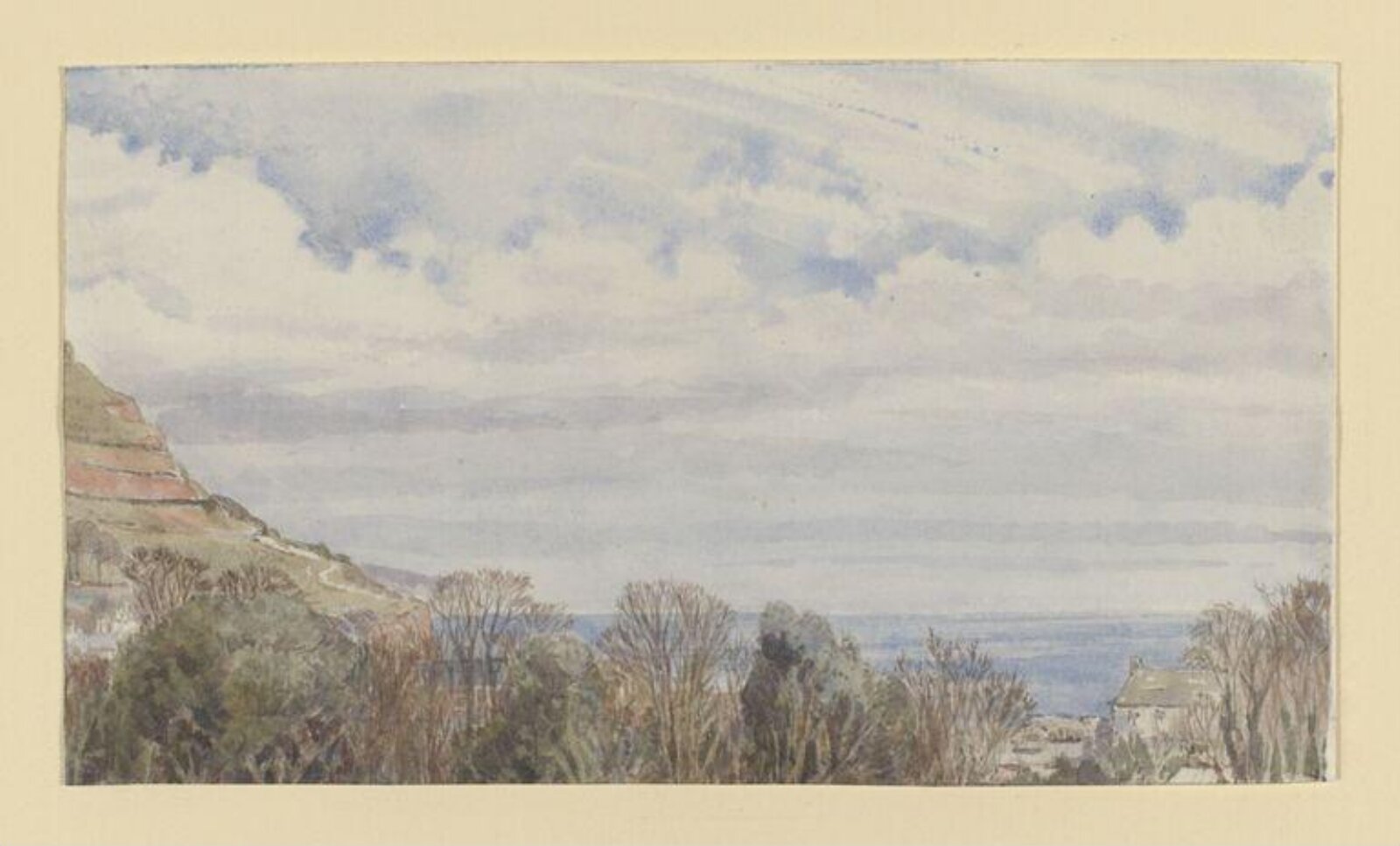
Watercolour
Czy można zobaczyć?
Obecnie poza wystawą
Gdzie jest teraz „Watercolour”? Kolekcja: Muzeum Wiktorii i Alberta, Londyn. Obecnie poza wystawą. Sprawdzono 25 września 2026.

Londyn, Wielka Brytania
Należy do kolekcji, ale obecnie nie jest wystawione.
- Sprawdzono
- Ten status od
- Źródło
- Muzeum
Szczegóły
- Numer inwentarzowy
- LC 13/B/3
Co przedstawia
W katalogu
Źródła
- Muzeum Wiktorii i Alberta
- Zdjęcie: Muzeum Wiktorii i Alberta — © Victoria and Albert Museum, London
Z życia: Beatrix Potter
Cały życiorys1881–1897
A journal in a cipher of her own
From 1881 Beatrix kept a journal in a simple substitution cipher of her own devising — in tiny handwriting, serving as both sketchbook and literary experiment, in which she described society, her impressions of art and the life around her. The entries stop in 1897, when her energies were absorbed in scientific study and in efforts to publish her drawings.
1895–1897
A theory of spore germination, and Kew Gardens
In 1895, curious about how fungi reproduce, Beatrix began microscopic drawings of agaric spores and developed a theory of their germination. Through her uncle, the chemist Sir Henry Roscoe, she consulted botanists at Kew and convinced George Massee of her ability to germinate spores, but William Thiselton-Dyer, the director of Kew, rebuffed her because of her sex and amateur status.
1897
A paper for the Linnean Society
In 1897 Beatrix submitted a paper, “On the Germination of the Spores of the Agaricineae”, to the Linnean Society, but as a woman she could neither attend the meeting nor read it herself — George Massee introduced it. She later withdrew it on realising that some of her samples were contaminated, yet she continued her microscopic studies for several more years.
1900–1901
A dummy book of the rabbit tale, printed at her own expense
In 1900 Beatrix revised her tale of the four little rabbits and made a dummy book of it — it has been suggested, in imitation of Helen Bannerman’s 1899 bestseller; no one would buy it. So in December 1901 she had it printed at her own expense for family and friends — in black and white, with a coloured frontispiece.