Paul GauguinFrancja, 1848–1903
The Large Tree
Czy można zobaczyć?
Obecnie poza wystawą
Gdzie jest teraz „The Large Tree”? Kolekcja: Cleveland Museum of Art, Cleveland. Obecnie poza wystawą. Sprawdzono 9 listopada 2026.

Cleveland, Stany Zjednoczone
Należy do kolekcji, ale obecnie nie jest wystawione.
- Sprawdzono
- Ten status od
- Źródło
- Muzeum
O obrazie
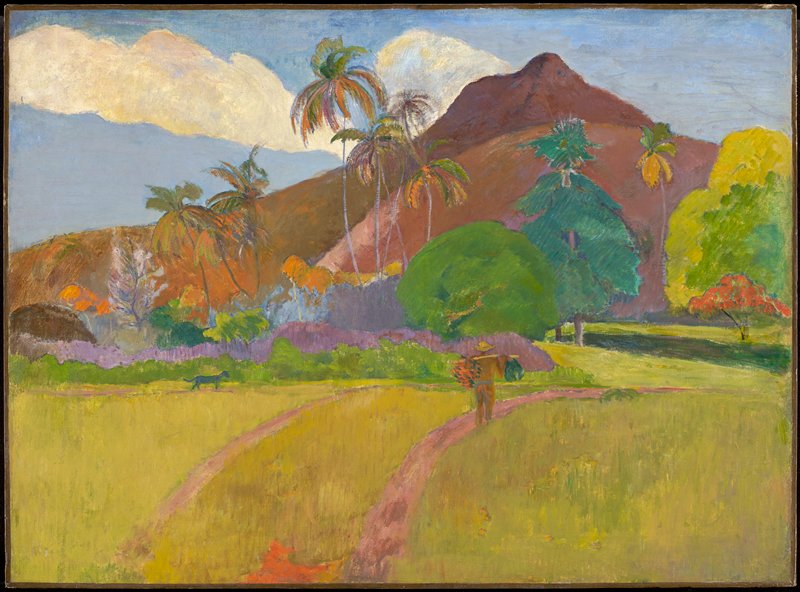
Paul Gauguin painted The Large Tree in 1891, soon after reaching Tahiti; the canvas is at the Cleveland Museum of Art in Cleveland. It was among his earliest pictures on the island. Repelled by European materialism, he had left his family and stockbroking career. Here, stylized figures and strong colors were meant to suggest private emotions through symbols and mystery. Gauguin compared such arrangements to musical harmonies, writing that they did not represent anything real in the strict meaning of the word.
Opis muzeum
Disgusted with the materialism of European society, Gauguin abandoned his family and career as a stockbroker and departed for Tahiti in 1891. This canvas is among the first paintings he completed on the island. Its rich colors and stylized figures were intended to be both symbolic and mysterious, evoking private thoughts and emotions. “I obtain symphonies,” he wrote, “harmonies that represent nothing real in the absolute sense of the word.”
Cleveland Museum of Art
Szczegóły
- Numer inwentarzowy
- 1975.263
W katalogu
Źródła
- Cleveland Museum of Art
- Zdjęcie: Cleveland Museum of Art — CC0 (Cleveland Museum of Art Open Access)
Z życia: Paul Gauguin
Cały życiorys1870s–1891 · Miejsce pracy
Paris
1886–1891 · Miejsce pracy
Pont-Aven
1891
Successful Auction at the Hôtel Drouot
A successful auction of paintings at the Hôtel Drouot in Paris in February 1891, aided by a glowing review from Octave Mirbeau, together with a banquet and a benefit concert, provided the funds for the journey to Tahiti.
1 April 1891
Departure for Tahiti
On 1 April 1891, after a final visit to his wife and children in Copenhagen, Gauguin sailed for Tahiti, intending to escape European civilization and "everything that is artificial and conventional." He spent his first three months in Papeete, then set up a studio in a bamboo hut at Mataiea.
1891–1901 · Miejsce pracy
Tahiti
1893
Return to France
In August 1893 Gauguin returned to France, where he continued painting Tahitian subjects such as Mahana no atua and Nave nave moe; he rented an apartment on rue Vercingétorix on the edge of Montparnasse and held a weekly salon, cultivating an exotic image.