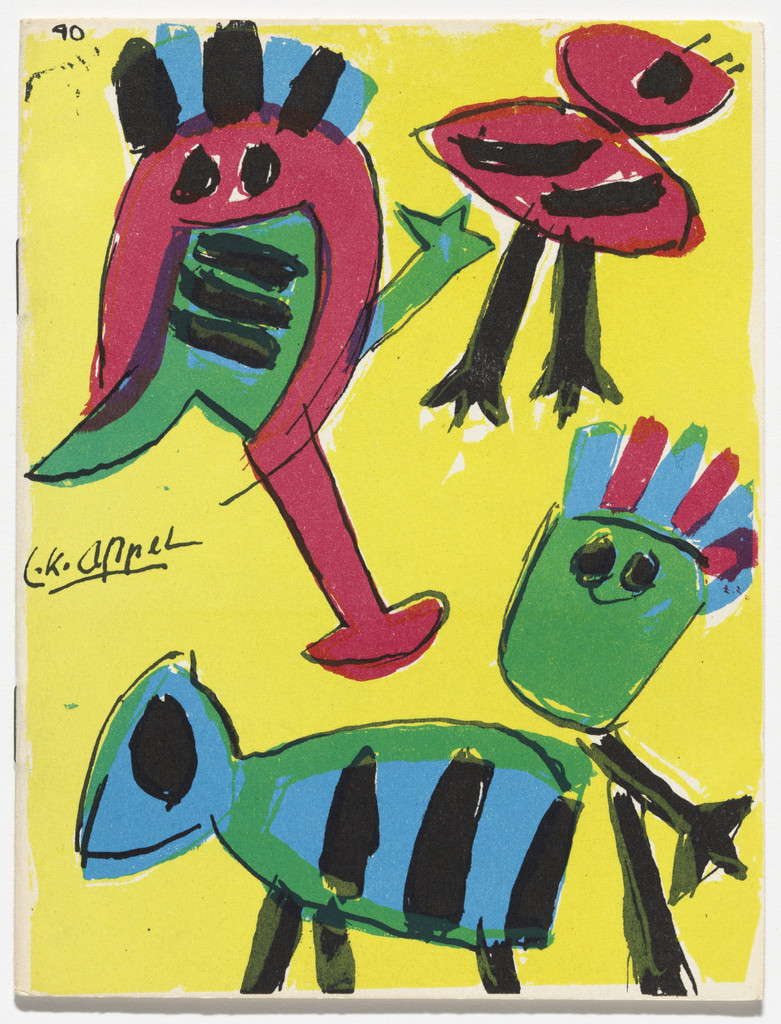
Karel AppelHolandia, 1921–2006
Square Man
Czy można zobaczyć?
Tak, teraz na wystawie
Gdzie jest teraz „Square Man”? Rijksmuseum, Room 3.3 · Freedom, Amsterdam. Tak, teraz na wystawie. Sprawdzono 2 listopada 2026.

Zamknięte· otwarcie jutro o 9:00
Dostępne dla publiczności.
- Sprawdzono
- Ten status od
- Źródło
- Muzeum
O obrazie
Karel Appel painted Square Man in 1951; it is at the Rijksmuseum in Amsterdam. Like other Cobra artists seeking a fresh approach after the Second World War, he valued spontaneity. The figure presses against the physical boundaries of the nearly square canvas and has barely enough space to fit. Its meaning remains uncertain: the man could be intruding with impudent confidence or advancing towards us after a terrible experience has left him without clothes. Appel leaves these alternatives unresolved. The painting hangs in room 3.3.
Opis muzeum
Cobra Group artists, like Karel Appel, were looking for a new way of painting after the Second World War and spontaneity was the key word. Appel tested the physical limits of the canvas while painting: this man just barely fits in the almost square surface. It is unclear whether he is impertinently horning in, or walking towards us, stripped of his clothes by some terrible event.
Rijksmuseum
Szczegóły
- Numer inwentarzowy
- SK-A-5002
Co przedstawia
W katalogu
Historia wystawiania
Na wystawie · Room 3.3 · Freedom
Rijksmuseum · 29 wrz 2026 — teraz · Zweryfikowane
Nie wiadomo, czy było na wystawie
Rijksmuseum · Niepotwierdzone
Źródła
- Rijksmuseum
- Zdjęcie: Rijksmuseum — © the artist or rights holder
Z życia: Karel Appel
Cały życiorys1949
The scandalous CoBrA show at the Stedelijk Museum
Appel exhibited with the other CoBrA artists at the Stedelijk Museum Amsterdam; the show caused a huge scandal and many objections in the press and among the public.
14 March 1949
Scandal over his fresco in Amsterdam City Hall
Appel completed the fresco “Questioning Children” commissioned for the canteen of Amsterdam City Hall, whose sketch had been approved by a city council committee. It drew a wave of harsh criticism and was covered up for ten years; after the scandal Appel began calling himself a barbarian and kept up the image, literally hurling paint at the canvas and groaning loudly as he worked.
1950
Moves to Paris
Because of the controversy and other negative Dutch reactions to CoBrA, Appel moved to Paris. From there he built an international reputation, traveling to Mexico, the United States, Yugoslavia, Brazil, Japan and China; he also lived in New York and Florence.
1952
Leaves CoBrA and joins Art Informel
Appel left CoBrA and joined the French Art Informel movement.