Alessandro AlgardiWłochy, 1595–1654
San Nicola da Tolentino
Czy można zobaczyć?
Nie wiadomo
Gdzie jest teraz „San Nicola da Tolentino”? Kolekcja: Museo di Palazzo Venezia, Rzym. Nie wiadomo.
Rzym, Włochy
Wiemy, do kogo należy, ale nie wiemy, czy jest dziś na wystawie.
- Ten status od
- Źródło
- Muzeum
O rzeźbie
Tekst muzeum, język: włoski
Jennifer Montagu avanza l'ipotesi che questo sia il "San Nicola di creta cotta" presente nello studio di Ercole Ferrata (che lo tradusse in marmo per l'altare maggiore della chiesa di San Nicola di Tolentino) che poi fu donato dall'artista al granduca di Toscana Cosimo III de' Medici e così descritta dal Baldinucci: "bellissimo modello di terracotta di mano dell' Algardi, rappresentante un Santo della religione Francescana" (F. Baldinucci, notizie dei professori del disegno, ediz. 1845, vol. 5, p. 389)
Museo di Palazzo Venezia
Szczegóły
- Numer inwentarzowy
- PV 10760
Co przedstawia
W katalogu
Źródła
- Museo di Palazzo Venezia
- Zdjęcie: Museo di Palazzo Venezia — Soprintendenza Speciale Archeologia, Belle arti e Paesaggio di Roma · Beni Culturali Standard (BCS) · Catalogo generale dei Beni Culturali (ICCD – MiC)
Z życia: Alessandro Algardi
Cały życiorys1622 · Miejsce pracy
Mantua
1625
Moves to Rome with the Duke of Mantua's introduction
After a short stay in Venice he goes to Rome with an introduction from the Duke of Mantua to Cardinal Ludovico Ludovisi, nephew of the late pope, who employs him for a time to restore ancient statues from his famous collection.
1625–1654 · Miejsce pracy
Rome
1644
Innocent X draws him to the papal court
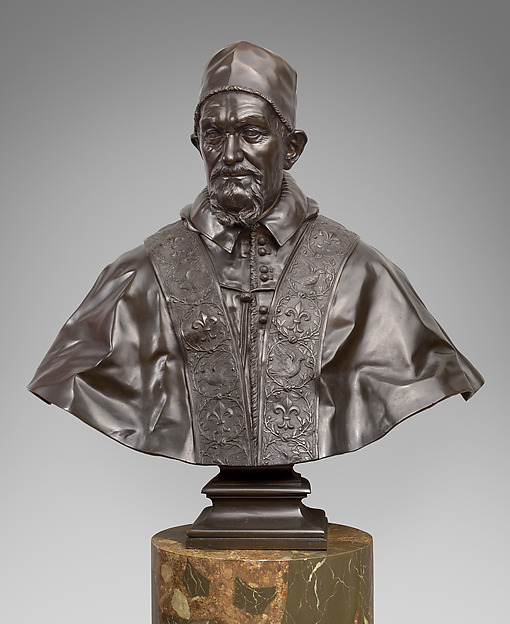
With the death of the Barberini pope Urban VIII and the accession of the Pamphilj pope Innocent X, the Barberini fall into disfavor and Bernini receives fewer commissions; Algardi, by contrast, is embraced by the new pope and the pope's nephew Camillo Pamphilj. His portraits are highly prized, their formal severity contrasting with Bernini's vivacity, and his large bronze of Innocent X is now in the Capitoline Museums.
1650
Meets Velázquez; commissions from Spain
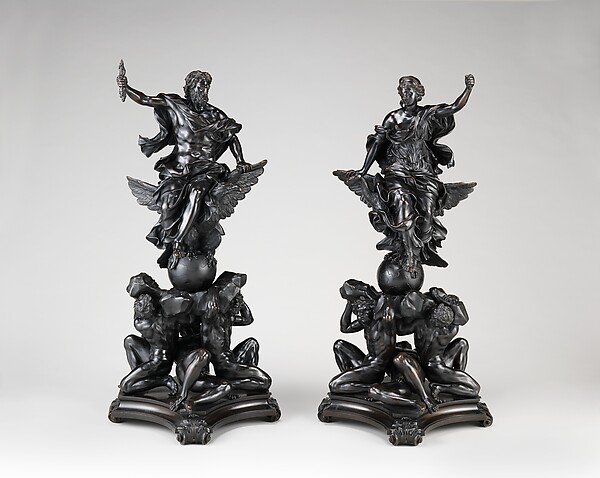
He meets Diego Velázquez, who obtains commissions for his work from Spain: four chimney-pieces and the figures of the fountain of Neptune in the gardens of the Royal Palace of Aranjuez, and the tomb of the Count and Countess de Monterey in the Augustinian monastery at Salamanca.
10 czerwca 1654
Died