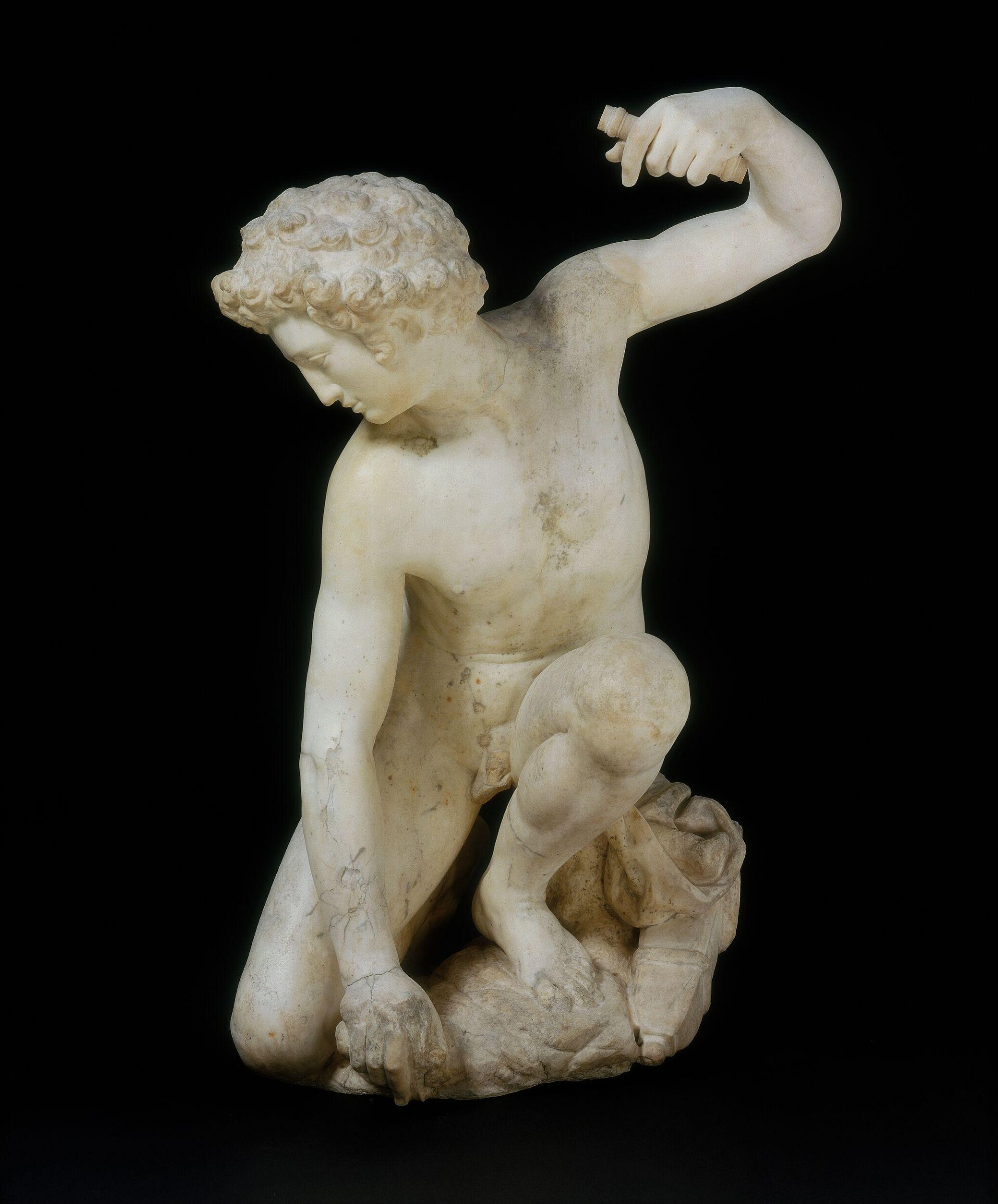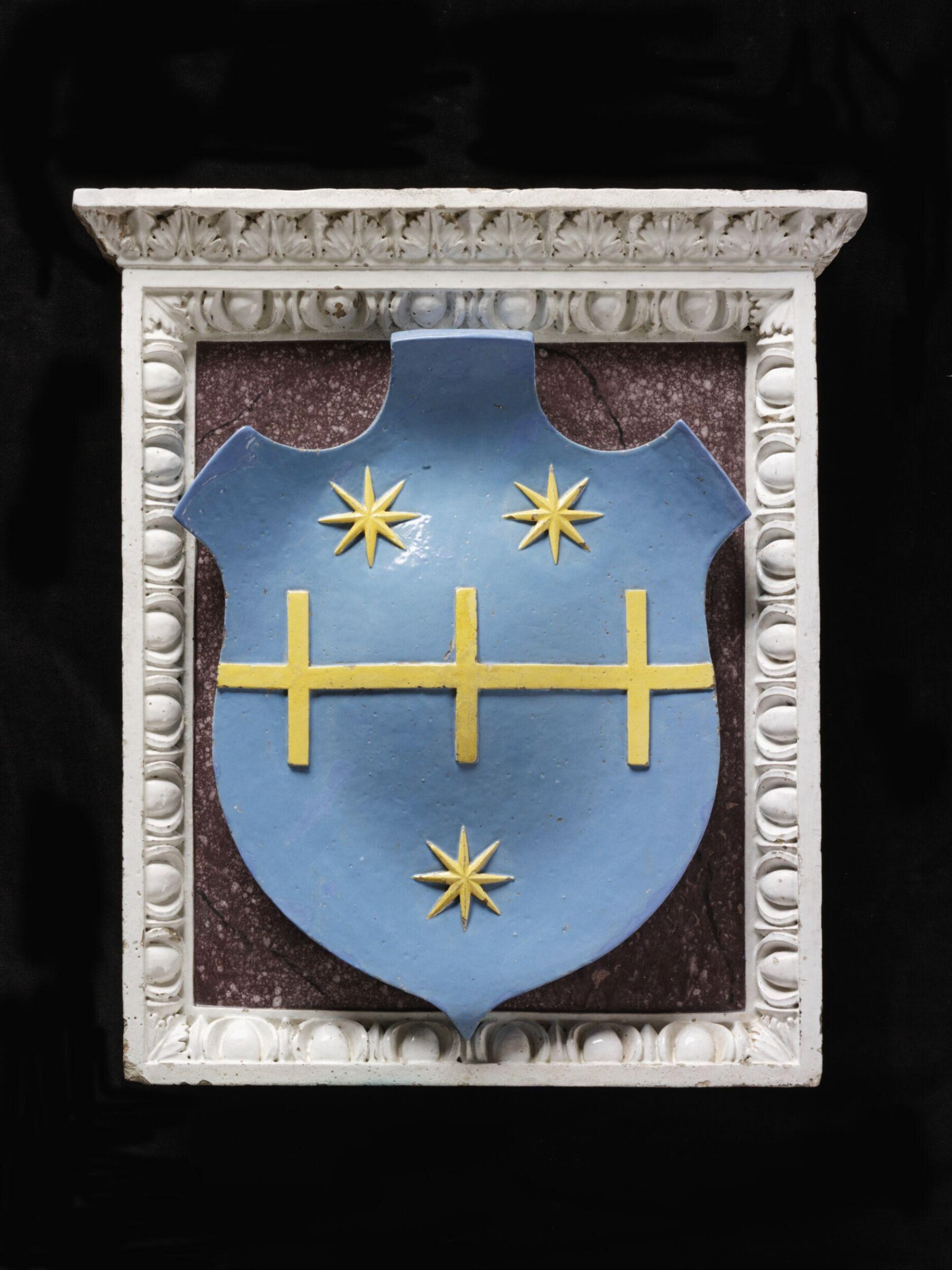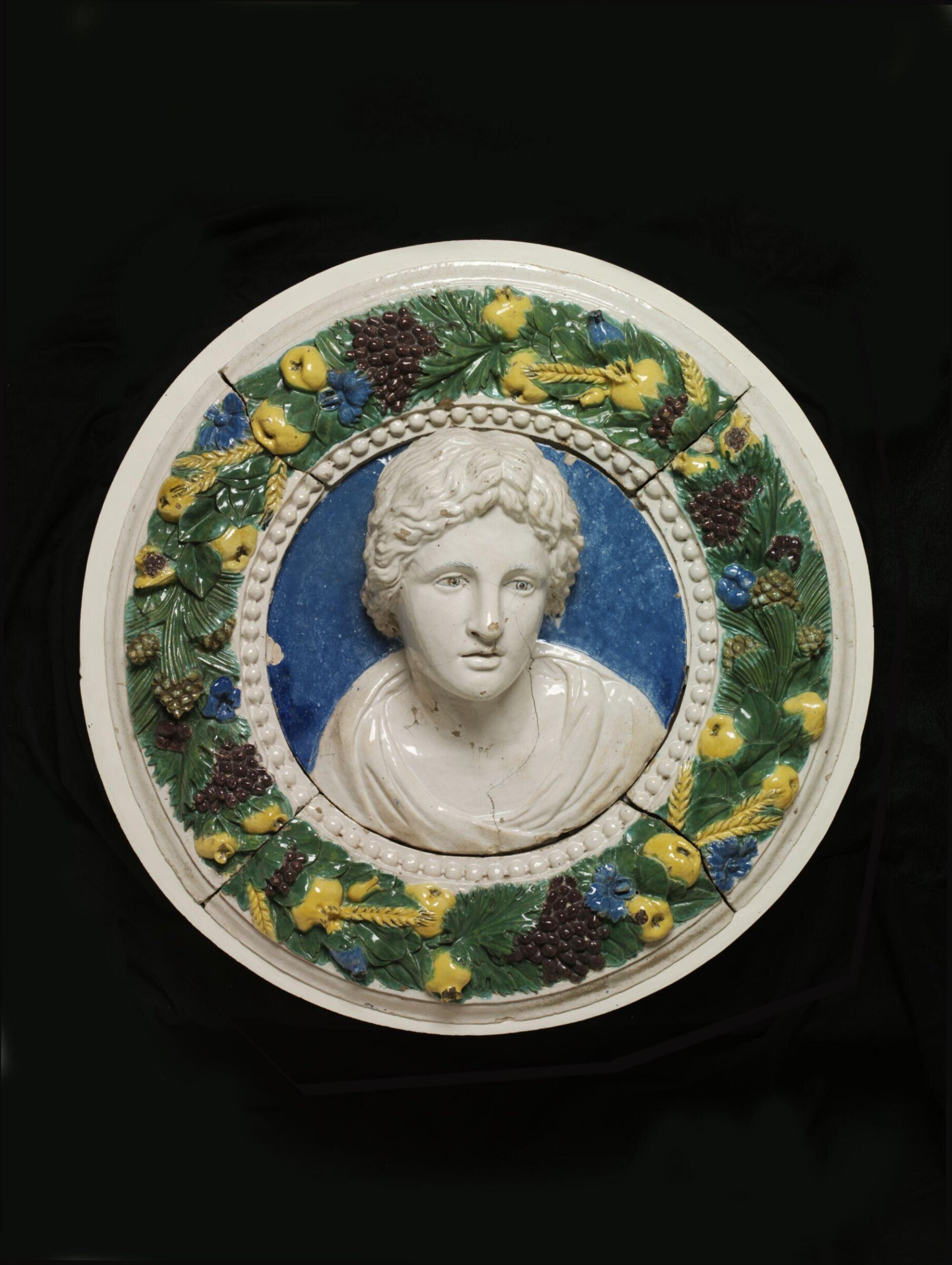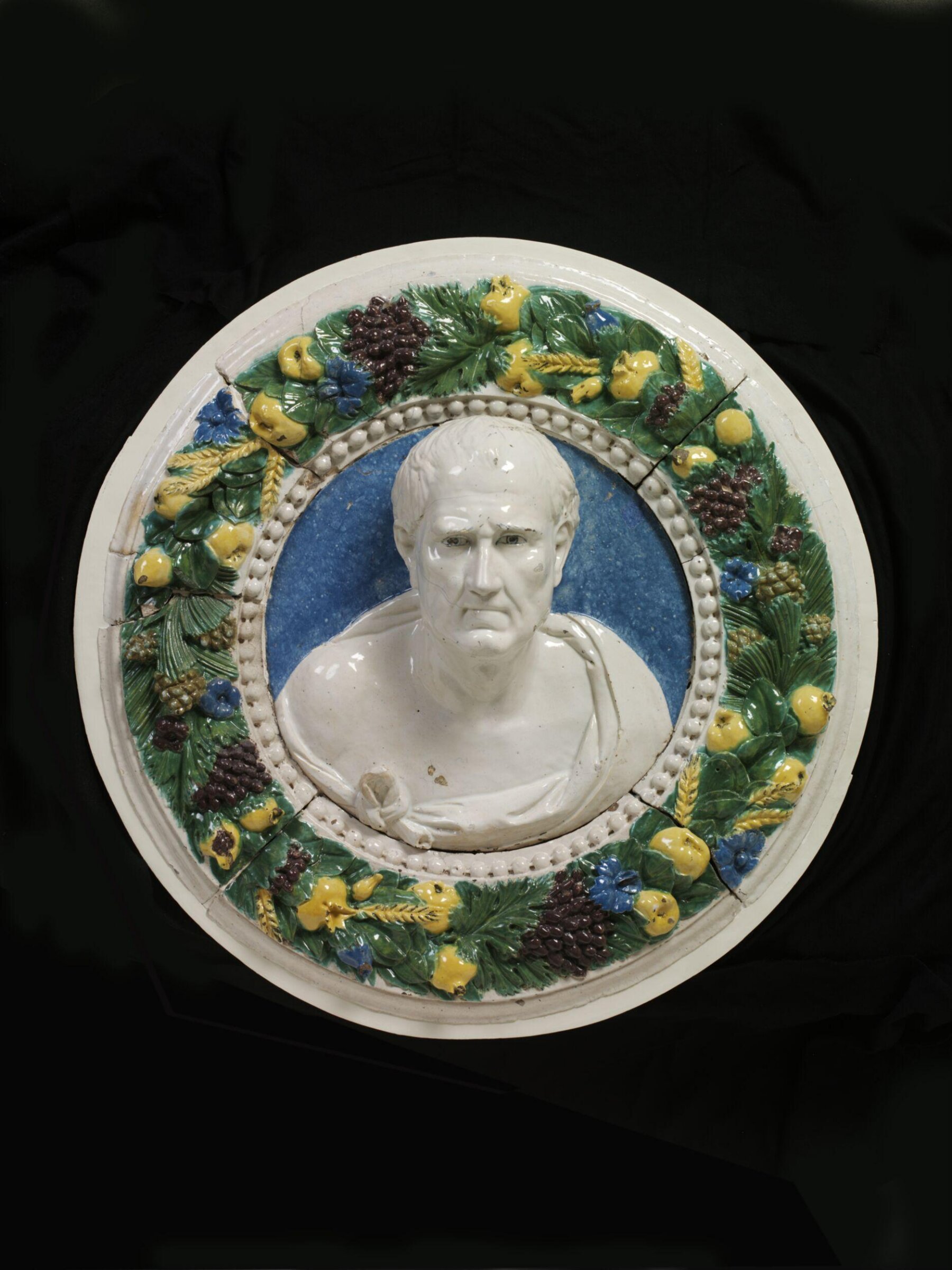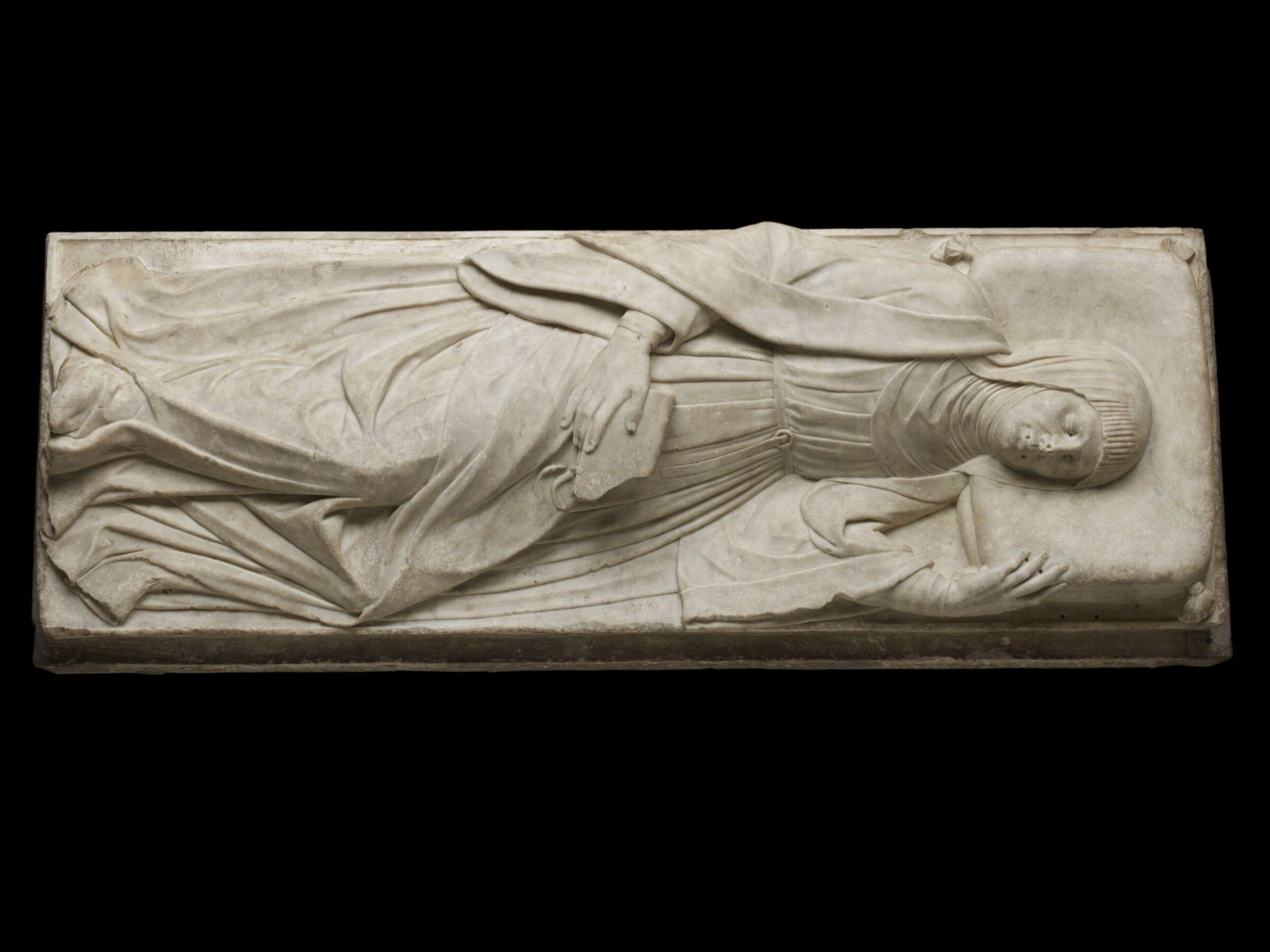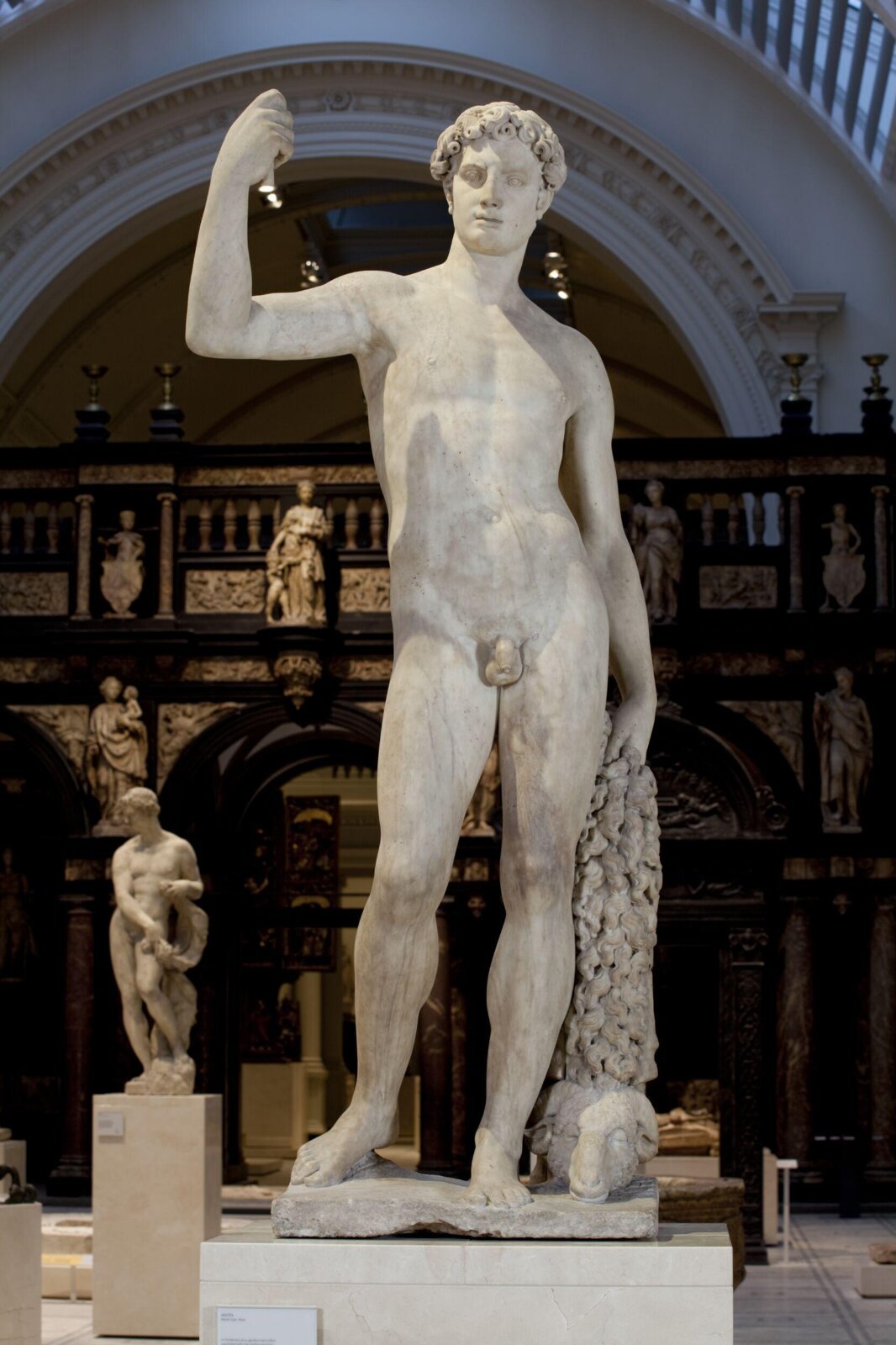
Jason
Czy można zobaczyć?
Tak, teraz na wystawie
Gdzie jest teraz „Jason”? Muzeum Wiktorii i Alberta, Medieval & Renaissance, Room 50a, The Paul and Jill Ruddock Gallery, Londyn. Tak, teraz na wystawie. Sprawdzono 2 listopada 2026.

Londyn, Wielka Brytania
SalaMedieval & Renaissance, Room 50a, The Paul and Jill Ruddock Gallery
Teraz otwarte· do 17:45
Dostępne dla publiczności.
- Sprawdzono
- Ten status od
- Źródło
- Muzeum
O rzeźbie
In the Renaissance gardens were often associated with the earthly paradises of classical mythology. The story of Jason includes the sacred grove of the Golden Fleece and the Garden of the Hesperides, making him a suitable subject for a garden. This sculpture once stood in a portico in the garden of the Palazzo Stiozzi-Ridolfi in Florence.
Although one of the most famous of the Greek heroes, Jason is not widely represented in Renaissance art. The revival of interest in classical art and literature in Renaissance Italy should have made him a fitting subject, however he does not occur with the fequency of other greek heroes such as Hercules.
Czytaj dalej
The story of Jason was first written in the 200s BC by the Alexandrian poet Apollonius of Rhodes. According to the Argonautica written by Apollonius, Jason led the Argonauts on their voyage to capture the Golden Fleece from Aeetes, King of Colchis on the Black Sea. The King's daughter Medea fell in love with Jason, and by her skill in magic helped him overcome various mortal dangers and win the fleece, which hung from the branch of a tree guarded by a dragon. Having won the fleece Jason and Medea fled from the wrath of Aeetes back to Greece. Jason later abandoned Medea and married a Greek woman causing Medea to seek revenge.
Muzeum Wiktorii i Alberta
Szczegóły
- Numer inwentarzowy
- 6735-1860
Co przedstawia
W katalogu
Źródła
- Muzeum Wiktorii i Alberta
- Zdjęcie: Muzeum Wiktorii i Alberta — © Victoria and Albert Museum, London