Théodore GéricaultFrancja, 1791–1824
Draft letter
Czy można zobaczyć?
Obecnie poza wystawą
Gdzie jest teraz „Draft letter”? Kolekcja: J. Paul Getty Museum, Los Angeles. Obecnie poza wystawą. Sprawdzono 7 października 2026.
Los Angeles, Stany Zjednoczone
Należy do kolekcji, ale obecnie nie jest wystawione.
- Sprawdzono
- Ten status od
- Źródło
- Muzeum
O dziele
Théodore Géricault's Draft Letter, dated 1812–1814, is at the J. Paul Getty Museum in Los Angeles. Written in his sketchbook, it addresses Baron Dominique Vivant-Denon, who directed the Louvre and supervised Salon admissions. Géricault asks the influential official to give his painting the most favourable position when hanging the exhibition.
Opis muzeum
In his sketchbook, Théodore Géricault drafted a letter to the powerful director of the Musée du Louvre and head of admissions to the Salon, Baron Dominique Vivant-Denon, asking him to hang Géricault's painting in the "best possible place."
J. Paul Getty Museum
Szczegóły
- Numer inwentarzowy
- 95.GD.40.7
W katalogu
Źródła
- J. Paul Getty Museum
- Zdjęcie: J. Paul Getty Museum — Open Content
Z życia: Théodore Géricault
Cały życiorys1810
To Pierre Guérin: six months of irregular lessons
In 1810 Géricault left Vernet's studio for the rigorous classicist Pierre Guérin, who disapproved of his student's impulsive temperament while recognizing his talent. He attended the studio irregularly for about six months, probably to work from the live model and meet the other pupils, and painted “Samson and Delilah”, “The Departure of Odysseus from Ithaca” and “The Defense of Thermopylae” at the time.
5 lutego 1811 · Nauka
Beaux-Arts de Paris
1812
Salon debut: “Officer of the Imperial Guard Chasseurs”
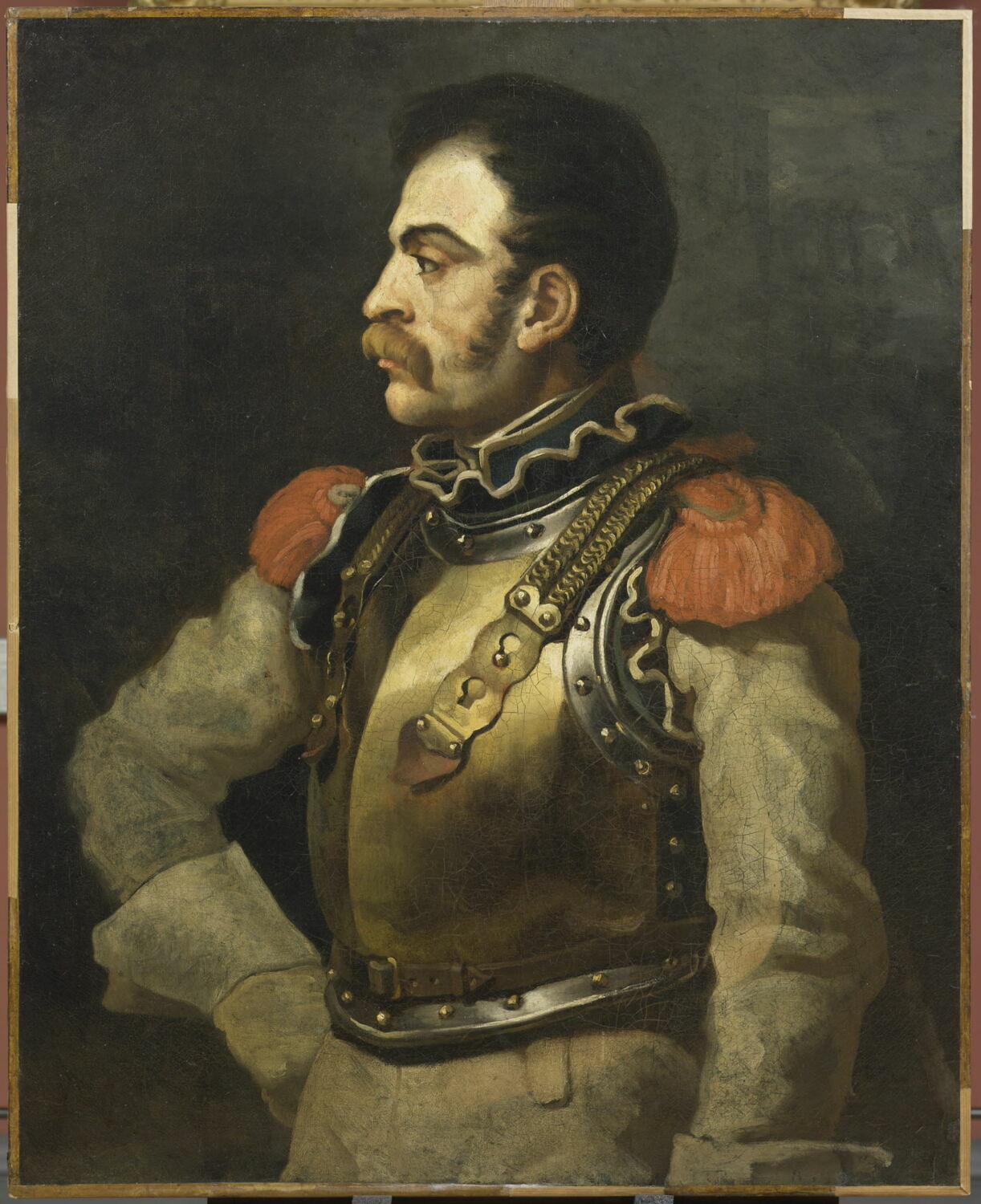
In 1812 Géricault sent “Portrait of Dieudonné” (now “Officer of the Imperial Guard Chasseurs Charging”, Louvre) to the Paris Salon. An artist unknown until then, said to have “hardly studied”, he at once drew the critics' attention: Boutard advised him to take up battle painting, Durdent called him “perhaps the best of all our painters”, and David himself noticed the picture.
1814
Salon of 1814: “Wounded Cuirassier” and cold reviews
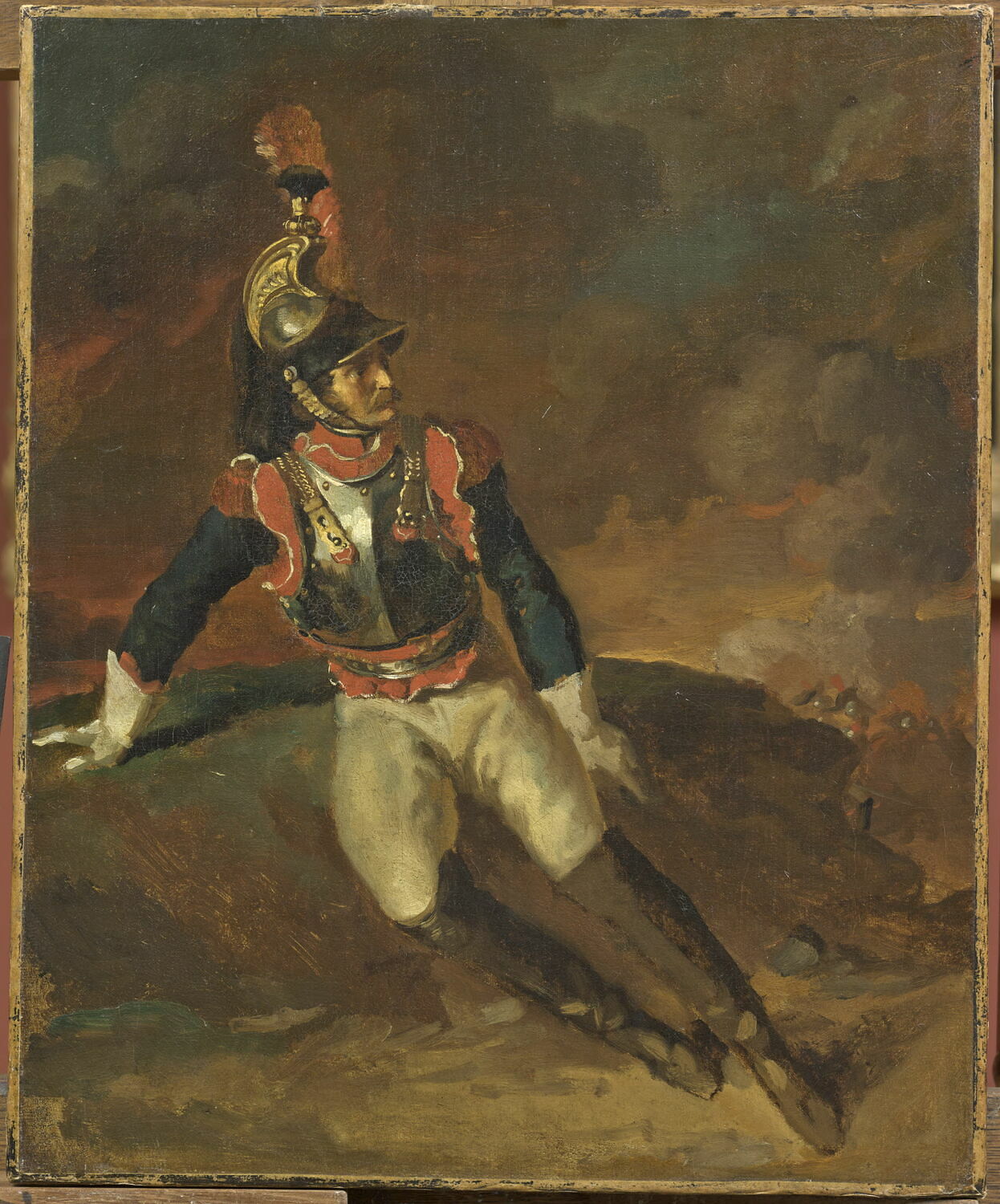
At the Salon of 1814, held after Napoleon's fall, the “Officer” was shown paired with “Wounded Cuirassier Leaving the Field of Battle”, the only reminder of a passing tragic and glorious era among the neutral subjects chosen by other artists. Critics either said nothing of Géricault's pictures or received them unfavorably.
December 1814
He buys a commission as a musketeer
Having recently evaded military service, in December 1814 Géricault, with the help of his father and uncle, bought a commission in the musketeer company commanded by Lauriston, a privileged military unit. His biographers find it hard to explain what motivated him.
1815
The Hundred Days: Louis XVIII's escort and flight to Normandy
During the Hundred Days Géricault was in the escort of the fleeing Louis XVIII and then, disguised as a peasant, made his way to Normandy, where he probably stayed until the middle of the summer of 1815.