Alessandro AlgardiWłochy, 1595–1654
Baptism of Christ
Czy można zobaczyć?
Tak, teraz na wystawie
Gdzie jest teraz „Baptism of Christ”? Cleveland Museum of Art, 217 Italian Baroque, Cleveland. Tak, teraz na wystawie. Sprawdzono 2 listopada 2026.

Dostępne dla publiczności.
- Sprawdzono
- Ten status od
- Źródło
- Muzeum
O rzeźbie
When Innocent X (Giovanni Battista Pamphili, ruled 1644–55) became pope, Alessandro Algardi endeavored to obtain his patronage. This bronze Baptism of Christ is a casting from the molds used for an original silver sculpture that Algardi presented to the new pope to gain his support in 1646. The composition depicts an important scene in the life of Christ. On the right is John the Baptist, who pours water onto Jesus's head from a shell. As Christ bows his head to be baptized, a little angel holds the edge of his cloak. Algardi worked carefully to make this piece exciting from a number of points of view. Its dramatic emphasis shifts, depending on the viewer's vantage point.
Cleveland Museum of Art
Szczegóły
- Numer inwentarzowy
- 1965.471
W katalogu
Źródła
- Cleveland Museum of Art
- Zdjęcie: Cleveland Museum of Art — Museum open access
Z życia: Alessandro Algardi
Cały życiorys1625–1654 · Miejsce pracy
Rome
1644
Innocent X draws him to the papal court
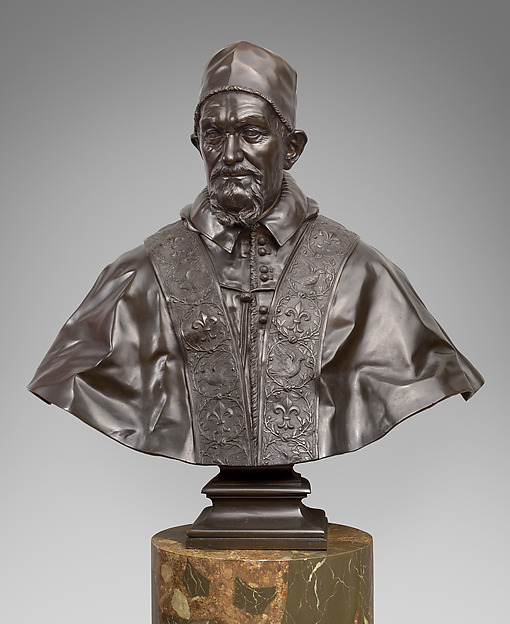
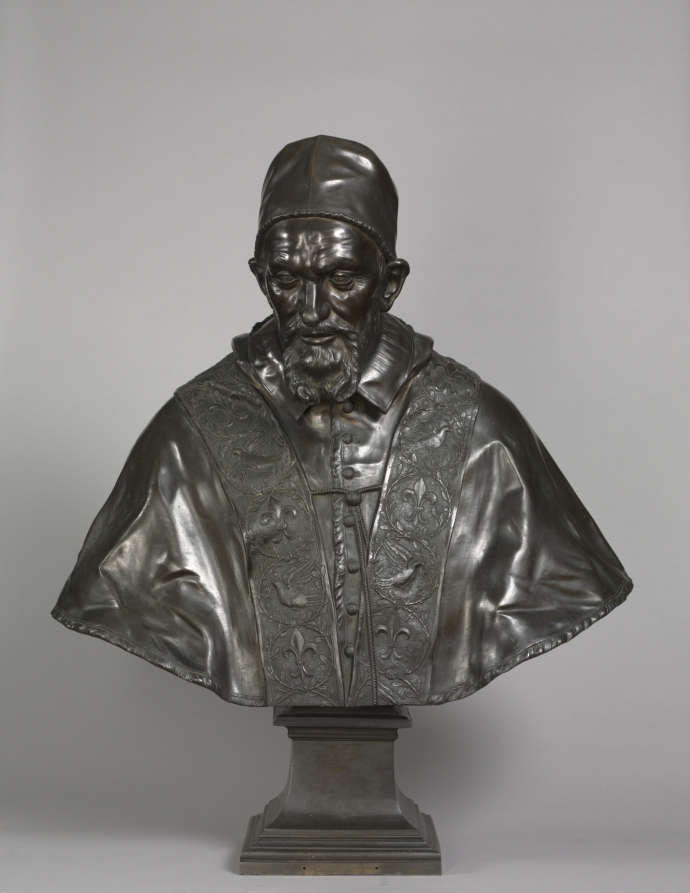
With the death of the Barberini pope Urban VIII and the accession of the Pamphilj pope Innocent X, the Barberini fall into disfavor and Bernini receives fewer commissions; Algardi, by contrast, is embraced by the new pope and the pope's nephew Camillo Pamphilj. His portraits are highly prized, their formal severity contrasting with Bernini's vivacity, and his large bronze of Innocent X is now in the Capitoline Museums.
1650
Meets Velázquez; commissions from Spain
He meets Diego Velázquez, who obtains commissions for his work from Spain: four chimney-pieces and the figures of the fountain of Neptune in the gardens of the Royal Palace of Aranjuez, and the tomb of the Count and Countess de Monterey in the Augustinian monastery at Salamanca.
in later years
A large studio, a fortune and pupils
In his later years he controls a large studio and amasses a great fortune. His classicizing manner is carried on by pupils such as Ercole Ferrata and Domenico Guidi, and Antonio Raggi initially trained with him (other accounts say all three then moved to Bernini); lesser-known assistants in his studio include Francesco Barrata, Girolamo Lucenti and Giuseppe Peroni.