Alessandro AlgardiWłochy, 1598–1654
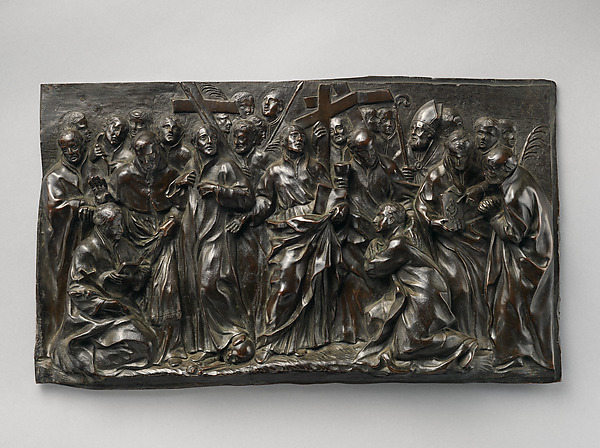
Attila
Czy można zobaczyć?
Nie wiadomo
Gdzie jest teraz „Attila”? Kolekcja: Musei Civici di Pesaro (Palazzo Mosca), Pesaro. Nie wiadomo, czy jest dziś na wystawie.
Pesaro, Włochy
Wiemy, do kogo należy, ale nie wiemy, czy jest dziś na wystawie.
- Ten status od
- Źródło
- Muzeum
O rzeźbie
Tekst muzeum, język: włoski
Si tratta di un bozzetto, in scala molto vicina alla esecuzione finale, utilizzato da Algardi a Roma nel 1625 per realizzare la grande pala marmorea raffigurante l'Incontro tra Leone Magno e Attila, collocata in un altare laterale della basilica di S. Pietro
Musei Civici di Pesaro (Palazzo Mosca)
Szczegóły
Co przedstawia
W katalogu
Źródła
- Musei Civici di Pesaro (Palazzo Mosca)
- Zdjęcie: Musei Civici di Pesaro (Palazzo Mosca) — Soprintendenza Archeologia, Belle Arti e Paesaggio per le province di Ancona e Pesaro e Urbino · Beni Culturali Standard (BCS) · Catalogo generale dei Beni Culturali (ICCD – MiC)
Z życia: Alessandro Algardi
Cały życiorysc. 1615
The Duke of Mantua and the jewelers: first patrons
By the age of twenty, Ferdinando Gonzaga, Duke of Mantua, is already commissioning works from him, and local jewelers employ him for figurative designs; other accounts say he entered the duke's service as early as 1608. From his early years in Bologna come his two earliest known works, statues of saints made of chalk in the Oratory of Santa Maria della Vita.
1622 · Miejsce pracy
Mantua
1625
Moves to Rome with the Duke of Mantua's introduction
After a short stay in Venice he goes to Rome with an introduction from the Duke of Mantua to Cardinal Ludovico Ludovisi, nephew of the late pope, who employs him for a time to restore ancient statues from his famous collection.
1625–1634
Years of struggling for recognition in Rome
Bernini and his studio, backed by Borghese and Barberini patronage, win most of the major Roman commissions, while Algardi struggles for recognition for nearly a decade: he takes small commissions — terracotta and a few marble portrait busts — and supports himself with small works like crucifixes. He is aided by friends, among them Pietro da Cortona and his fellow Bolognese Domenichino; he was also a friend of François Duquesnoy, Andrea Sacchi and Nicolas Poussin.
1625–1654 · Miejsce pracy
Rome