Vasily KandinskyFrancja, 1866–1944
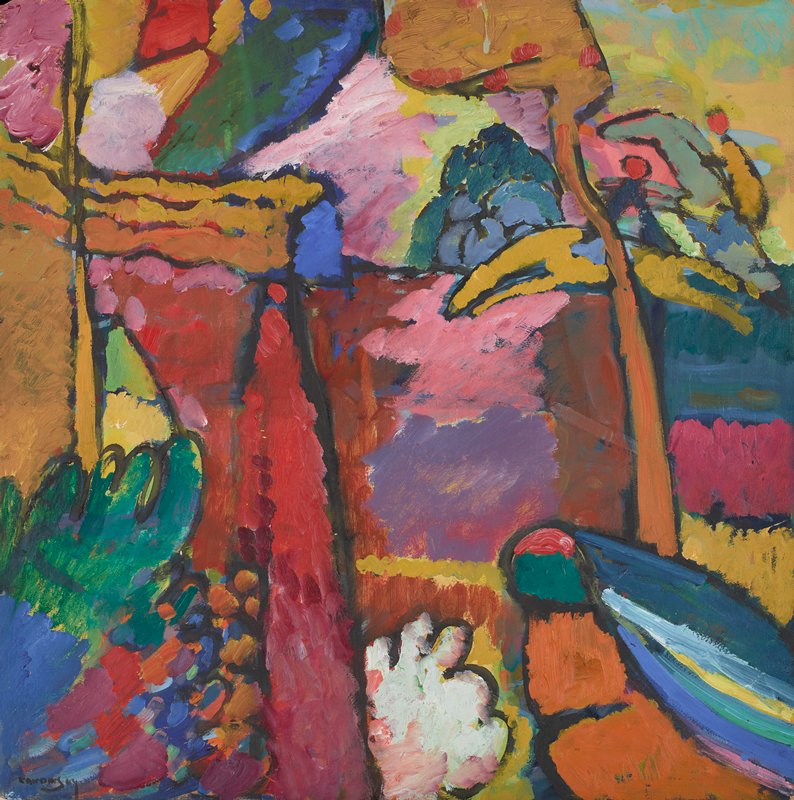
Abstract Composition
Czy można zobaczyć?
Nie wiadomo
Gdzie jest teraz „Abstract Composition”? Kolekcja: Yale University Art Gallery, New Haven. Nie wiadomo, czy jest dziś na wystawie.
New Haven, Stany Zjednoczone
Wiemy, do kogo należy, ale nie wiemy, czy jest dziś na wystawie.
- Ten status od
- Źródło
- Muzeum
Szczegóły
- Numer inwentarzowy
- 2006.52.83
W katalogu
Źródła
- Yale University Art Gallery
- Zdjęcie: Yale University Art Gallery — Image: Yale University Art Gallery
Z życia: Vasily Kandinsky
Cały życiorys1917–1921
Cultural politics in revolutionary Moscow
After the revolution Kandinsky worked actively in public life: he helped protect monuments, founded the Museum of Painterly Culture and the Russian Academy of Artistic Sciences, taught at the Vkhutemas, sat on the fine arts collegium of the People's Commissariat for Education and chaired the All-Russian purchasing commission. He also became vice-president of the RAKhN.
1918–1921
The Institute of Artistic Culture: rejected by the radicals
Kandinsky became the first director of the Institute of Artistic Culture in Moscow, but the institute's radical members judged his spiritual, expressionist view of art too individualistic and bourgeois. He painted little in these years but taught a great deal, using a programme of form and colour analysis.
June 1920
Death of his son Vsevolod
Kandinsky's son Vsevolod died in June 1920; the couple had no more children.
1921
Leaves for Berlin
In December 1921 Kandinsky left for Berlin to set up a branch of the RAKhN there. He took part in the First Russian Art Exhibition in Germany and began teaching painting.
summer 1922
Teacher at the Bauhaus
From the summer of 1922 Kandinsky worked at the Bauhaus and became a leading theorist of the school. In the interwar years he gained worldwide recognition as one of the leaders of abstract art.
1922–1933
Employed by: Bauhaus