 Pierre PugetFrancja, 1620–1694
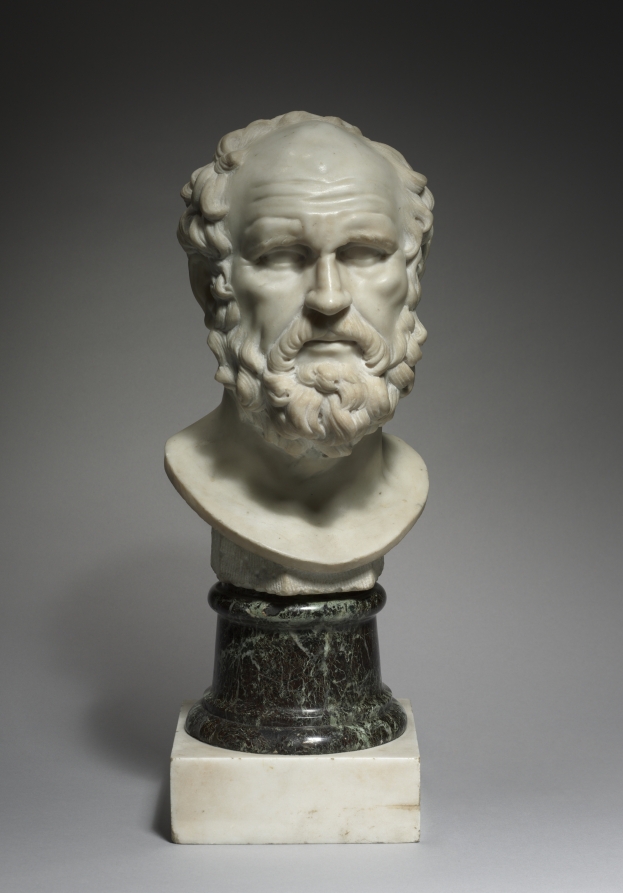
A Philosopher
Czy można zobaczyć?
Tak, teraz na wystawie
Gdzie jest teraz „A Philosopher”? Cleveland Museum of Art, 212 Baroque Painting and Sculpture, Cleveland. Tak, teraz na wystawie. Sprawdzono 2 listopada 2026.

Dostępne dla publiczności.
- Sprawdzono
- Ten status od
- Źródło
- Muzeum
O rzeźbie
A furrowed brow and mature beard define Pierre Puget’s A Philosopher, carved in 1662 and now at the Cleveland Museum of Art in Cleveland. Puget made a generalized intellectual type rather than a likeness of a named person. His models were ancient busts of philosophers, speakers and writers, studied in Roman noble collections during a visit in the early 1660s. Rounded flesh and individually shaped locks of hair belong to the Baroque taste of his own century. On view in gallery 212.
Opis muzeum
Puget traveled to Rome in the early 1660s, where he closely studied ancient busts in the collections of wealthy nobles. Although inspired by Greek and Roman depictions of individual philosophers, orators, and writers, Puget created a generalized image of this type—a mature, bearded man with a furrowed brow— rather than a portrait of a particular historical figure. The rounded forms of the flesh and individual locks of hair are particularly characteristic of 17th-century baroque taste.
Cleveland Museum of Art
Szczegóły
- Numer inwentarzowy
- 1969.121
W katalogu
Źródła
- Cleveland Museum of Art
- Zdjęcie: Cleveland Museum of Art — Museum open access
Z życia: Pierre Puget
Cały życiorys1660
Commission from Nicolas Fouquet and a trip to Genoa for marble
The King’s Minister of Finance, Nicolas Fouquet, commissioned sculptures for his new garden at Vaux-le-Vicomte, including a statue of Hercules, Fouquet’s personal symbol, and sent Puget to Genoa to select and bring back the best blocks of marble in person. There the statue known as the Hercules of Gaul was made, with a Genoese sailor as the model.
1660
Refuses Colbert out of obligation to Fouquet
While preparing his voyage he received several proposals for sculptural projects from Jean-Baptiste Colbert, secretary to Cardinal Mazarin, but refused them because of his obligations to Fouquet. Colbert did not forget the slight.
5 September 1661
Fouquet is arrested on Colbert’s accusation
Nicolas Fouquet was arrested and imprisoned on Colbert’s accusation of using government funds for his own purposes. The statue commissioned for his garden was later sent instead to the Château de Sceaux, Colbert’s more modest residence; it is now in the Louvre.
1661–1669
Decides to stay in Italy for a time
He decided to stay in Italy for a time, making long visits to Rome and Genoa; his principal patron there was the nobleman Francesco Maria Sauli. For the French patron Emmanuel Brignole he made a notable statue, “The Immaculate Conception”, for the chapel of an Albergo in Genoa, and he declined the Genoese senate’s proposal to paint their council chamber in order to devote himself to sculpture.