
Wapping
Over het schilderij
Wapping is an 1864 oil painting by the American artist James McNeill Whistler. It shows a riverside scene in the Rotherhithe district of East London. It captures a view of the River Thames crowded with ships and warehouses, a common feature in his early etchings. It grew out of an etching he had previously made and represented the most complex painting he had yet attempted.
Verder lezen
Whistler began the painting that he called Rotherhithe in 1860 when he was living in Wapping, directly across thr river, before moving west to Chelsea. He originally conceived it depicting the discussion between a prostitute and her client. The woman was modelled by his frequent collaborator Joanna Hiffernan. One of the men was his friend and fellow artist Alphonse Legros. He later resumed work on the painting and made some adjustments such as closing the previously open blouse, in order to make it less clear that she was a prostitute. He was now more intestedin the arrangement of the three figures thana narrative.
The picture was displayed at the Royal Academy Exhibition of 1864 held at the National Gallery in London. Whistler sold the work for £350 to a regular patron of his Thomas Winans. Today the painting is in the collection of the National Art Gallery in Washington, which acquired it in 1982.
Gegevens
Intussen, in het leven van James Abbott McNeill Whistler
Het hele leven1858
Friendship with Fantin-Latour and the Courbet Circle
In 1858 Whistler met Henri Fantin-Latour at the Louvre and through him entered the circle of Gustave Courbet, which included Manet, Legros, Carolus-Duran, and the poet Charles Baudelaire, whose ideas influenced the artist.
1863
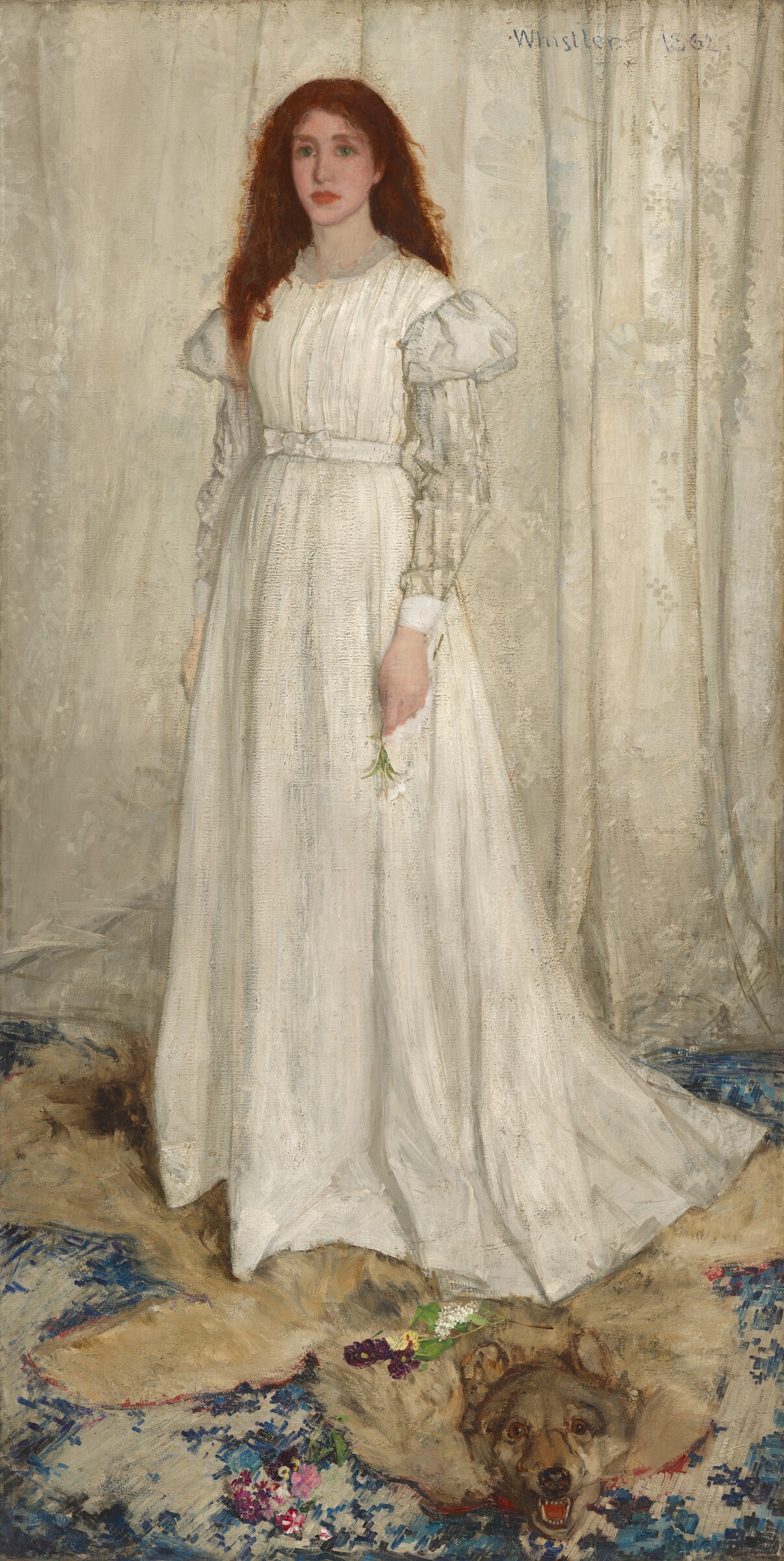
"The White Girl" at the Salon des Refusés
In 1863 the painting, rejected by the Royal Academy, was shown at the Salon des Refusés in Paris and gained wide renown, despite the scandal surrounding Manet's "Le Déjeuner sur l'herbe."
1866
Voyage to Valparaíso
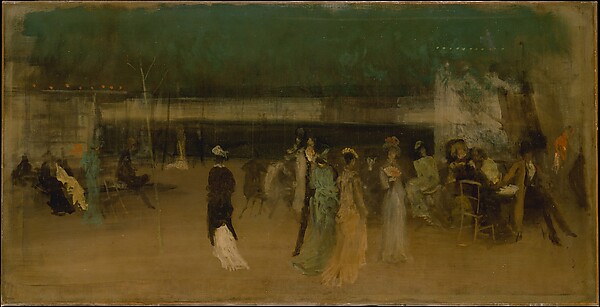
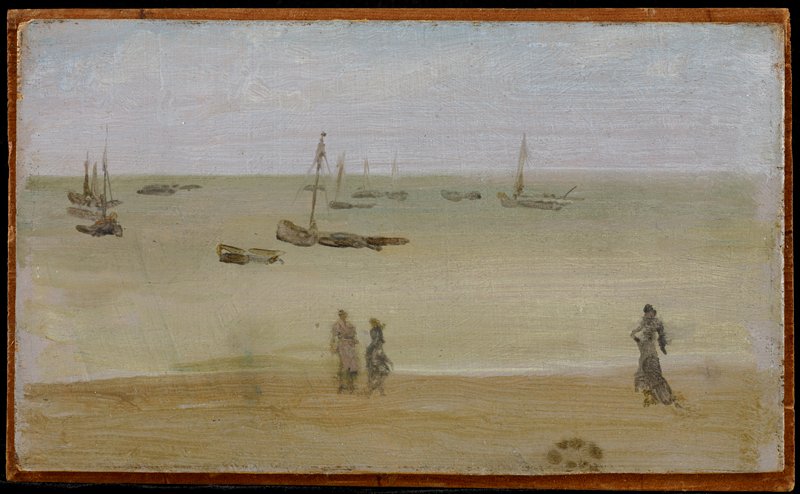
In 1866 Whistler set off for Valparaíso, Chile, professing political motives for the journey. There he painted his first three nocturnal harbour scenes — "moonlight" paintings that he later called "nocturnes."





![Ginevra de' Benci [obverse], Leonardo da Vinci, c. 1474/1478](https://api.nga.gov/iiif/8f29e3c9-a289-4d53-abf0-31a66e9e98fa/full/!2400,2400/0/default.jpg)
![Wreath of Laurel, Palm, and Juniper with a Scroll inscribed Virtutem Forma Decorat [reverse], Leonardo da Vinci, c. 1474/1478](https://api.nga.gov/iiif/ff62e8d0-45c4-498f-ad36-6358de827e04/full/!2400,2400/0/default.jpg)


