ART WIKI32.963 te zien
KaartCollectieKunstenaarsMuseaTentoonstellingenJournal
Inloggen

ART WIKI

Waar het meesterwerk hangt en wanneer men u toelaat.

Collecties: Art Institute of Chicago, Cleveland Museum of Art, Getty Villa, Harvard Art Museums, Hermitage, Hirshhorn Museum and Sculpture Garden, J. Paul Getty Museum, Louvre, Metropolitan Museum of Art, Minneapolis Institute of Art, Museum of Modern Art, National Gallery of Art, National Museum of Asian Art, National Portrait Gallery, Poesjkinmuseum, Rijksmuseum Amsterdam, Russisch Museum, Smithsonian American Art Museum, Statens Museum for Kunst, Tretjakovgalerij, Victoria and Albert Museum, Whitney Museum of American Art, Staatscatalogus van het Russische museumfonds (274 musea), Europeana (19 musea), Wikidata (6 musea), Paris Musées (12 musea) en Joconde, de museumdatabank van het Franse ministerie van Cultuur (495 musea). De afbeeldingen behoren toe aan hun rechthebbenden.

Rubrieken

  • Kaart
  • Zoeken
  • Collectie
  • Meesterwerken
  • Nu te zien
  • Kunstenaars

Meer

  • Musea & galerieën
  • Tentoonstellingen
  • Journal
  • Waar de gegevens vandaan komen
  • Privacy & cookies
StartpaginaKaartCatalogus
  1. Collectie/
  2. Cleveland Museum of Art/
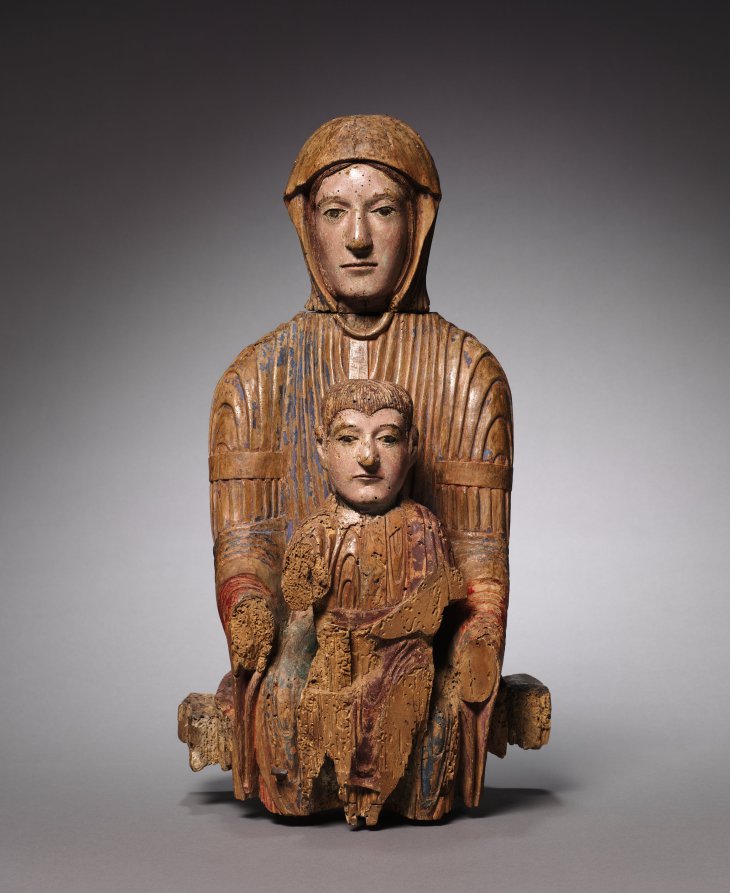
  3. Virgin and Child in Majesty
Virgin and Child in Majesty, c. 1150–1200

Virgin and Child in Majesty

c. 1150–1200 · Sculpture

Mag men het zien?

Ja, het ontvangt bezoek

Cleveland Museum of Art

Cleveland, Verenigde Staten

Zaal106B Romanesque & Gothic Sculpture

Publiek tentoongesteld. Wie daarvoor instaat, staat hieronder.

Gecontroleerd
3 dagen geleden
Ongewijzigd sinds
19 aug 2026
Bron
Het museum
Op de kaartMuseumpagina

Over de sculptuur

This sculpture belongs to a group of early representations of the Virgin and Child known as the Sedes Sapientiae (the Throne of Wisdom). The subject embodies a complex and core Christian doctrine of the Virgin’s role in the Incarnation (the moment in which Christ became flesh) and ultimately in the redemption of humankind. Mary faces forward, her gaze toward the beholder. As she is seated on a throne, she in turn becomes the throne to the Christ child, thus symbolizing her role in giving birth not only to the human Jesus, but also to the divine Christ. The Incarnation gave Mary a unique role as principal mediator between heaven and earth, and between God and humankind. As a result, her image proliferated in art, especially after the 12th century, a period in which there was surging interest in Mary’s life and increasing devotion to her person and images.

Verder lezen

The sculpture belongs to a rare group of surviving figures produced in the Auvergne region of central France during the second half of the 12th century. These "Auvergne" Virgins are estimated to number only about 25 or 30 and are characterized by their linear, calligraphic draperies, which form beautiful swirls and contours. All such sculptures are smaller than life-size and made of wood in order to make them mobile. Evidence suggests that they were moved from altar to altar or church to church, and were frequently carried in procession within churches and town streets on Marian feast days. The heads were intentionally removable in order to "dress" them in costumes for such processions.

Cleveland Museum of Art

Gegevens

Inventarisnummer
2012.52

In de catalogus

BeeldhouwkunstHoutMiddeleeuwenVóór 1400France, Auvergne

Bronnen

  • Cleveland Museum of Art
  • Afbeelding: Cleveland Museum of Art — Museum open access
Buren in huis: Cleveland Museum of Art

Museumpagina
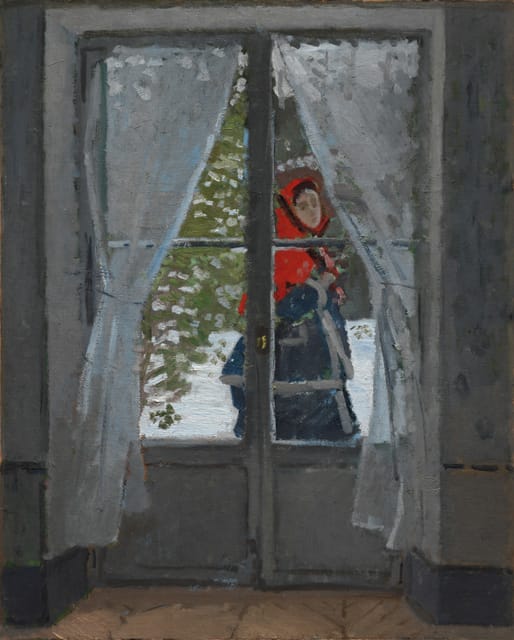
The Red Kerchief, Claude Monet, c. 1868–73

Claude Monet

The Red Kerchief, c. 1868–73

Melencolia I, Albrecht Dürer, 1514

Albrecht Dürer

Melencolia I, 1514

The Virgin and Child with the Pear, Albrecht Dürer, 1511

Albrecht Dürer

The Virgin and Child with the Pear, 1511

The Nativity, Albrecht Dürer, probably c. 1509/1510

Albrecht Dürer

The Nativity, probably c. 1509/1510

The Virgin and Child on a Crescent with a Starry Crown, Albrecht Dürer, 1508

Albrecht Dürer

The Virgin and Child on a Crescent with a Starry Crown, 1508

The Lamentation, Albrecht Dürer, 1507

Albrecht Dürer

The Lamentation, 1507

Large Horse, Albrecht Dürer, 1505

Albrecht Dürer

Large Horse, 1505

Nemesis (The Great Fortune), Albrecht Dürer, c. 1501/1502

Albrecht Dürer

Nemesis (The Great Fortune), c. 1501/1502