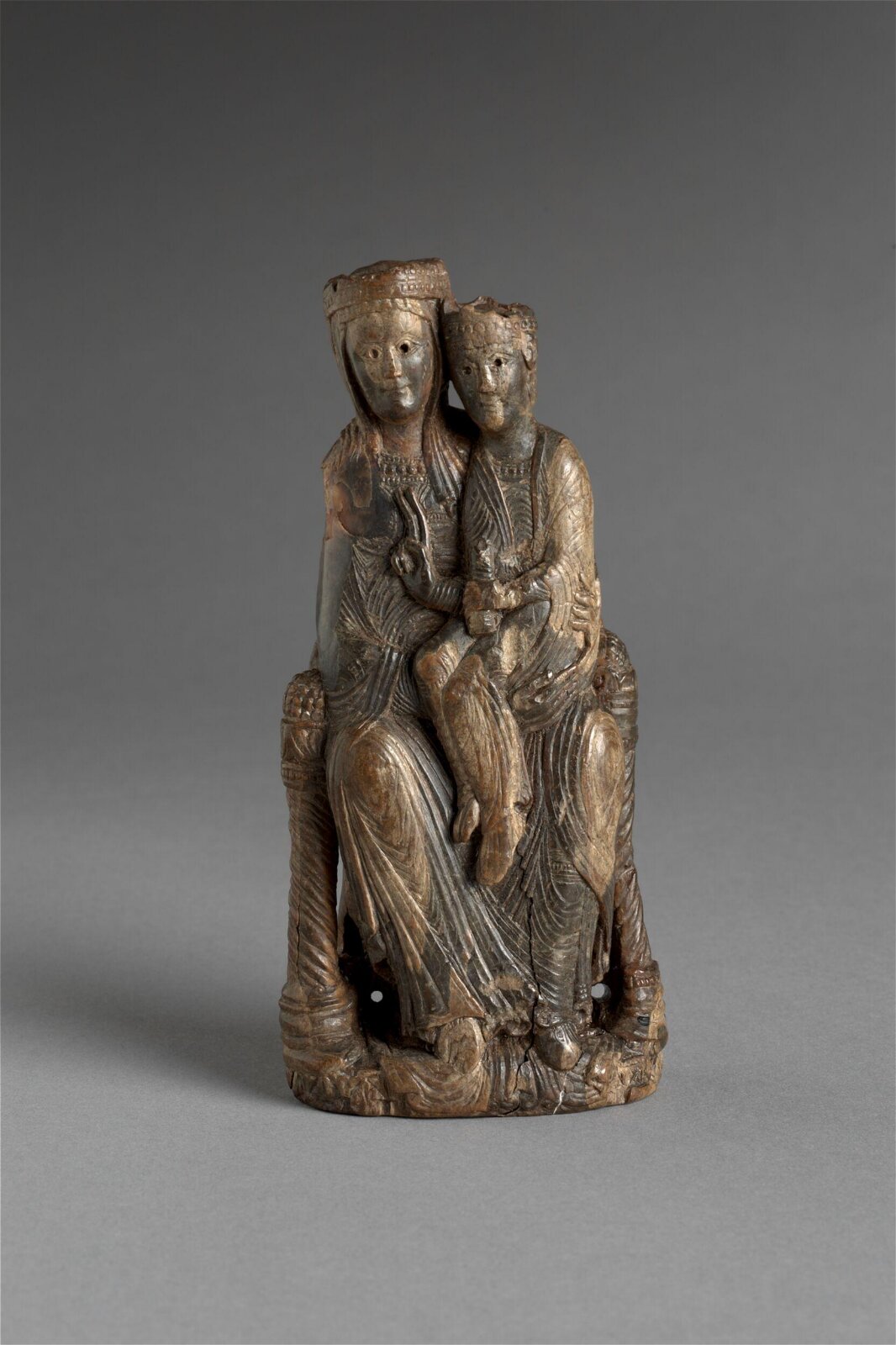
Virgin and Child
Mag men het zien?
Ja, het ontvangt bezoek

Victoria and Albert Museum
Londen, Verenigd Koninkrijk
ZaalMedieval & Renaissance, Room 8, The William and Eileen Ruddock Gallery
Publiek tentoongesteld. Wie daarvoor instaat, staat hieronder.
- Gecontroleerd
- 9 dagen geleden
- Ongewijzigd sinds
- 25 sep 2026
- Bron
- De eigen collectiegegevens van het museum
About the sculpture
Walrus ivory, or morse, had been widely used in Northern Europe for the production of luxury items since at least the 9th century.
The present group and the figure of the Magus in the Dorset County Museum in Dorchester formed part of an Adoration of the Magi group, and Christ would thus have been blessing the approaching magi. It is likely that the magus was originally the second of the three kings. The ivories were probably attached to a separate background, possibly of a contrasting material such as gilt-copper, and the whole was possibly intended for a shrine or small reredos, but this must remain as speculation.
Read on
A striking iconographic and stylistic parallel is provided by the limestone relief of the Virgin and Child in York Minster. Especially the unusual position of the Child - more a boy than a child - with his knees across the Virgin's right wrist, his large right hand and with two elongated fingers raised ion blessing, is virtually identical, as the way the Virgin holds him under his body. It is likely that there was a model, which must have been especially venerated in England around the middle of the 12th century.
Victoria and Albert Museum
Gegevens
- Inventarisnummer
- A.25-1933
What it shows
In de catalogus
Bronnen
- Victoria and Albert Museum: the museum's own open data · opgehaald 9 dagen geleden
- Afbeelding: Victoria and Albert Museum — © Victoria and Albert Museum, London