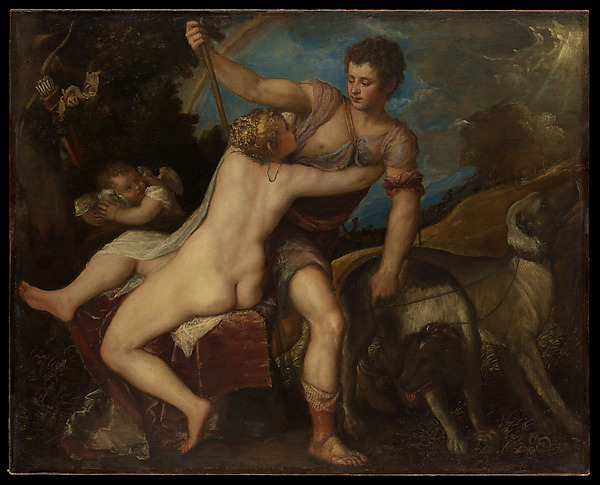
Peter Paul RubensVlaanderen, 1577–1640
Venus Lamenting Adonis
Kan ik het zien?
Nu niet te zien
Waar is „Venus Lamenting Adonis” nu? Collectie: National Gallery of Art, Washington D.C. Nu niet te zien. Gecontroleerd 29 september 2026.

Washington D.C., Verenigde Staten
Het hoort bij de collectie, maar is momenteel niet tentoongesteld.
- Gecontroleerd
- Ongewijzigd sinds
- Bron
- Het museum
Gegevens
- Inventarisnummer
- 1968.20.1
Wat het toont
In de catalogus
Bronnen
- National Gallery of Art
- Afbeelding: National Gallery of Art — Museum open access
In het leven van Peter Paul Rubens
Het hele levenjuli 1600 – 5 mei 1608 · Werkzaam in
Mantua
1606–1608
Commission for the High Altar of the Chiesa Nuova
With the assistance of Cardinal Jacopo Serra, Rubens received his most important commission to date — the high altar of the fashionable new Roman church of Santa Maria in Vallicella (Chiesa Nuova); the first version had to be replaced by a second on three slate panels.
28 October 1608
Departure from Italy Forever
Having finished the commission for the Oratorians, Rubens left Rome without permission on 28 October 1608, hurrying to his ailing mother; despite promises to return to Mantua, he never went back to Italy.
3 oktober 1609
Married: Isabella Brant
8 October 1609
Marriage to Isabella Brant
The 32-year-old Rubens married the 18-year-old Isabella Brant, niece of his brother's wife and daughter of the humanist and city secretary Jan Brant; the marriage produced three children.
9 January 1610
Court Painter to the Archducal Couple
After being presented at court in August 1609, Rubens received his patent as court painter to Archduke Albert and the Infanta Isabella; at the same time he secured the right to remain working in Antwerp rather than Brussels, and to be paid a fee for each painting.





![Ginevra de' Benci [obverse], Leonardo da Vinci, c. 1474/1478](https://api.nga.gov/iiif/8f29e3c9-a289-4d53-abf0-31a66e9e98fa/full/!2400,2400/0/default.jpg)
![Wreath of Laurel, Palm, and Juniper with a Scroll inscribed Virtutem Forma Decorat [reverse], Leonardo da Vinci, c. 1474/1478](https://api.nga.gov/iiif/ff62e8d0-45c4-498f-ad36-6358de827e04/full/!2400,2400/0/default.jpg)