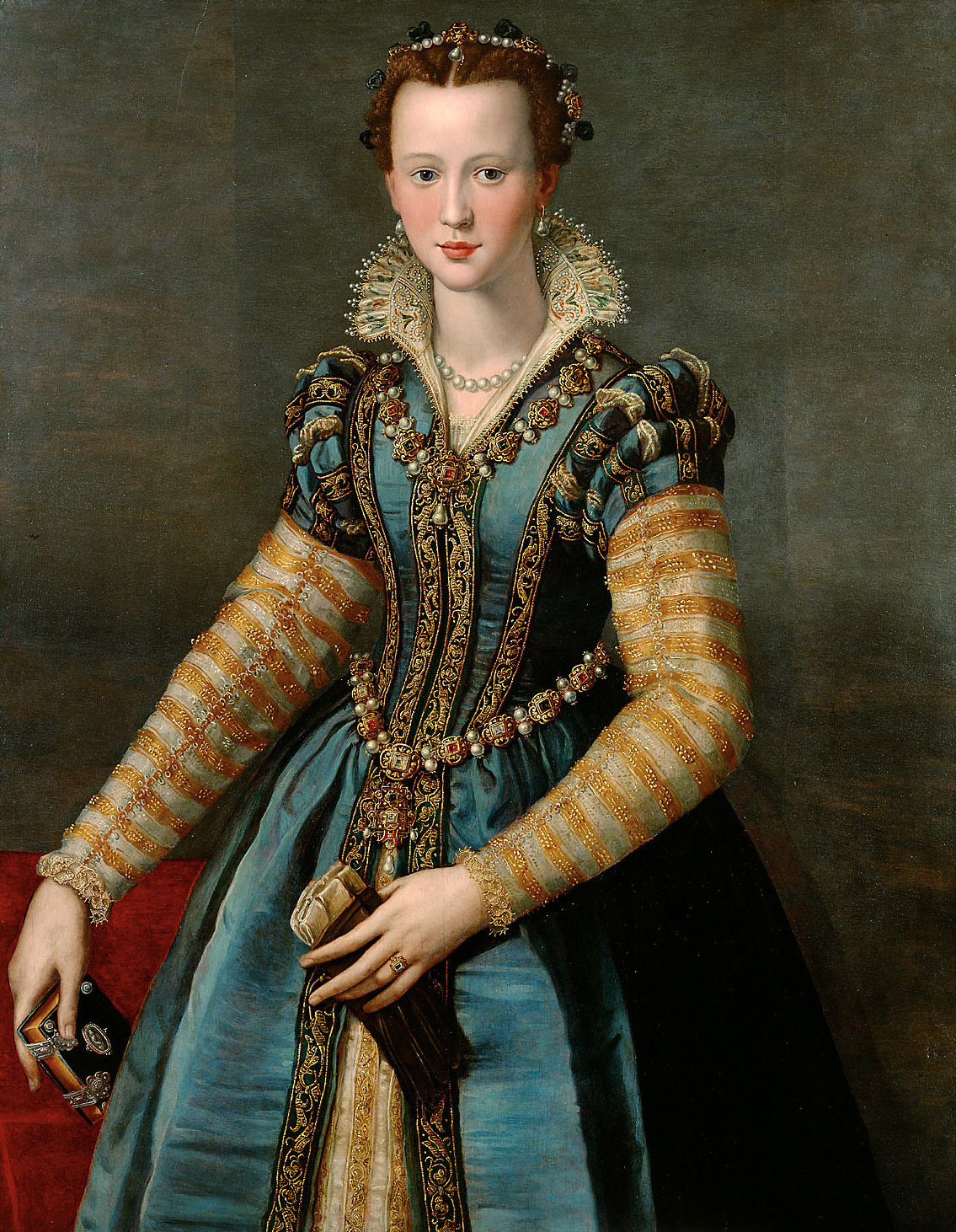
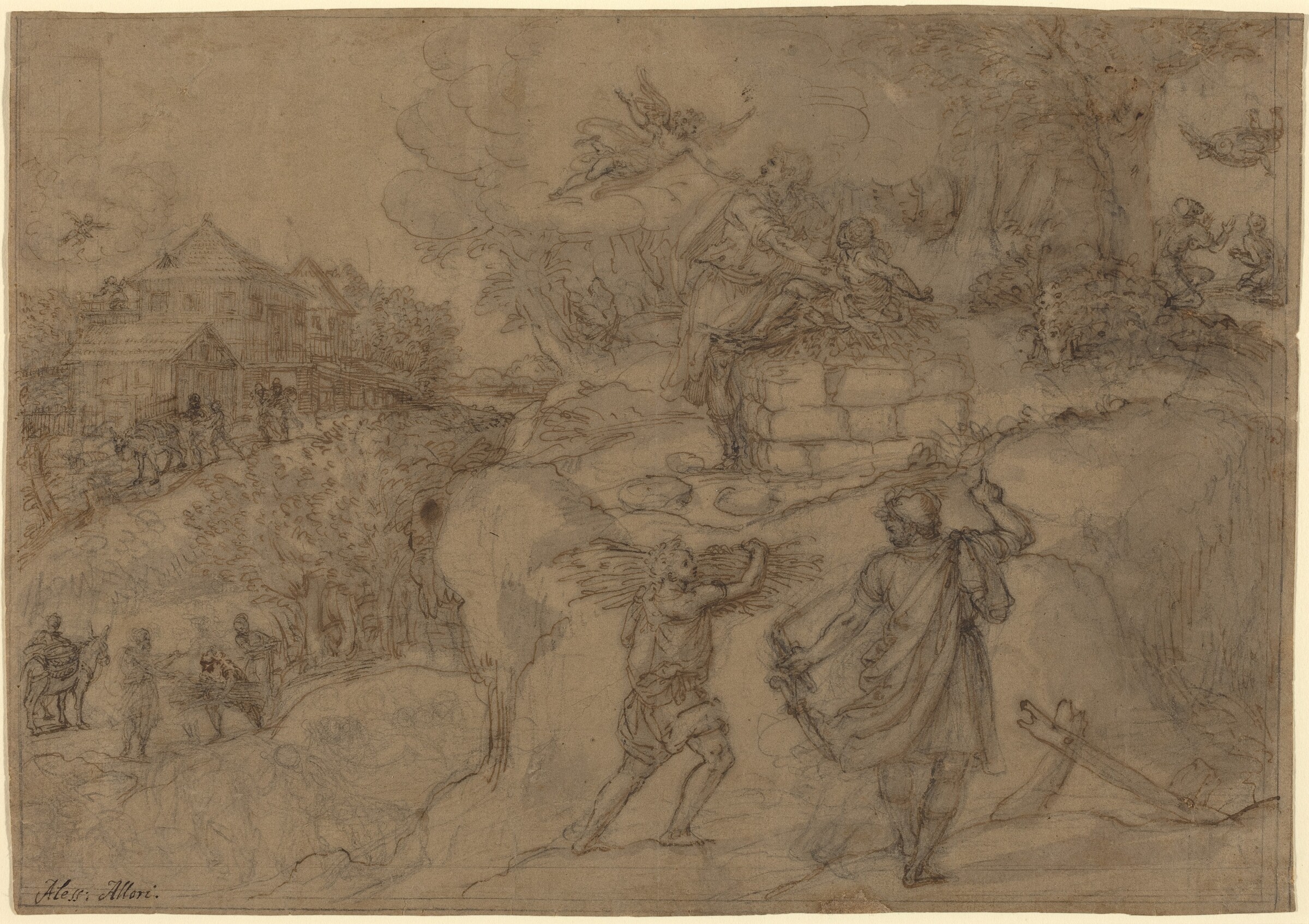
Alessandro AlloriItalië, 1535–1607
Vénus et l'Amour
Kan ik het zien?
Onbekend
Waar is „Vénus et l'Amour” nu? Collectie: Musée Saint-Germain, Auxerre. Onbekend.
Auxerre, Frankrijk
De eigenaar is bekend; of het werk nu te zien is, is onbekend.
- Ongewijzigd sinds
- Bron
- Het museum
Gegevens
- Inventarisnummer
- 1871.3.1 ; 871.3.1 ; RE 345
Wat het toont
In de catalogus
Bronnen
- Musée Saint-Germain
- Afbeelding: Musée Saint-Germain — musées d'Auxerre; Ministère de la Culture (France), base Joconde
In het leven van Alessandro Allori
Het hele leven1554–1560
A study trip to Rome
He goes to Rome with his brother Bastiano, where he joins the circle of Tuscan artists, studies the paintings of Raphael and admires the works of Michelangelo, whom he may have known.
1560
The treatise “Dialogue on the Art of Drawing”
Begins writing a treatise on plastic anatomy, “Dialogo sull'arte del disegno” (Dialogue on the Art of Drawing), dedicating it to Bronzino; his anatomical studies include the dissection of human corpses provided by the Hospital of Santa Maria Nuova.
18 January 1561
Bronzino's will in his favor
Bronzino makes his will, leaving his paintings, drawings, colors and everything concerning the art of painting to Alessandro Allori; in their last years the two worked and lived together in the same house.
18 October 1563
Consul of the Accademia del Disegno
Appointed consul of the Accademia del Disegno in Florence on 18 October, he holds the post until April 1564; he also takes part in preparing Michelangelo's funeral.
1572
Bronzino's death and the signature “Bronzino”
After the death of his teacher Agnolo Bronzino he begins to sign his works in his honor — “Alessandro Bronzino” or “Alessandro Bronzino Allori” (Sandrino for short) — which is why he is often confused with Agnolo Bronzino himself; later his son Cristofano also sometimes uses the name Bronzino.
1576 or 1581
Head of the Medici tapestry workshop
Becomes head of the Arazzeria Medicea, Florence's state-owned tapestry workshop, and designs many cartoons for woven tapestries himself; by one account this happens in 1576, by another in 1581.