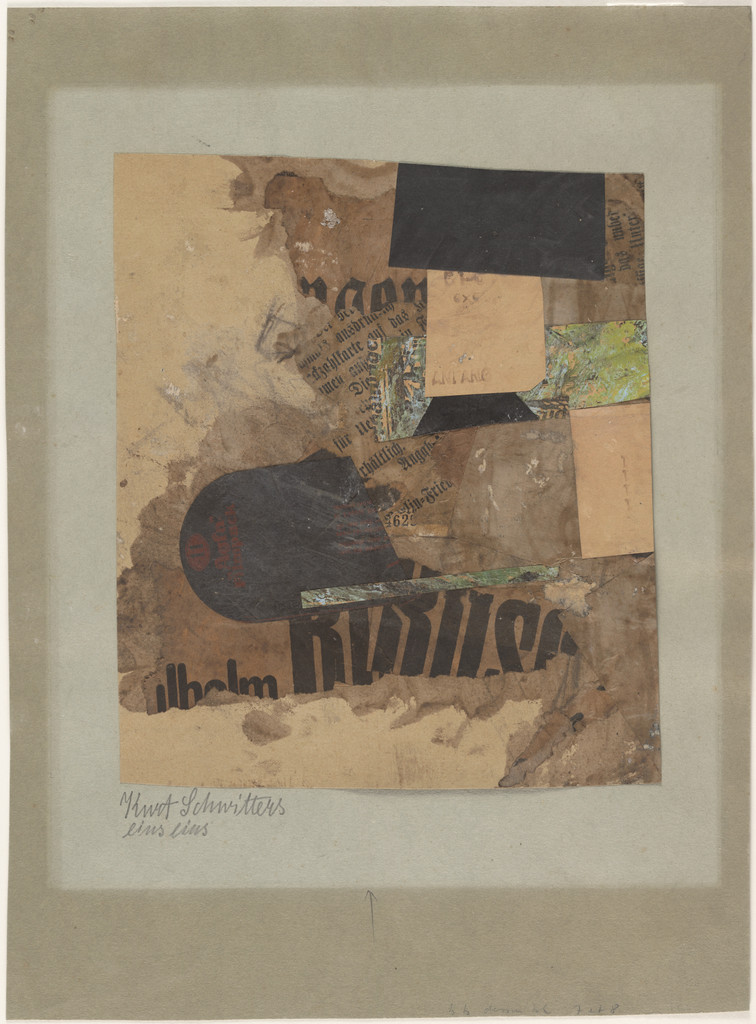
 Kurt SchwittersDuitsland, 1887–1948
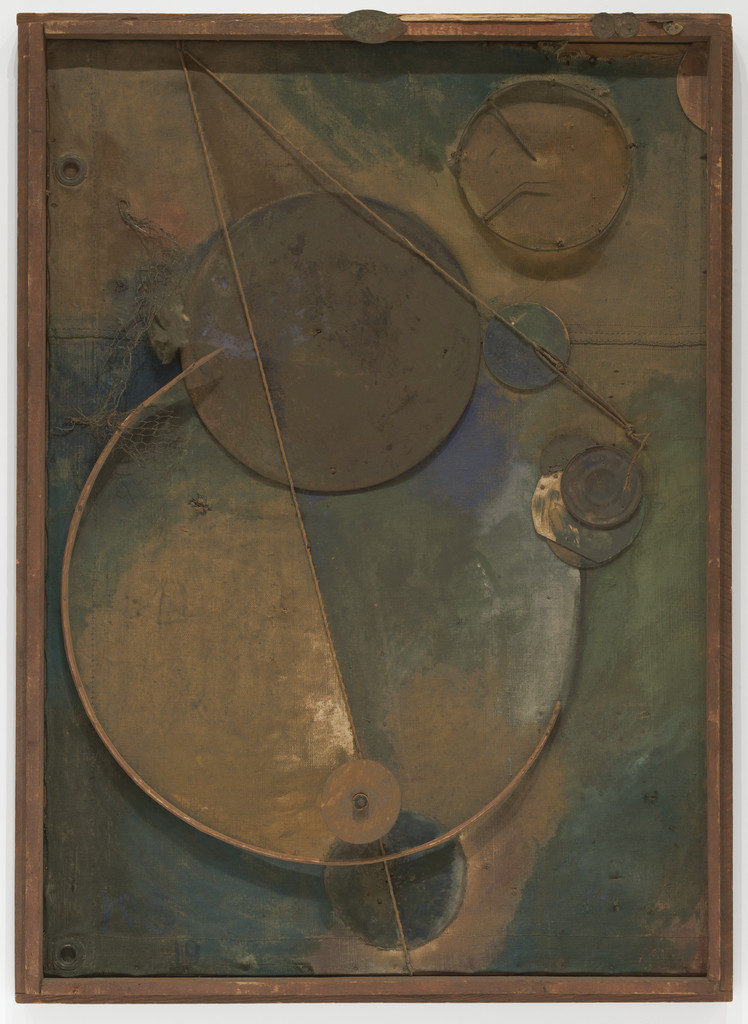
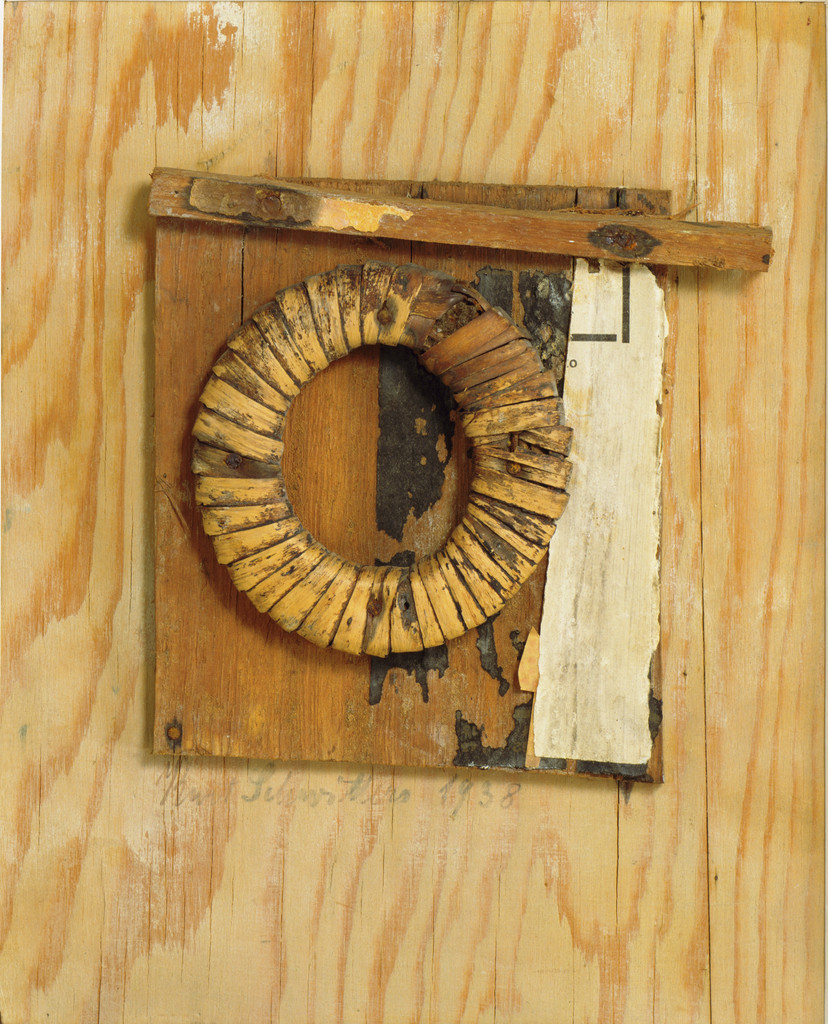
Untitled (Picture with Basket Ring)
Kan ik het zien?
Nu niet te zien
Waar is „Untitled (Picture with Basket Ring)” nu? Collectie: Museum of Modern Art, New York. Nu niet te zien. Gecontroleerd 22 september 2026.

New York, Verenigde Staten
Het hoort bij de collectie, maar is momenteel niet tentoongesteld.
- Gecontroleerd
- Bron
- Het museum
Gegevens
- Inventarisnummer
- 1070.1983
In de catalogus
Bronnen
- Museum of Modern Art
- Afbeelding: Museum of Modern Art — © the artist or rights holder
In het leven van Kurt Schwitters
Het hele levenlate 1936
Photographs of the Merzbau at MoMA
Photographs of the Merzbau, reproduced in 1933–34 in the journal of the Paris-based group abstraction-création, are exhibited at the Museum of Modern Art in New York.
1937
Merz pictures in the ‘Degenerate Art’ exhibition
That same year his Merz pictures are included in the Nazi-organised ‘Degenerate Art’ exhibition in Munich, making his return impossible.
2 January 1937
Flees Germany for Norway
Wanted by the Gestapo for an ‘interview’, he leaves for Norway to join his son Ernst, who had left Germany on 26 December 1936; his wife Helma stays in Hanover to manage their four properties.
2 June 1939
Last meeting with his wife Helma
At a joint celebration in Oslo of his mother Henriette’s 80th birthday and his son Ernst’s engagement, Kurt and Helma meet for the last time; until the outbreak of war Helma had visited him in Norway for a few months each year.
8 – 18 June 1940
Flees from Norway to Scotland
After the Nazi invasion he is interned, as a German citizen, by the Norwegian authorities at the Vågan Folk High School in Kabelvåg in the Lofoten Islands; after his release he flees with his son and daughter-in-law to Leith on the Norwegian patrol vessel ‘Fridtjof Nansen’, between 8 and 18 June 1940.
17 July 1940
Arrives at Hutchinson Camp on the Isle of Man
Officially an enemy alien, he is moved between various camps in Scotland and England and on 17 July 1940 arrives at Hutchinson Camp in Douglas; by the end of the month it holds some 1,205 internees, almost all German or Austrian, and it is soon known as ‘the artists’ camp’.