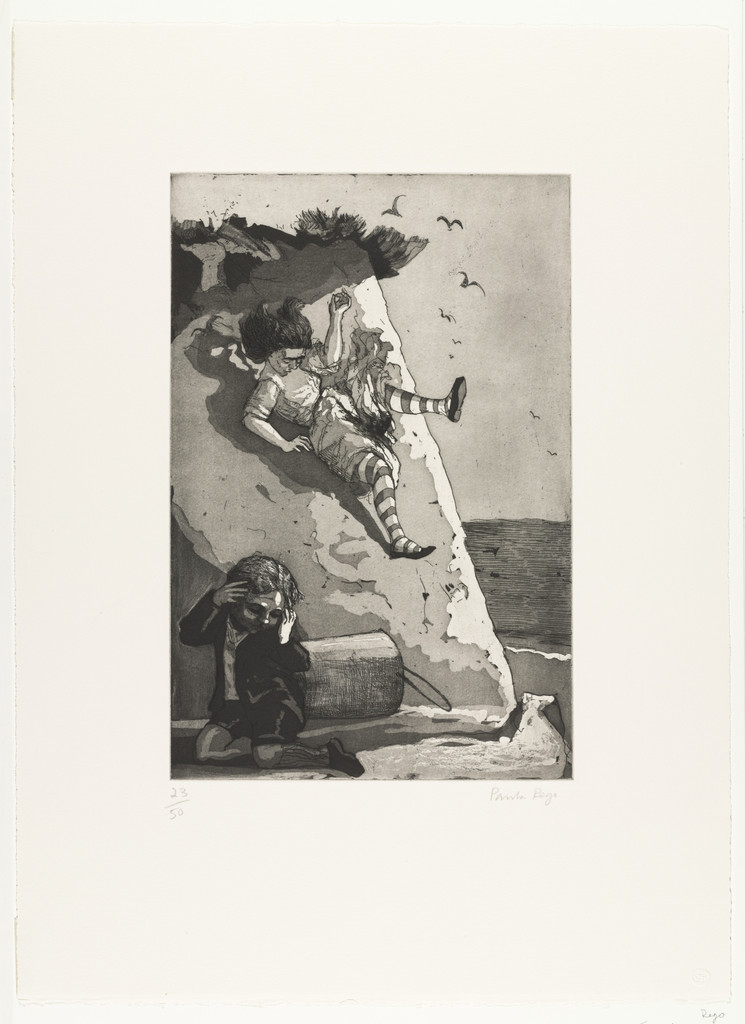
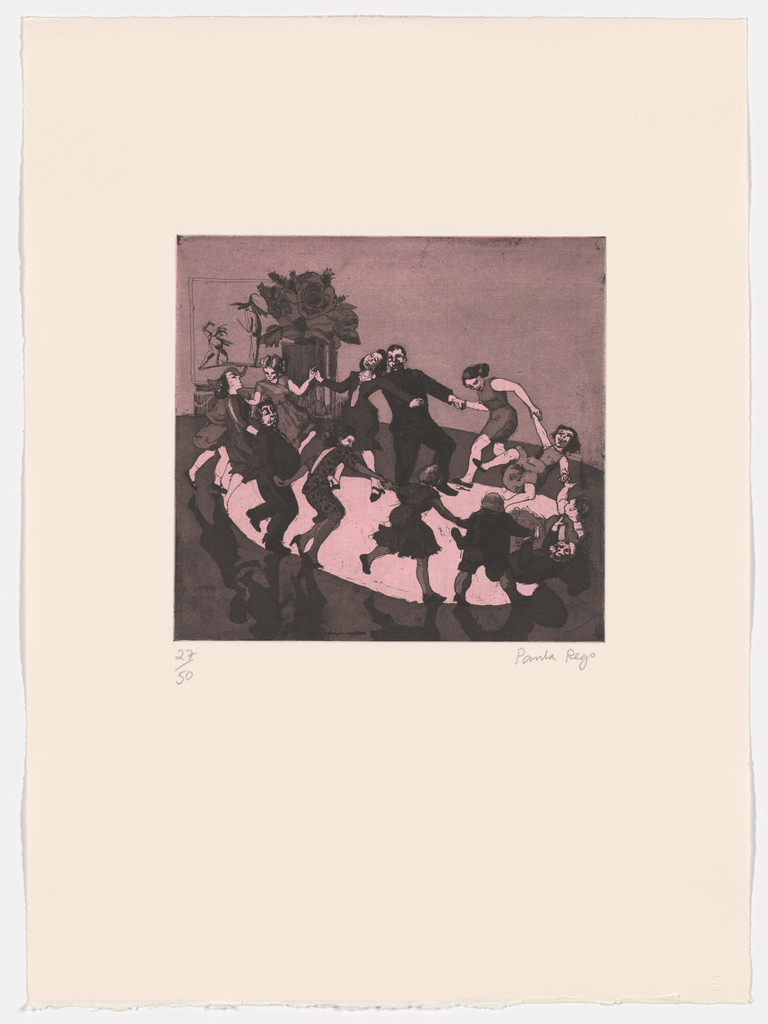
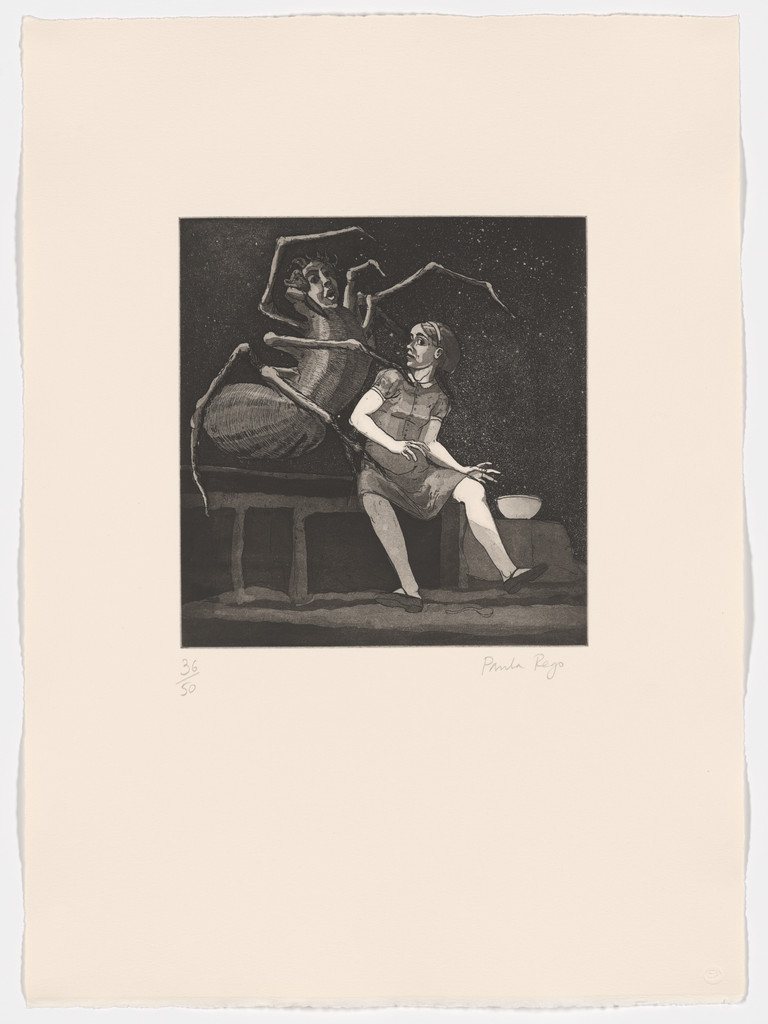
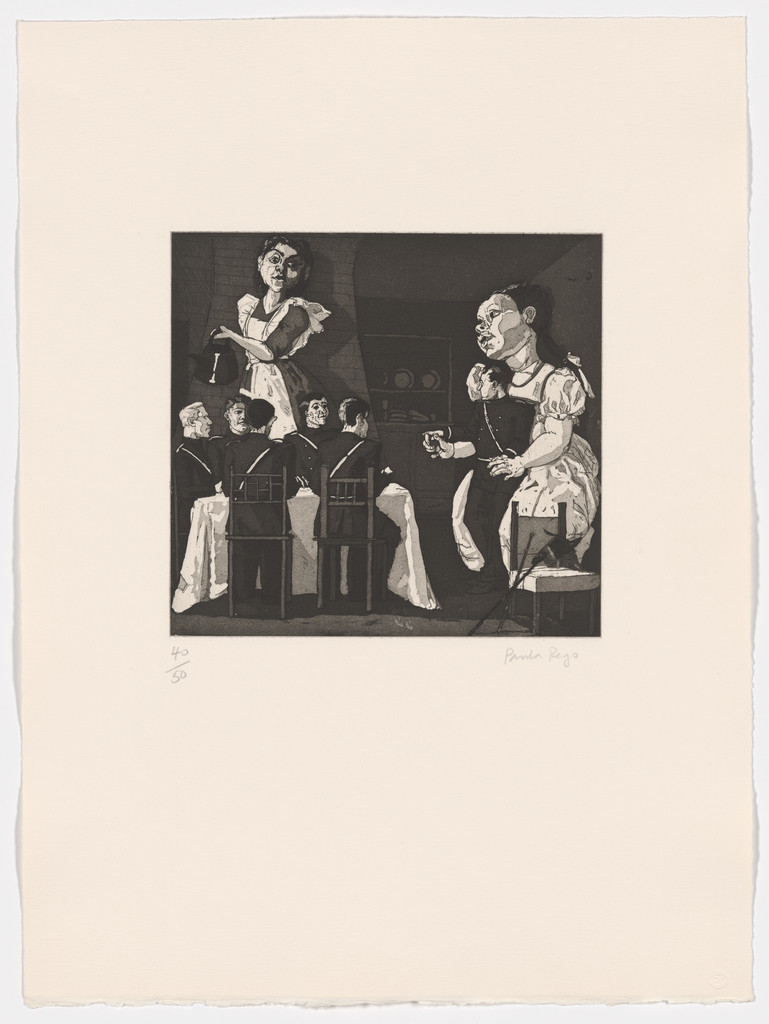
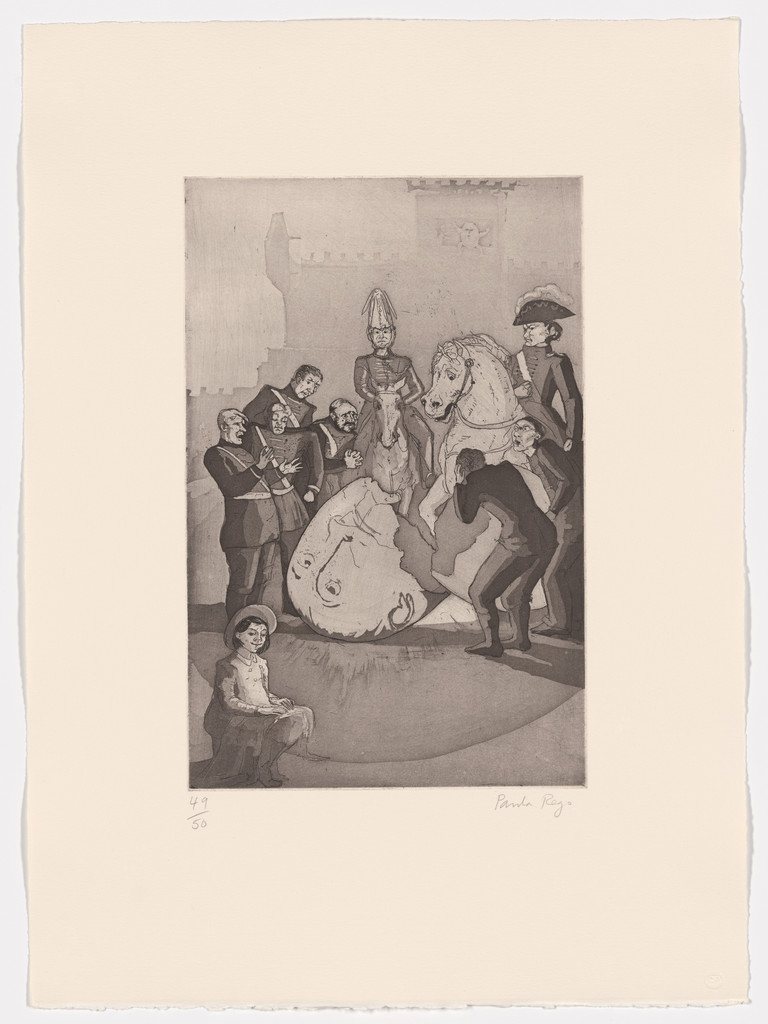
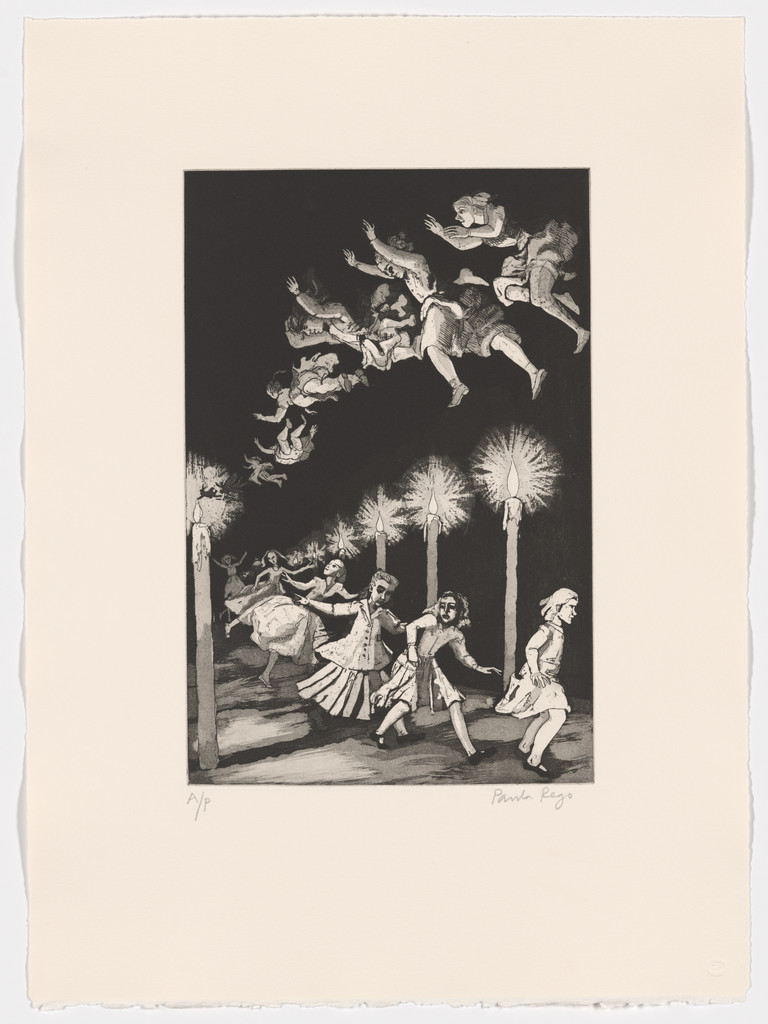
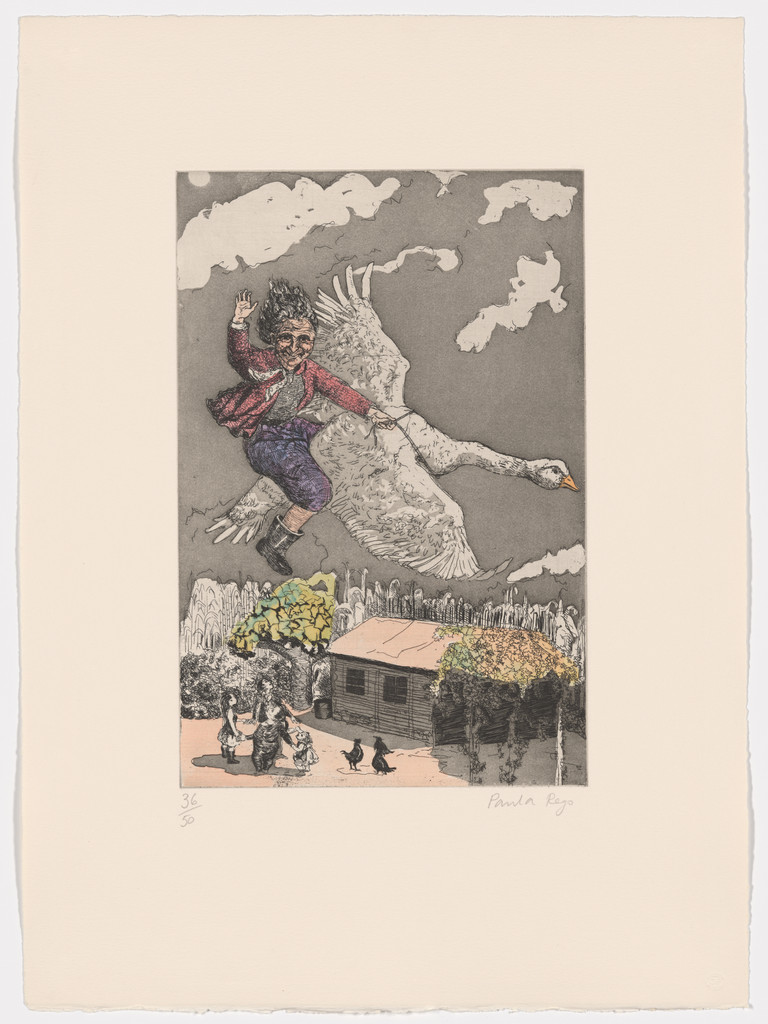
A series of solo exhibitions in Britain follows: AIR Gallery in London (1981), the Arnolfini in Bristol (1983) and the Edward Totah Gallery in London (1984, 1985 and 1987).
1988
Death of Victor Willing
Her husband Victor Willing dies.
1988
Retrospective in Lisbon and London
A retrospective exhibition is held at the Calouste Gulbenkian Foundation in Lisbon and the Serpentine Gallery in London; it leads to her invitation to the National Gallery.
1990
First Associate Artist at the National Gallery
The success of the retrospective leads to her invitation to become the first Associate Artist at the National Gallery in London, the first of a series of artist-in-residence schemes organized by the gallery; her remit is to make new work that connects in some way to the gallery’s collection. By other accounts she became the gallery’s second artist-in-residence as early as 1989, after Jock McFadyen (1981).
1990
A turn to a clearer line
After her appointment at the National Gallery her style changes noticeably: she is pulled back towards a clearer, tighter line reminiscent of the highly wrought drawing technique taught at the Slade. The result is works that come to characterize the popular perception of her style, strong women in sometimes disturbing situations; “Crivelli’s Garden” has clear links to paintings by Carlo Crivelli in the gallery, while “Joseph’s Dream” and “The Fitting” draw on Velázquez in subject matter and spatial representation.
early 1990s
A move to pastels
In the early 1990s she begins using pastels as a medium and continues to use them up to her death, almost to the exclusion of oil paint. Among her most notable pastel works is the “Dog Women” series, in which women sit, squat, scratch and generally behave as if they were dogs, the antithesis of what is considered feminine behaviour.