
 Mark RothkoVerenigde Staten, 1903–1970
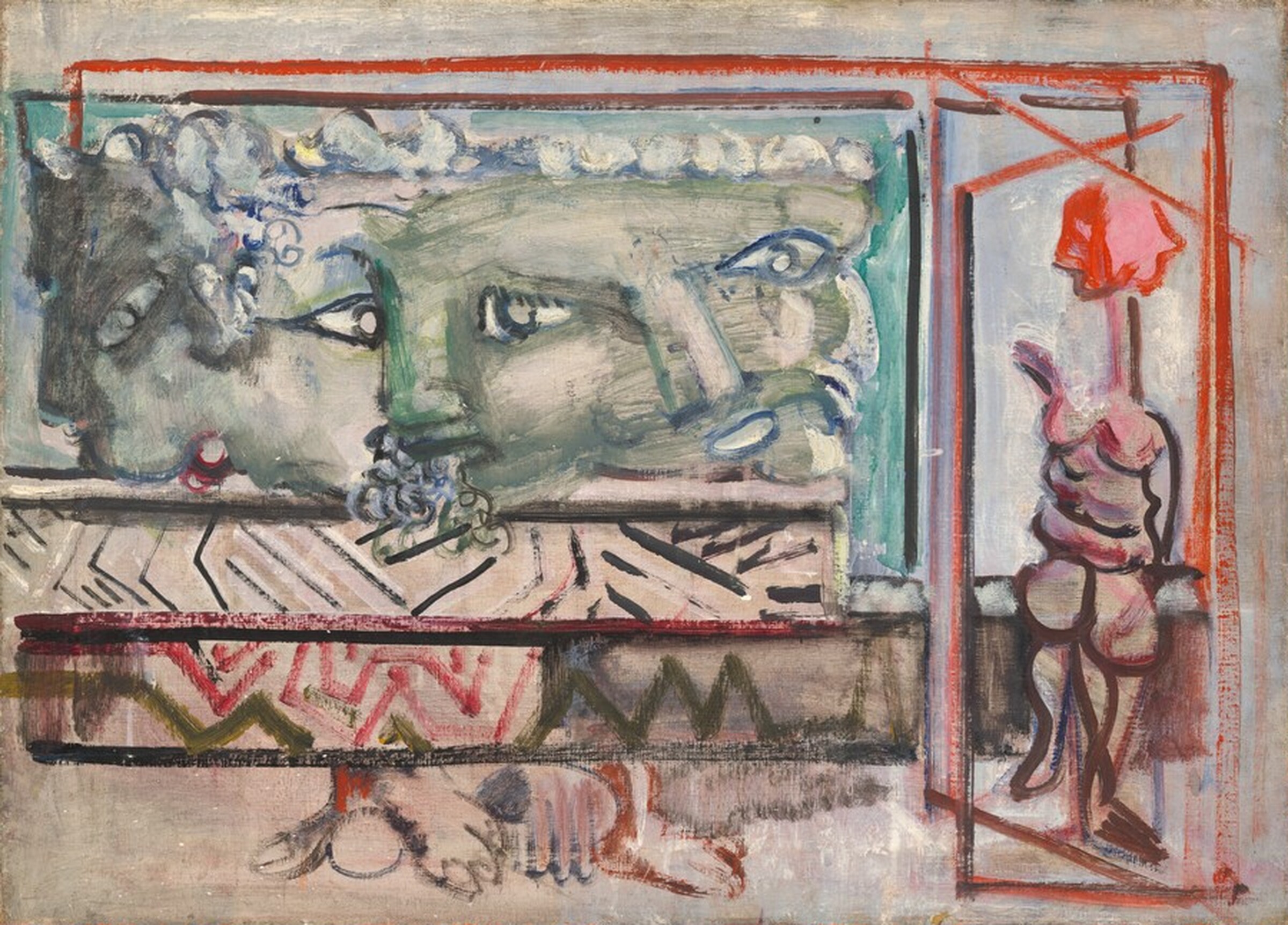
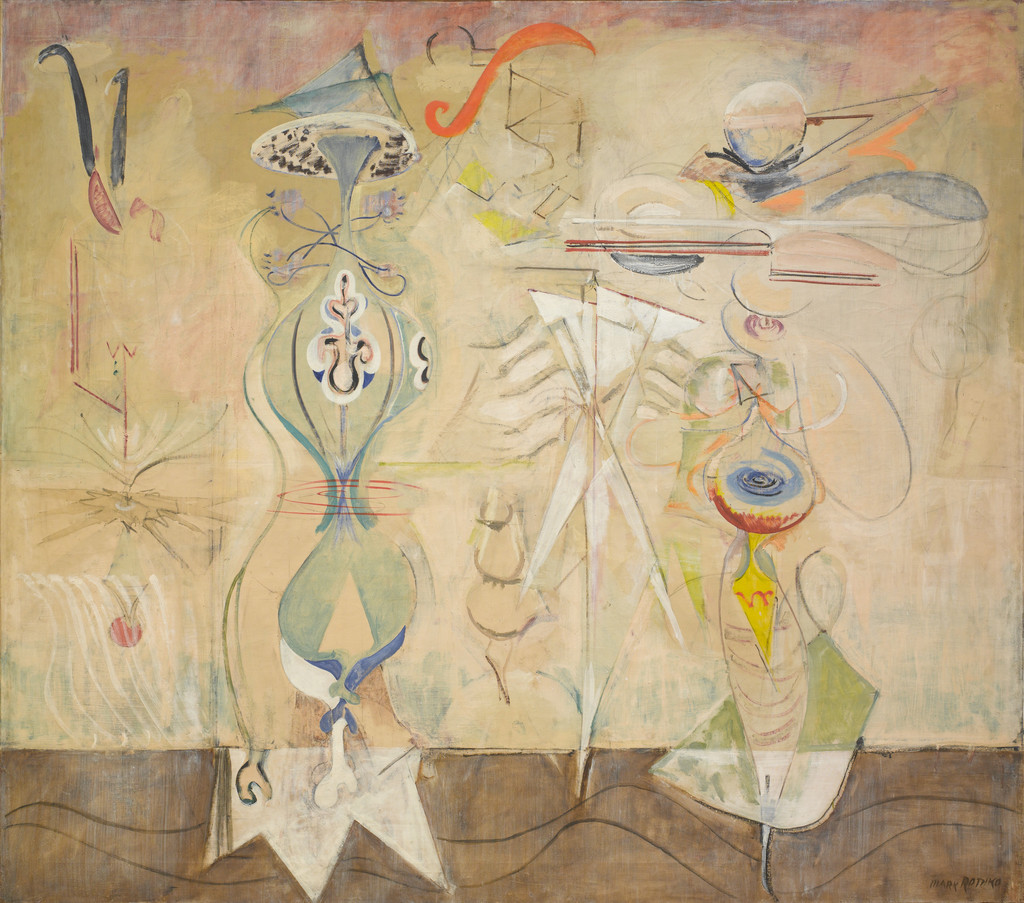
Untitled
Mag men het zien?
Ontvangt momenteel niet

National Gallery of Art
Washington D.C., Verenigde Staten
Het hoort bij de collectie, maar is momenteel niet tentoongesteld.
- Gecontroleerd
- eergisteren
- Ongewijzigd sinds
- 19 aug 2026
- Bron
- De eigen collectiegegevens van het museum
Gegevens
- Inventarisnummer
- 1986.43.161
What it shows
In de catalogus
Bronnen
- National Gallery of Art: the museum's own open data · opgehaald 6 dagen geleden
- Afbeelding: National Gallery of Art — © the artist or rights holder
Intussen, in het leven van Mark Rothko
Het hele leven1929–1952
Teaching children at the Brooklyn Jewish Center
From 1929 Rothko taught drawing, painting and clay sculpture part-time to schoolchildren at the Center Academy of the Brooklyn Jewish Center, where he remained until 1952.
1949–1956
Large vertical canvases: being “inside” the picture
For seven years Rothko painted in oil only on large vertical canvases so that the viewer would feel “enveloped within” the painting. Critics saw this as compensating for a lack of substance; he replied that he painted large because he wanted to be intimate, and advised viewers to stand as close as eighteen inches away.
early 1950
Five months in Europe
In early 1950 Rothko and his wife spent five months in Europe; he did not go back to his homeland but visited the great museums of England, France and Italy, and was most impressed by Fra Angelico’s frescoes in San Marco in Florence. Mell became pregnant during the trip, and on 30 December, back in New York, their daughter Kate was born, named after Rothko’s mother.
1950
The “Irascibles” photograph: a protest against the Met
In 1950 a conservative jury rejected paintings by the radical group to which Rothko belonged for a major exhibition of modern art at the Metropolitan Museum. In reply the artists posed for a group photograph of the “Irascibles”, all stern-faced, with Rothko especially angry.
1952
“Fifteen Americans” and a quarrel with Newman
Dorothy Canning Miller’s Fifteen Americans at MoMA formally heralded the abstract artists, but it also set Rothko against Barnett Newman, who accused him of trying to exclude him from the show.
1954
A Chicago show and a meeting with Sidney Janis
At a solo show at the Art Institute of Chicago in 1954 Rothko met the dealer Sidney Janis, who represented Pollock and Franz Kline; the relationship proved mutually beneficial.




![Ginevra de' Benci [obverse], Leonardo da Vinci, c. 1474/1478](https://api.nga.gov/iiif/8f29e3c9-a289-4d53-abf0-31a66e9e98fa/full/!2400,2400/0/default.jpg)
![Wreath of Laurel, Palm, and Juniper with a Scroll inscribed Virtutem Forma Decorat [reverse], Leonardo da Vinci, c. 1474/1478](https://api.nga.gov/iiif/ff62e8d0-45c4-498f-ad36-6358de827e04/full/!2400,2400/0/default.jpg)


