
 Mark RothkoVerenigde Staten, 1903–1970
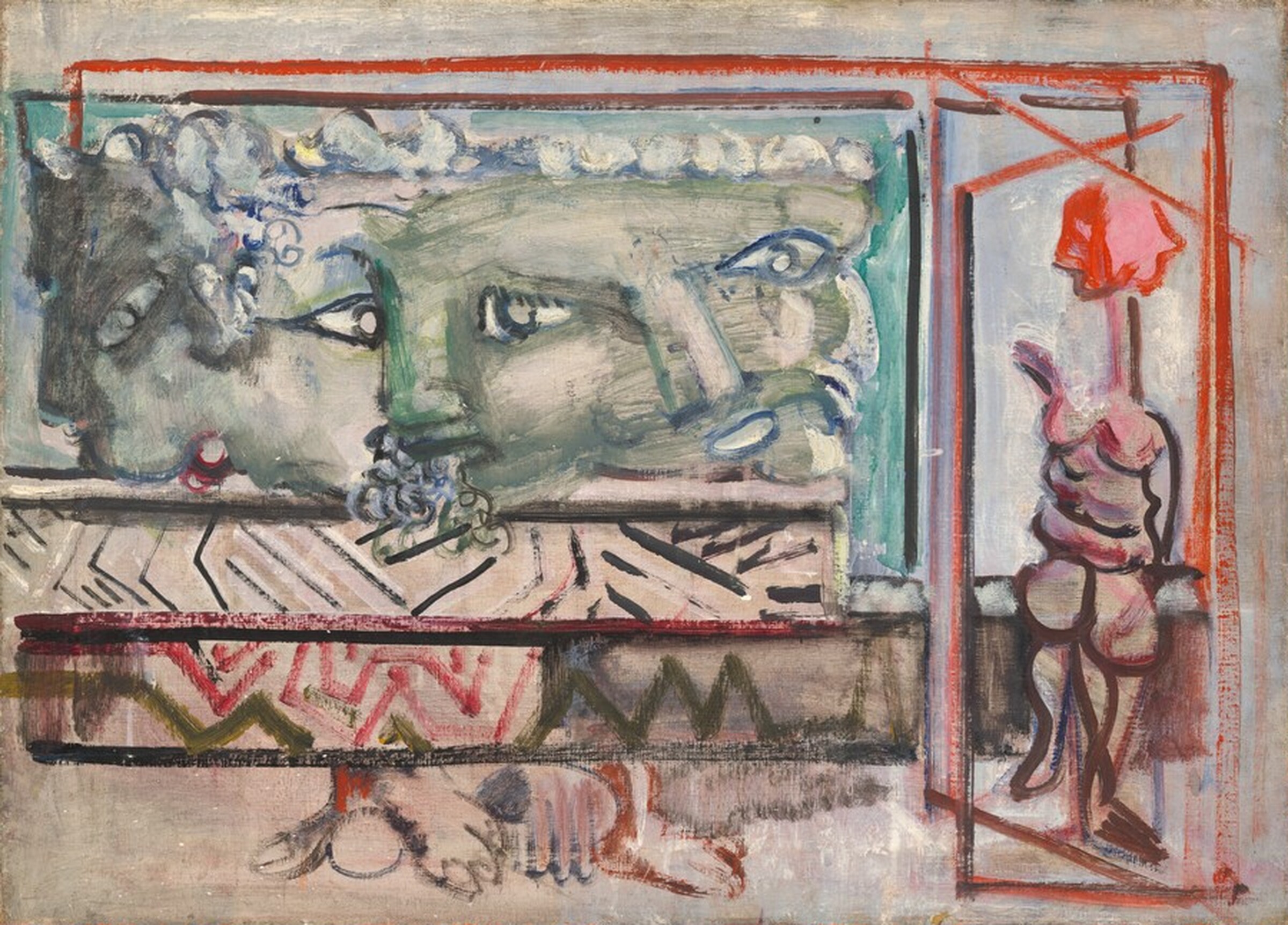
Untitled
Mag men het zien?
Ontvangt momenteel niet

National Gallery of Art
Washington D.C., Verenigde Staten
Het hoort bij de collectie, maar is momenteel niet tentoongesteld.
- Gecontroleerd
- eergisteren
- Ongewijzigd sinds
- 19 aug 2026
- Bron
- De eigen collectiegegevens van het museum
Gegevens
- Inventarisnummer
- 1986.43.146
What it shows
In de catalogus
Bronnen
- National Gallery of Art: the museum's own open data · opgehaald 5 dagen geleden
- Afbeelding: National Gallery of Art — © the artist or rights holder
Intussen, in het leven van Mark Rothko
Het hele leven1949–1956
Large vertical canvases: being “inside” the picture
For seven years Rothko painted in oil only on large vertical canvases so that the viewer would feel “enveloped within” the painting. Critics saw this as compensating for a lack of substance; he replied that he painted large because he wanted to be intimate, and advised viewers to stand as close as eighteen inches away.
after June 1959
Walks away from the Four Seasons: the advance is returned
Back in New York Rothko visited the nearly completed restaurant, found its atmosphere pretentious and unsuited to his paintings, refused to go on and returned his cash advance to Seagram. He kept the paintings in storage until 1968; the series was later split between the Tate, the Kawamura Memorial Museum in Japan and the National Gallery of Art in Washington.
June 1959
Europe: the Laurentian Library, Pompeii, Turner
In June 1959 Rothko and his family went to Europe: Rome, Florence, Venice, Pompeii, then Paris, Brussels, Antwerp, Amsterdam and London, where he studied Turner’s watercolours. On the ship he told the journalist John Fischer that he wanted his murals to ruin the appetite of everyone who ate in that room, and in Florence he found the feeling of a walled-in room he was after in the vestibule of Michelangelo’s Laurentian Library.
11 juli 1959 – 11 oktober 1959
Exhibition: Documenta II
1961
The retrospective at MoMA
In 1961 the Museum of Modern Art held a retrospective of Rothko’s work, to considerable commercial and critical success, though the art world was already turning its attention to pop art.
1964–1970
The Rothko Chapel: six years of work
The chapel for the oil millionaires John and Dominique de Menil in Houston was originally meant to be Roman Catholic, and for the first three years, until 1967, Rothko believed it would remain so; he took a close interest in its layout and insisted on a central cupola. Because of his health he hired two assistants to apply the layers of paint; on half of the works he applied none himself, calling the completion of the paintings “torment”.




![Ginevra de' Benci [obverse], Leonardo da Vinci, c. 1474/1478](https://api.nga.gov/iiif/8f29e3c9-a289-4d53-abf0-31a66e9e98fa/full/!2400,2400/0/default.jpg)
![Wreath of Laurel, Palm, and Juniper with a Scroll inscribed Virtutem Forma Decorat [reverse], Leonardo da Vinci, c. 1474/1478](https://api.nga.gov/iiif/ff62e8d0-45c4-498f-ad36-6358de827e04/full/!2400,2400/0/default.jpg)


