 Jean-Louis-Ernest MeissonierFrankrijk, 1815–1891
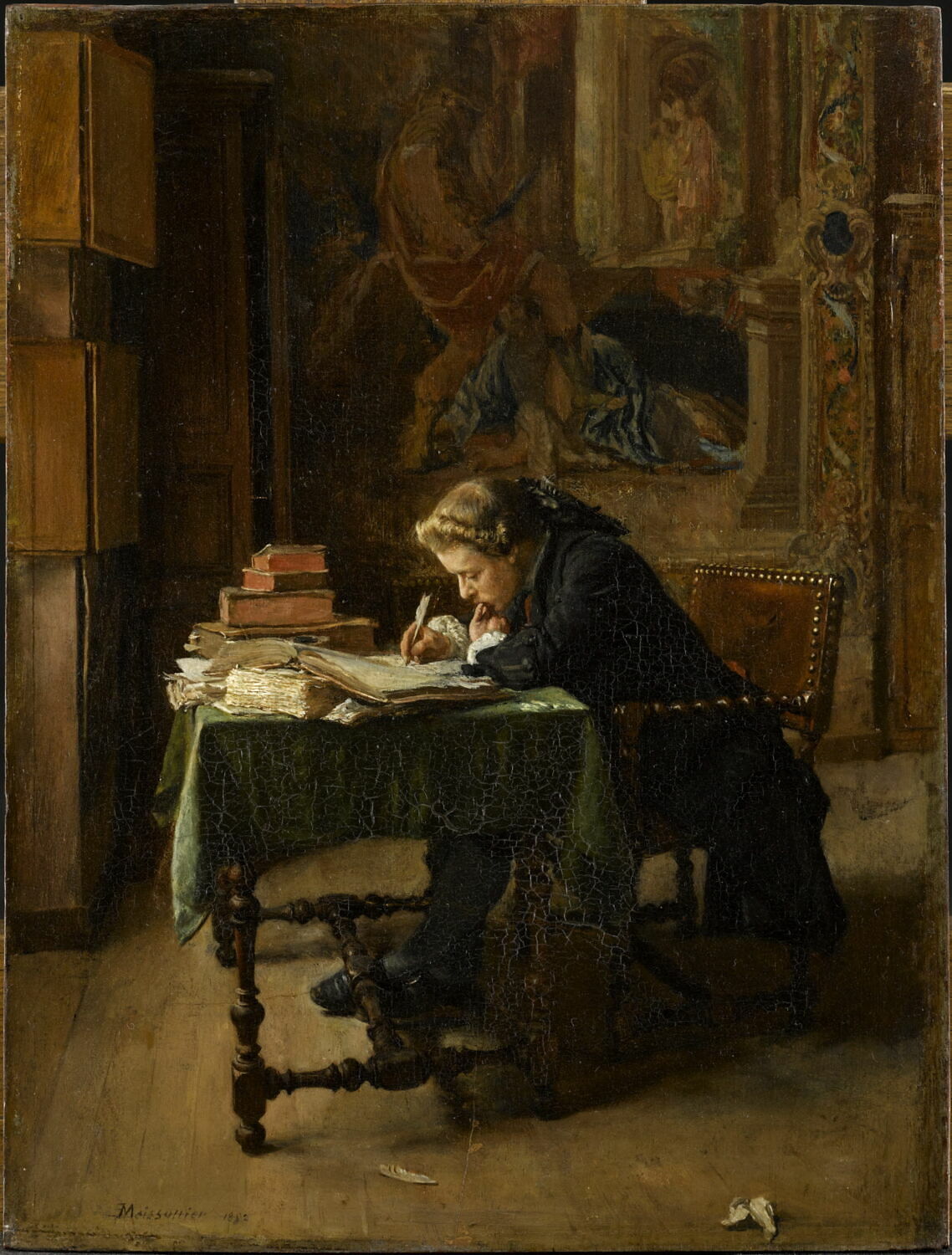
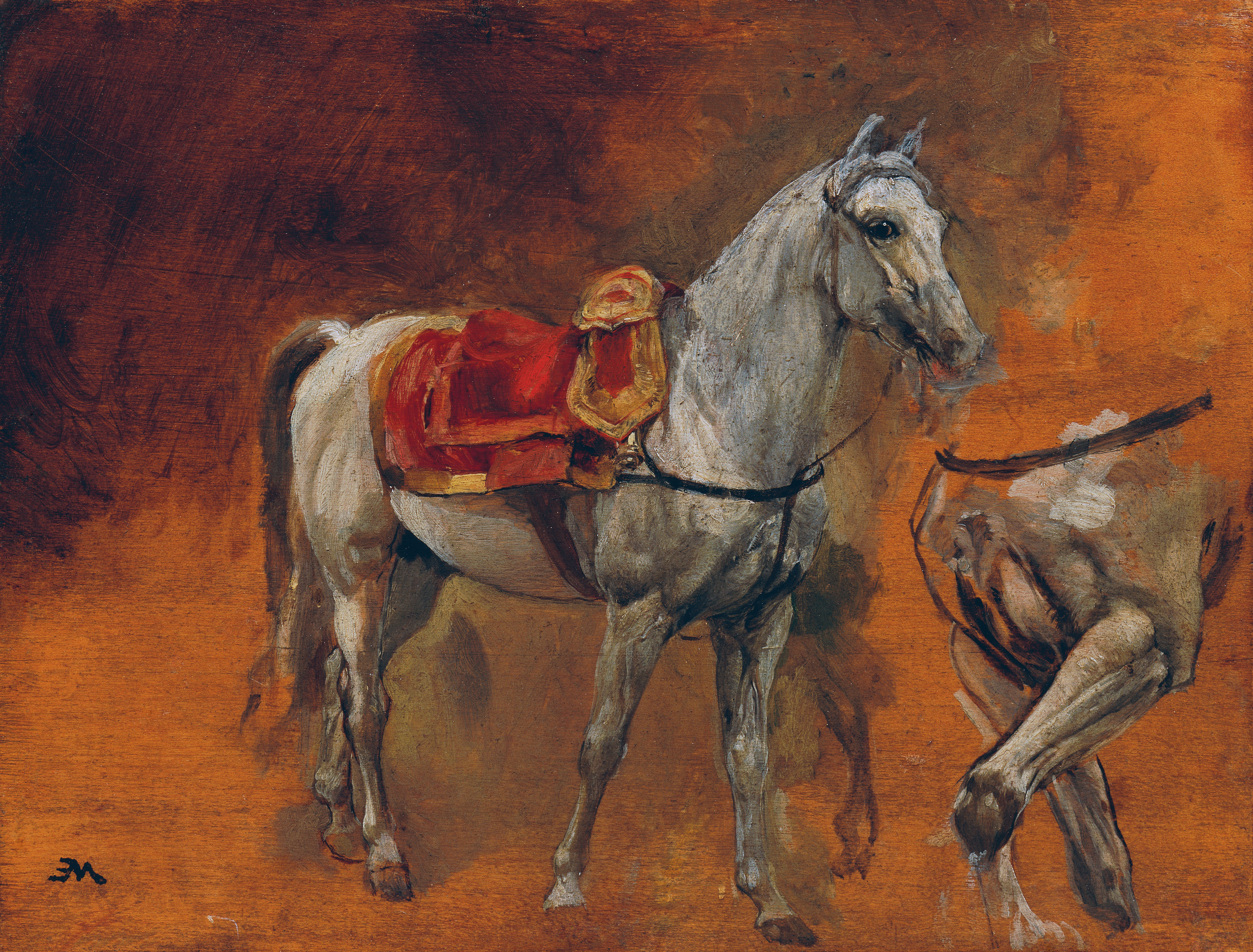
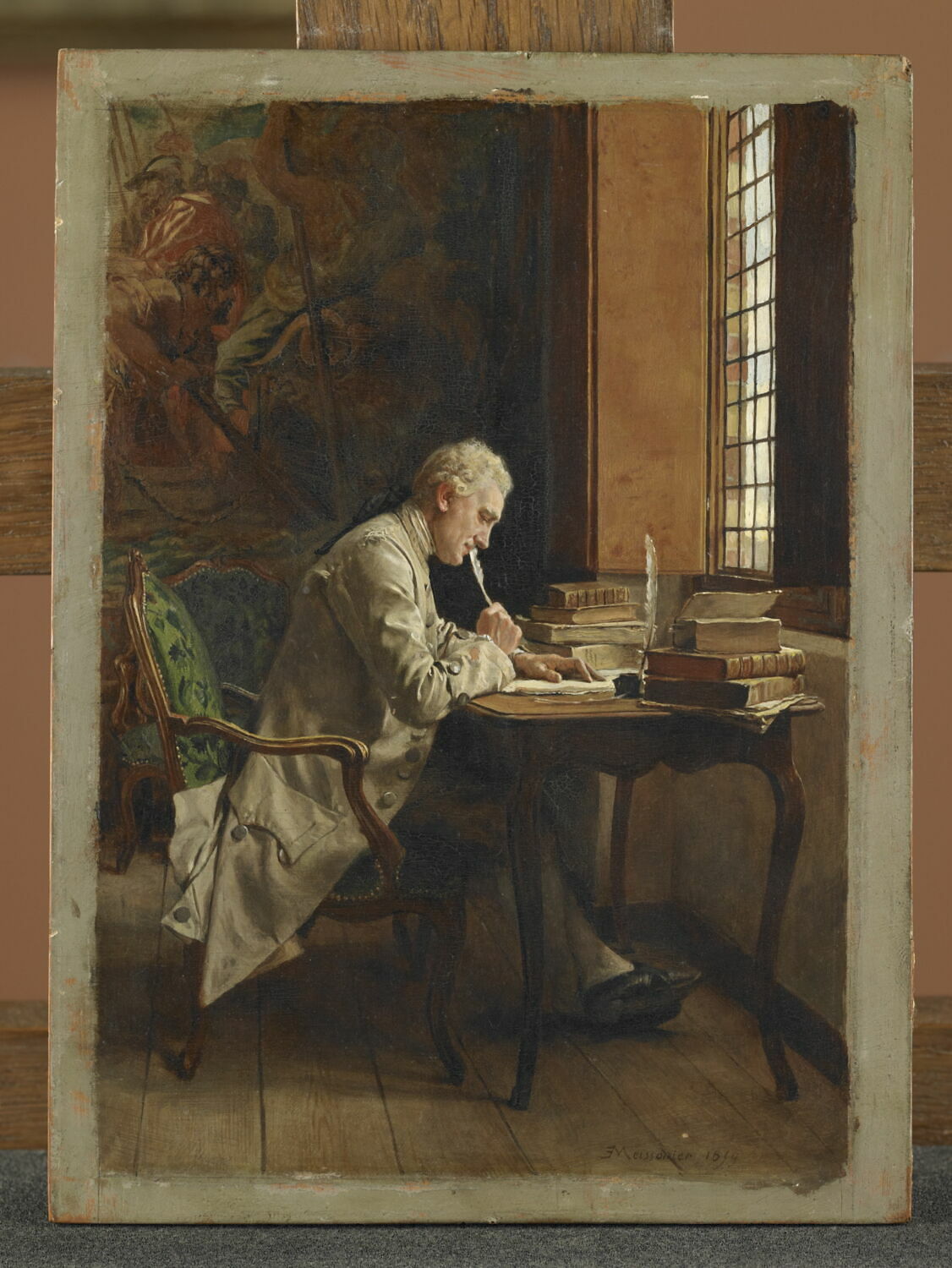
Un poète
Kan ik het zien?
Nu niet te zien
Waar is „Un poète” nu? Collectie: Louvre, Parijs. Nu niet te zien. Gecontroleerd 26 september 2026.

Parijs, Frankrijk
Het hoort bij de collectie, maar is momenteel niet tentoongesteld.
- Gecontroleerd
- Ongewijzigd sinds
- Bron
- Het museum
Gegevens
- Inventarisnummer
- RF 1434
In de catalogus
Bronnen
- Louvre
- Afbeelding: Louvre — © 2009 GrandPalaisRmn (musée du Louvre) / Michel Urtado
In het leven van Jean-Louis-Ernest Meissonier
Het hele leven1857
Nine works at the Salon of 1857
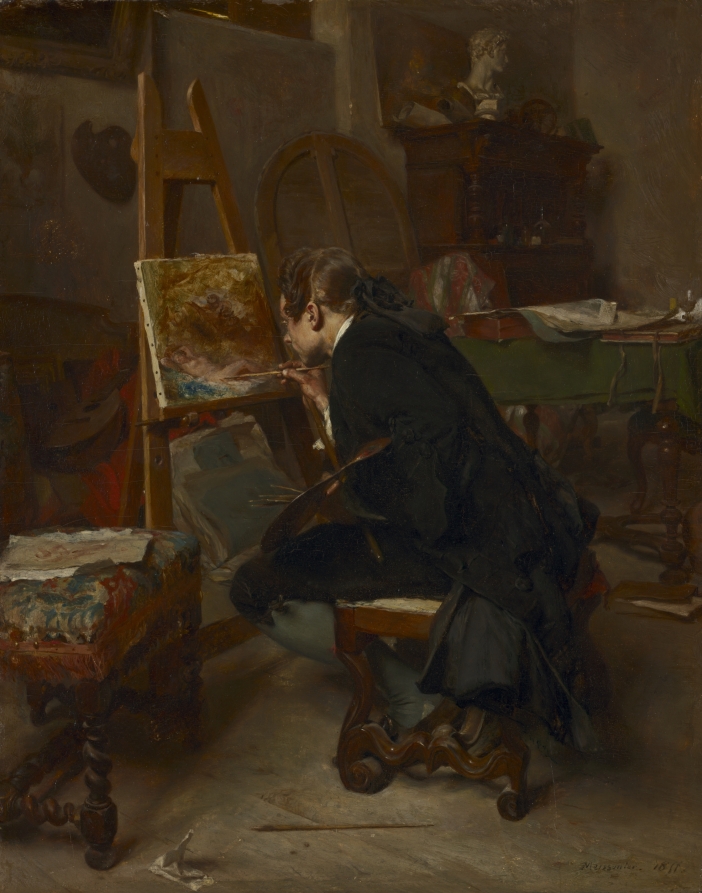
His triumph is sustained: Meissonier shows nine pictures and drawings, among them Young Man of the Time of the Regency, The Painter, The Shoeing Smith, The Musician and A Reading at Diderot’s. With Gérôme and Cabanel he counts as one of the three most successful artists of the Second Empire.
summer 1859
A government commission for scenes of the Italian campaign
In the summer of 1859, when Napoleon III and Victor Emmanuel II set out to oust the Habsburgs from northern Italy, Meissonier receives a government commission to illustrate scenes from the campaign. Napoleon III attached him to the imperial staff, and the painter accompanied the emperor in Italy.
1860s
A turn to battle subjects and high prices
In the 1860s he begins to paint historical and battle scenes from the time of the French Revolution, the Napoleonic Wars and the conflicts of Emperor Napoleon III; his contemporaries valued them even more than his earlier genre works. In time he received 300,000 francs each for The Charge of the Cuirassiers and Napoleon I in 1814, and 200,000 for Napoleon III at Solferino, which its first owner later resold for 850,000.
autumn 1861
Elected to the Institut de France
In autumn 1861 the members of the Académie des Beaux-Arts vote him into their number: he takes the chair of Abel de Pujol.