 William BlakeVerenigd Koninkrijk, 1757–1827
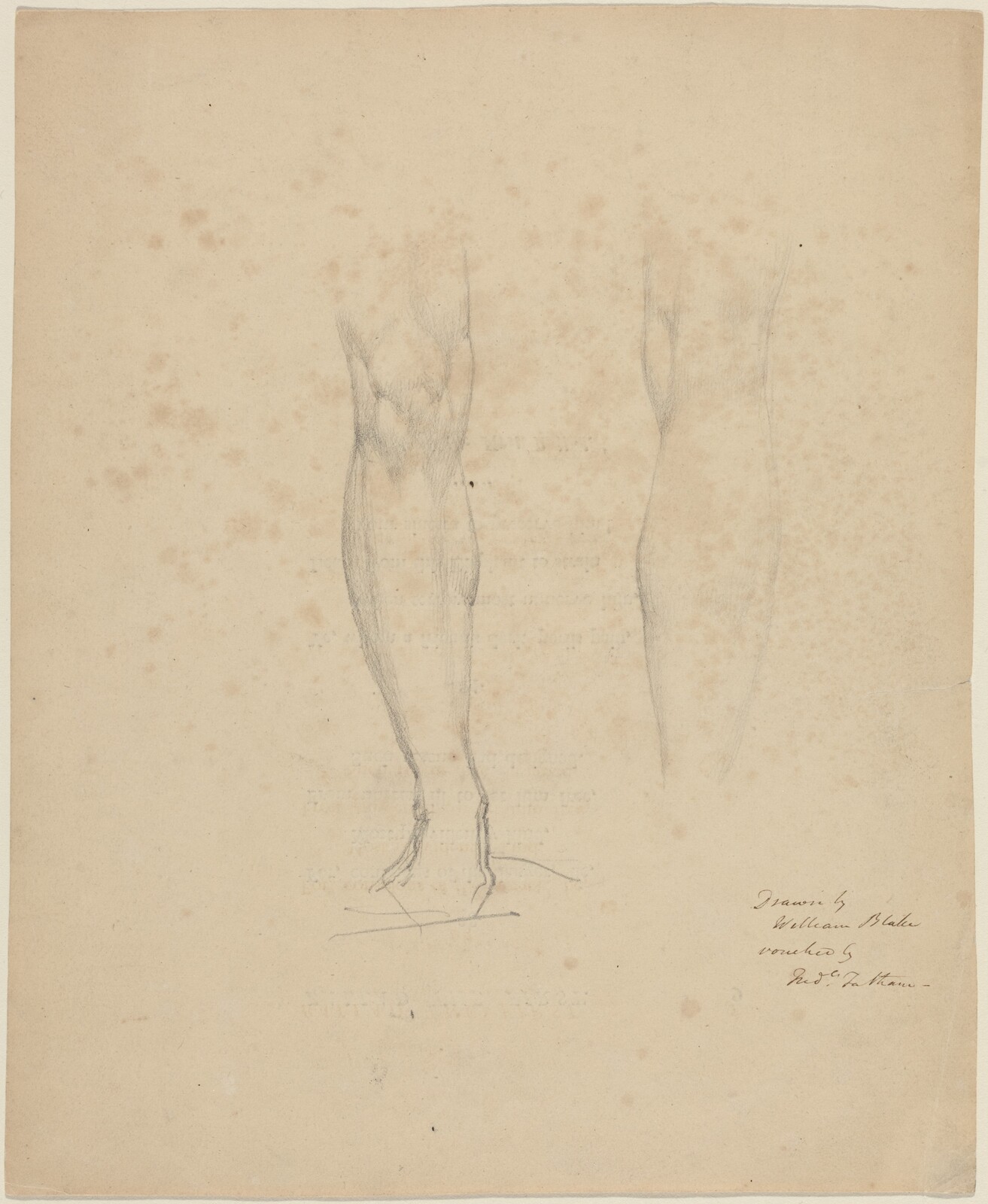
Two Legs
Kan ik het zien?
Nu niet te zien
Waar is „Two Legs” nu? Collectie: National Gallery of Art, Washington D.C. Nu niet te zien. Gecontroleerd 16 november 2026.

Washington D.C., Verenigde Staten
Het hoort bij de collectie, maar is momenteel niet tentoongesteld.
- Gecontroleerd
- Ongewijzigd sinds
- Bron
- Het museum
Over het werk
Two Legs, een grafiettekening van William Blake die waarschijnlijk in 1805-1810 ontstond, behoort tot de collectie van de National Gallery of Art in Washington. De benen zijn vanaf de bovenbenen tot de voeten onder verschillende hoeken bestudeerd, met spieren en botten licht aangegeven. Frederick Tatham voegde in bruine inkt een opschrift toe waarin hij Blakes auteurschap bevestigt. Het blad meet 27,7 bij 22,7 centimeter.
Gegevens
- Inventarisnummer
- 1943.3.9008
Wat het toont
In de catalogus
Bronnen
- National Gallery of Art
- Afbeelding: National Gallery of Art — Museum open access
In het leven van William Blake
Het hele levenseptember 1800 – september 1803 · Werkzaam in
Felpham
1803
A fight with the soldier Schofield and a trial at Chichester
In August 1803 Blake was involved in a physical altercation with a soldier, John Schofield, and was charged not only with assault but with uttering seditious and treasonable expressions against the King; Schofield claimed that Blake had exclaimed “Damn the king. The soldiers are all slaves.” Blake was cleared at the Chichester assizes.
september 1803 – oktober 1803 · Woonplaats
Broadwick Street
oktober 1803 – 1820 · Woonplaats
South Molton Street
1804
Returns to London and begins “Jerusalem”
In 1804 Blake returned to London and began to write and illustrate “Jerusalem: The Emanation of the Giant Albion” (1804–20), his most ambitious work.
1809
An exhibition in his brother's shop: nothing sold
Blake set up an independent exhibition in his brother's haberdashery shop at 27 Broad Street in Soho to market his version of “The Canterbury Pilgrims” along with other works. It was very poorly attended, sold none of the temperas or watercolours, and its only review, in The Examiner, was hostile.