Margaret Bourke-WhiteVerenigde Staten, 1904–1971
Tovarisch Mikhail: Bricklayer
Kan ik het zien?
Nu niet te zien
Waar is „Tovarisch Mikhail: Bricklayer” nu? Collectie: National Gallery of Art, Washington D.C. Nu niet te zien. Gecontroleerd 29 september 2026.

Washington D.C., Verenigde Staten
Het hoort bij de collectie, maar is momenteel niet tentoongesteld.
- Gecontroleerd
- Ongewijzigd sinds
- Bron
- Het museum
Gegevens
- Inventarisnummer
- 2023.36.1.7
Wat het toont
In de catalogus
Bronnen
- National Gallery of Art
- Afbeelding: National Gallery of Art — © the artist or rights holder
In het leven van Margaret Bourke-White
Het hele levensummer 1929
Joins Fortune magazine
She accepts a post as associate editor and staff photographer at the new business magazine Henry Luce is launching in the fall. She holds it until 1935.
1930
First Western photographer admitted to the USSR
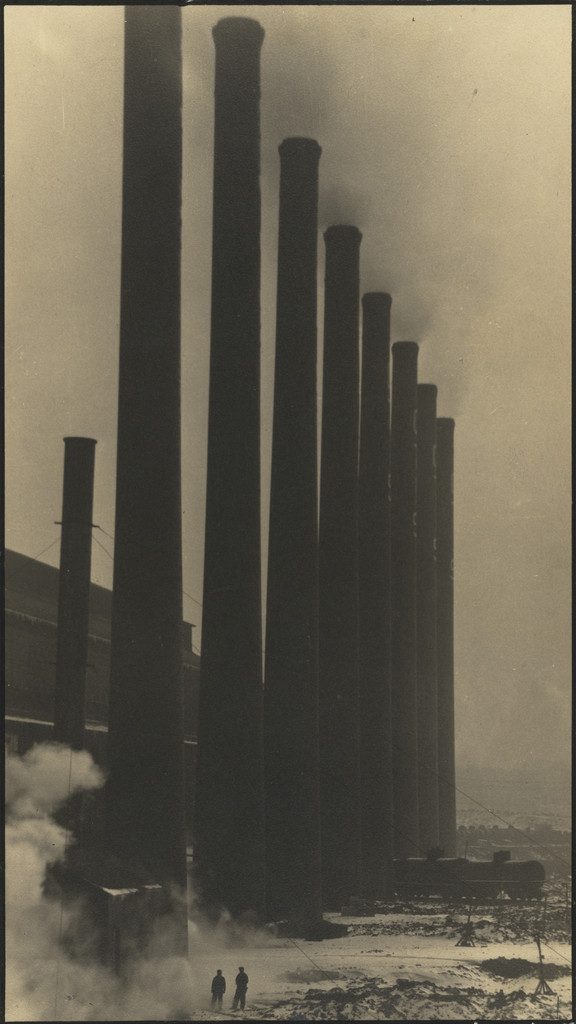
She is granted official access to document the industrial sites of the Soviet Union during the first five-year plan, the first Western professional photographer to be admitted. She returns in each of the next two summers, until 1932.
c. 1930
A studio in the Chrysler Building
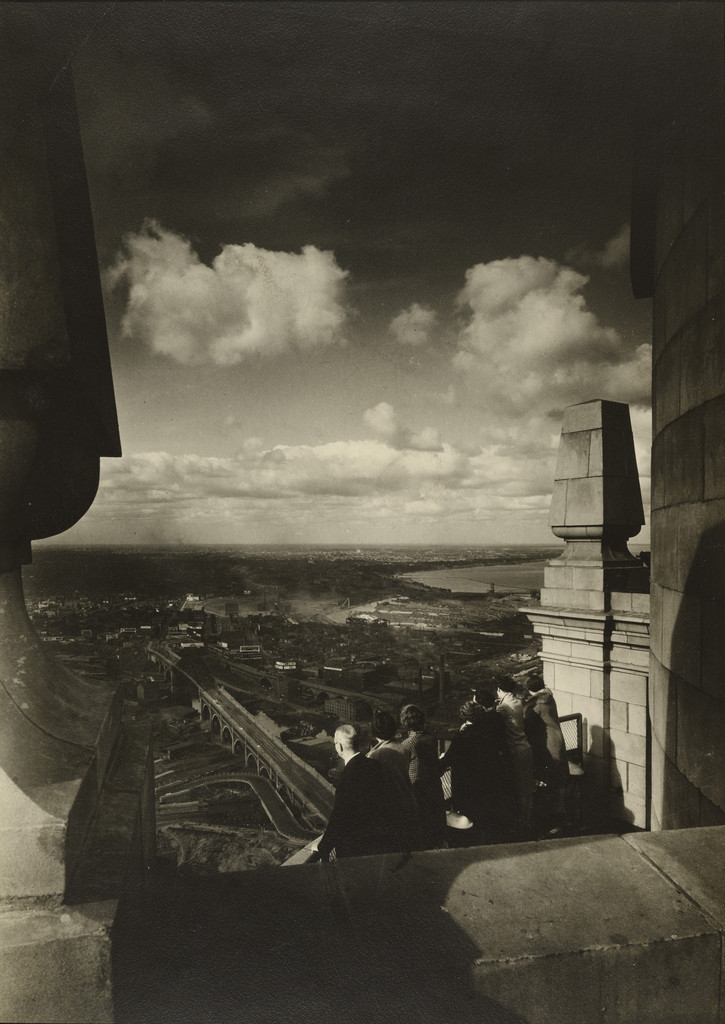
The building’s management at first refuses to rent to a woman, but with a recommendation from Fortune, her principal employer at the time, she opens her studio there shortly afterwards. She hires John Vassos to design the deluxe interior, whose clean modern lines echo the building’s exterior.
1930–1932
Photographs Stalin, his mother, Radek and Eisenstein
On her trips she photographs Joseph Stalin and, in Georgia, his mother and great-aunt; she also portrays Karl Radek, Sergei Eisenstein and Hugh Cooper. The work in the USSR demanded great patience, and her impressions remained mixed but on the whole positive.
1931
“Eyes on Russia” in Fortune
Her Soviet photographs first appear in Fortune under the title “Eyes on Russia”; a book of the same name follows from Simon and Schuster.
1932–1934
The Soviet series: newspaper, portfolio, photomurals
The Soviet photographs run as a six-part series in The New York Times (1932), as a deluxe photo portfolio (1934) and as photomurals for the Soviet consulate in New York (1934); other frames circulate in exhibitions, books and periodicals around the globe, especially in Soviet magazines and postcards.



![Ginevra de' Benci [obverse], Leonardo da Vinci, c. 1474/1478](https://api.nga.gov/iiif/8f29e3c9-a289-4d53-abf0-31a66e9e98fa/full/!2400,2400/0/default.jpg)
![Wreath of Laurel, Palm, and Juniper with a Scroll inscribed Virtutem Forma Decorat [reverse], Leonardo da Vinci, c. 1474/1478](https://api.nga.gov/iiif/ff62e8d0-45c4-498f-ad36-6358de827e04/full/!2400,2400/0/default.jpg)